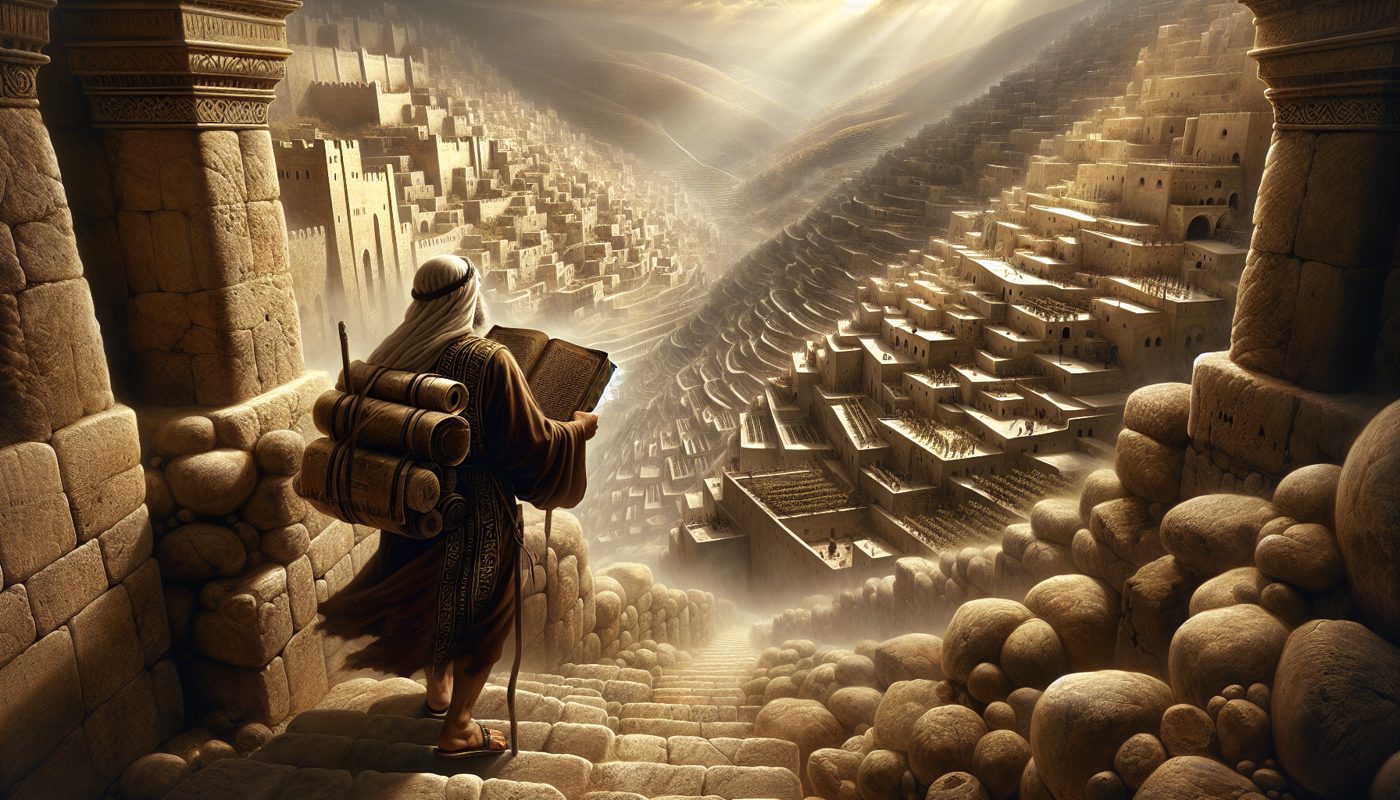
The book opens with a single word: burden. Not a vision of comfort, not a promise of restoration, but a weight that the prophet Habakkuk saw and carried. He does not introduce himself with a father's name or a king's date. He steps forward only as the one who received this burden, and the burden itself is a question that refuses to settle.
Habakkuk cries out to the Lord about violence, and the Lord does not answer. He cries out again, and still the Lord does not save. The repetition is deliberate. The prophet is not whispering a polite request. He is pressing his case before a God who seems to have gone silent. The violence he sees is not distant rumor. It is destruction and strife and contention rising up in front of him, and the law has gone slack because of it. Justice does not go forth. The wicked surround the righteous, and what passes for justice is only a perversion of what it should be.
That is the state of things when the Lord finally speaks. And when he does, his answer is not what Habakkuk expected. The Lord tells him to look among the nations, to watch and be utterly astonished. He is working a work in their own days, a work they will not believe even when it is told to them. He is raising up the Chaldeans. That bitter and hasty nation will march across the earth and seize dwellings that do not belong to them. They are terrible and dreadful. Their judgment and their dignity come from themselves, not from any higher authority.
The description of the Chaldeans is vivid and relentless. Their horses are swifter than leopards and more fierce than evening wolves. Their horsemen press on proudly, coming from far away, flying like an eagle that hastens to devour. They come for violence, their faces set forward, and they gather captives as countless as the sand. They scoff at kings and mock princes. They laugh at every stronghold, heaping up dust to take it. Then they sweep by like a wind and pass over, and they are guilty, because their might is their god.
This is the Lord's answer to a prophet who cried out about violence and injustice. The Lord is raising up a nation more violent and more unjust than anything Judah has seen. The Chaldeans do not follow the Lord's law. They do not acknowledge his covenant. They worship their own strength and their own tools of war. And yet the Lord says he has ordained them for judgment and established them for correction.
Habakkuk does not fall silent. He does not offer a hymn of praise or a confession of trust. He pushes back. He addresses the Lord as the one who is from everlasting, his God, his Holy One, the Rock. He declares that they will not die, but then he asks the question that drives the rest of the chapter. The Lord is of purer eyes than to behold evil and cannot look on perverseness. So why does he look on those who deal treacherously? Why does he hold his peace when the wicked swallows up the man who is more righteous than he?
The prophet presses further. The Lord has made men like the fish of the sea, like creeping things that have no ruler. The Chaldeans haul them all up with hooks and nets and drags, and then they rejoice and are glad. They sacrifice to their net and burn incense to their drag, because by those tools their portion is fat and their food is plentiful. The question that ends the chapter is stark: Shall he therefore empty his net, and spare not to slay the nations continually?
Habakkuk has not received a comfortable answer. He has received a harder question wrapped inside the Lord's reply. The Lord is working, but the work looks like the triumph of the wicked. The prophet is left standing on the edge of that tension, still crying out, still watching, still refusing to let the Lord's silence or the Lord's answer settle the matter too easily.
The chapter does not resolve. It ends with the prophet still asking. That is the burden he saw, and he does not put it down.
Comments
Comments 0
Read the discussion and add your voice.
Members only
Sign in to join the conversation
We keep comments tied to real accounts so the discussion stays clean and trustworthy.
No comments yet. Be the first to add one.