The chapter opens with a formal heading: the vision of Isaiah son of Amoz, set in the reigns of four kings of Judah. But the content that follows is not a vision of heavenly courts or distant futures. It is a direct, blistering indictment delivered to a people still performing their religious duties. The Lord calls heaven and earth as witnesses: he raised children, and they have rebelled. The charge is not ignorance but refusal to know. The ox knows its owner; the donkey knows its master's feeding trough. Israel, the Lord says, does not know. They do not consider.
The language turns surgical. The nation is sick from head to foot—wounds, bruises, fresh stripes, none bound up, none softened with oil. The land is desolate, cities burned, strangers devouring the fields while the owners watch. The daughter of Zion is left like a makeshift shelter in a vineyard, a watchman's hut in a cucumber field, a city under siege. Only the Lord's restraint in preserving a small remnant kept Judah from becoming Sodom and Gomorrah outright.
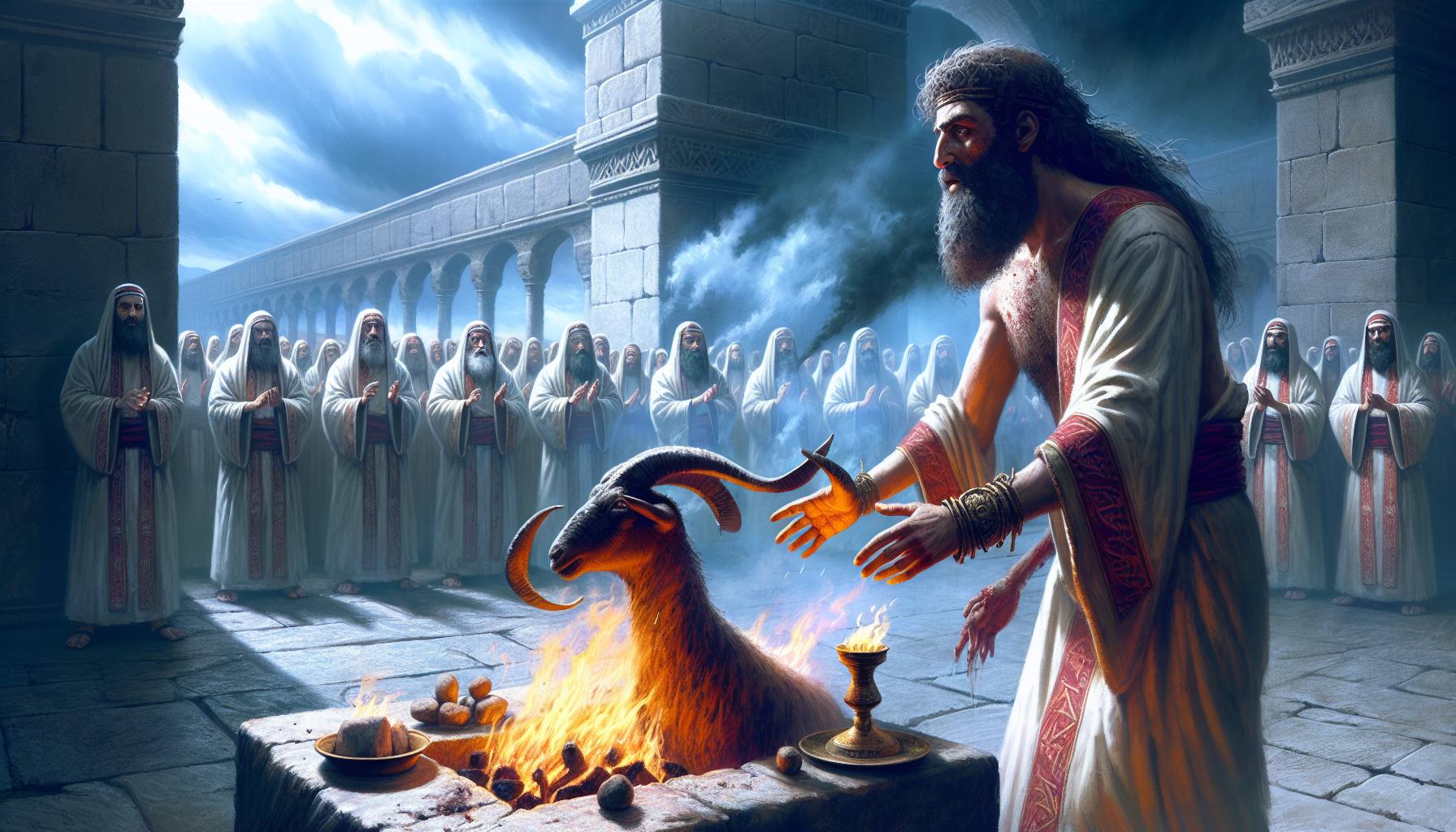
Then the Lord addresses the rulers and the people directly, calling them rulers of Sodom and people of Gomorrah. The shock is deliberate. These are not pagans; they are the ones bringing sacrifices to the temple. And the Lord rejects those sacrifices outright. The multitude of offerings means nothing. He is fed up with burnt offerings of rams and the fat of fed beasts. He takes no delight in the blood of bullocks, lambs, or he-goats. When they come to appear before him, he asks who required them to trample his courts. Their oblations are vain. Their incense is an abomination. Their new moons, sabbaths, and assemblies are intolerable because they are paired with iniquity.
The Lord says plainly: he hates their appointed feasts. They have become a burden he is weary of bearing. When they spread their hands in prayer, he will hide his eyes. When they multiply their prayers, he will not listen. The reason is blunt: their hands are full of blood. The rituals are not merely empty; they are offensive because they are performed by hands stained with violence.
The remedy is not more sacrifices. The Lord commands them to wash, make themselves clean, put away the evil of their doings, cease to do evil, learn to do well, seek justice, relieve the oppressed, judge the fatherless, plead for the widow. The list is concrete and social. The requirement is not a new liturgy but a new pattern of public conduct.
Then the tone shifts. The Lord invites them to reason together. Though their sins are like scarlet, they shall be as white as snow. Though red like crimson, they shall be as wool. The offer is conditional: if they are willing and obedient, they will eat the good of the land. If they refuse and rebel, they will be devoured by the sword. The mouth of the Lord has spoken it.
The chapter then laments what the faithful city has become. Once full of justice, where righteousness lodged, now it harbors murderers. Its silver has turned to dross; its wine is diluted with water. Its princes are rebels and companions of thieves. Everyone loves bribes and runs after rewards. They do not defend the fatherless, and the widow's cause never reaches them.
Therefore the Lord, the Lord of hosts, the Mighty One of Israel, declares he will ease himself of his adversaries and avenge himself of his enemies. He will turn his hand against the city and purge away its dross, remove all its alloy. He will restore judges as at the first, counselors as at the beginning. Then the city will be called the city of righteousness, a faithful town. Zion will be redeemed with justice, and her converts with righteousness.
But the chapter does not end on that note alone. The destruction of transgressors and sinners will be together. Those who forsake the Lord will be consumed. They will be ashamed of the oaks they desired and confounded for the gardens they chose. They will become like an oak whose leaf fades, like a garden without water. The strong will be like tinder, and his work like a spark; both will burn together, and no one will quench them.
The chapter is a single, sustained argument: ritual without righteousness is not merely worthless but repulsive to God. The Lord does not want more offerings; he wants justice for the fatherless and the widow. The promise of cleansing is real, but it is tied to a change in behavior, not to the volume of incense. The vision of Isaiah is not a prediction of distant judgment; it is a present confrontation with a people who have mastered the forms of worship while abandoning its substance.