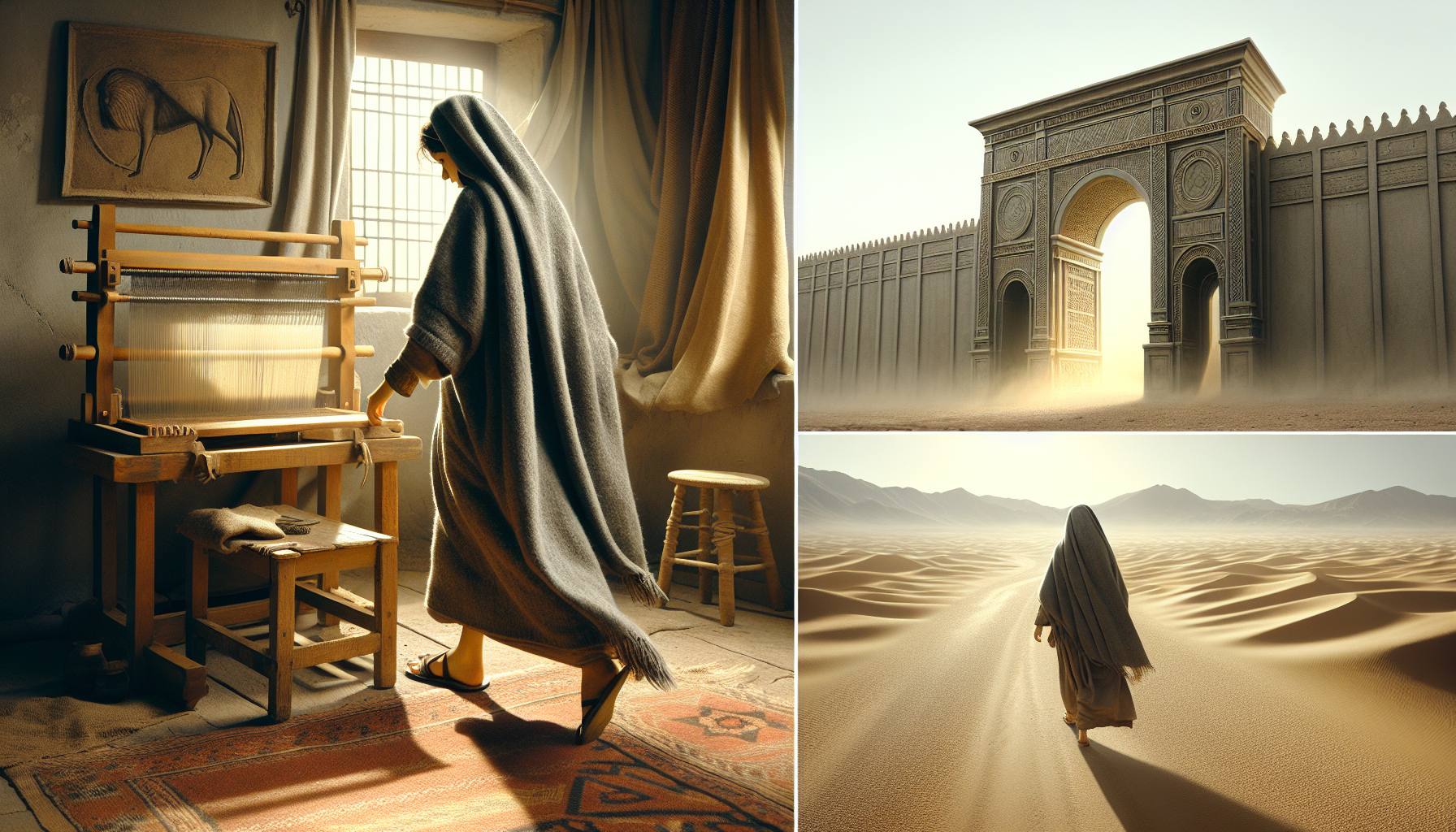
The chapter opens with a command to sing, directed at a woman who has never borne a child. The imperative is not a gentle suggestion but a public, audible cry. The barren woman is told to break forth into singing, to cry aloud, because the children of the desolate will outnumber the children of the married wife. The Lord speaks this directly, without explanation or softening. The logic is not natural; it is covenantal.
The next verses shift to the image of a tent. The woman is told to enlarge the place of her tent, to stretch out the curtains, to lengthen the cords and strengthen the stakes. This is not a metaphor for spiritual growth. It is a concrete instruction to prepare for a household that does not yet exist. The tent must be made ready for the children who will come, even though no child is visible. The command assumes the promise will be kept.
The promise itself is territorial. The woman's seed will possess the nations and make the desolate cities inhabited. This is not a private blessing. It is a restoration of land and people, a reversal of exile. The desolate cities, like the barren woman, will be filled. The same Lord who speaks to the woman speaks to the city, and the same pattern holds: what was empty will be crowded.
The Lord then addresses fear and shame directly. The woman is told not to be ashamed or confounded, because she will forget the shame of her youth and the reproach of her widowhood. The shame is not denied; it is remembered, then dismissed. The Lord does not say the shame never happened. He says it will be forgotten, replaced by something else.
The basis for this reversal is the identity of the Lord. He is the Maker, the husband, the Redeemer. He is called the Holy One of Israel and the God of the whole earth. The marriage metaphor is explicit: the Lord has called the woman as a wife forsaken and grieved in spirit, a wife of youth who was cast off. The forsakenness was real, but it was temporary.
The Lord describes the forsaking as a small moment, an overflowing wrath that lasted only a moment. But the mercy that follows is everlasting. The same Lord who hid his face will gather with great mercies. The language of wrath is not minimized, but it is bounded. The mercy has no boundary.
The Lord swears an oath, comparing his promise to the waters of Noah. Just as he swore that the flood would never again cover the earth, so he swears that he will not be angry with this woman or rebuke her. The oath is a guarantee. The mountains may depart and the hills be removed, but the Lord's lovingkindness will not depart, and his covenant of peace will not be removed.
The chapter then addresses the afflicted one, tossed with tempest and not comforted. The Lord promises to set her stones in fair colors, to lay her foundations with sapphires, to make her pinnacles of rubies, her gates of carbuncles, and all her border of precious stones. This is not a description of a literal building. It is a vision of a city so restored that its materials reflect the glory of the one who rebuilds it.
The children of this city will be taught by the Lord, and their peace will be great. The city will be established in righteousness, far from oppression and terror. The enemies who gather against her will fall, because their gathering is not from the Lord. The smith who makes the weapon and the waster who destroys are both created by the Lord, but no weapon formed against this city will prosper, and every tongue that rises in judgment will be condemned.
The chapter closes by naming this promise as the heritage of the servants of the Lord. Their righteousness is from him. The barren woman, the desolate city, the afflicted one—all are given a future that does not depend on their past. The tent must be enlarged because the Lord has sworn it. The singing must begin before the children arrive.