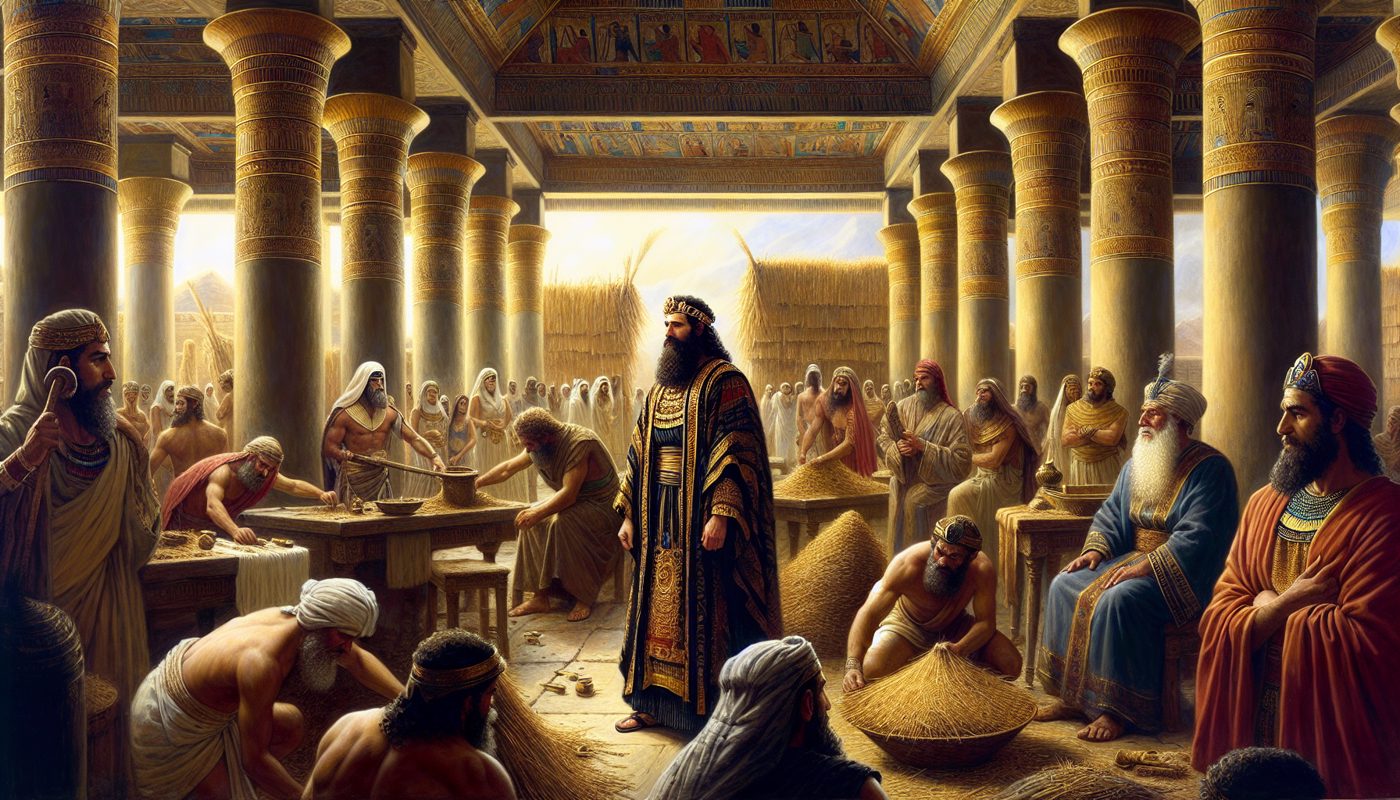
The Lord told Moses there would be one more plague. After that, Pharaoh would not only let the people go—he would drive them out completely. This was not a negotiation anymore. It was a countdown.
Before the plague fell, Moses received a strange command. The people were to ask their Egyptian neighbors for silver and gold jewelry. And the Lord gave the Israelites favor in the eyes of the Egyptians. Moses himself had become very great in the land, respected even by Pharaoh’s own servants. The plagues had not broken Egypt’s pride, but they had shifted something in the social order.
Moses went to Pharaoh and delivered the Lord’s words directly. At midnight, the Lord said, he would go out into the midst of Egypt. The phrasing was deliberate. Not a plague sent from heaven or rising from the river, but a personal passage through the land. The Lord himself would move through the houses of Egypt.
Every firstborn in Egypt would die. From Pharaoh’s own son on the throne down to the child of the slave woman grinding at the mill. Even the firstborn of the cattle would die. No rank, no wealth, no distance from the palace would shield anyone.
A great cry would rise across the whole land of Egypt. Moses described it as a sound unlike any before or after. Not a battle cry or a funeral wail for one house, but a collective scream from every household at once. The grief would be total and simultaneous.
But against the Israelites, Moses said, not even a dog would growl. Not against a person or an animal. The silence among the Hebrews would be absolute. The Lord was drawing a distinction between Egypt and Israel, and that distinction would be visible in the most concrete way possible: life versus death in the same hour.
Then Moses told Pharaoh what would happen next. All of Pharaoh’s officials would come bowing to Moses, begging him to leave. They would say, “Get out, you and all the people who follow you.” Only after that would Moses go. He walked out of Pharaoh’s presence in hot anger.
The Lord had already told Moses that Pharaoh would not listen. The point was not persuasion. The point was that the Lord’s wonders would be multiplied in Egypt. Each refusal was another occasion for the Lord to act in a way that could not be explained away.
Moses and Aaron had performed all these wonders before Pharaoh. But the Lord hardened Pharaoh’s heart, and Pharaoh did not let the Israelites go. The chapter ends with that fact standing like a locked door. The wonders were done. The warning was given. The next move belonged to the Lord.
Comments
Comments 0
Read the discussion and add your voice.
Members only
Sign in to join the conversation
We keep comments tied to real accounts so the discussion stays clean and trustworthy.
No comments yet. Be the first to add one.