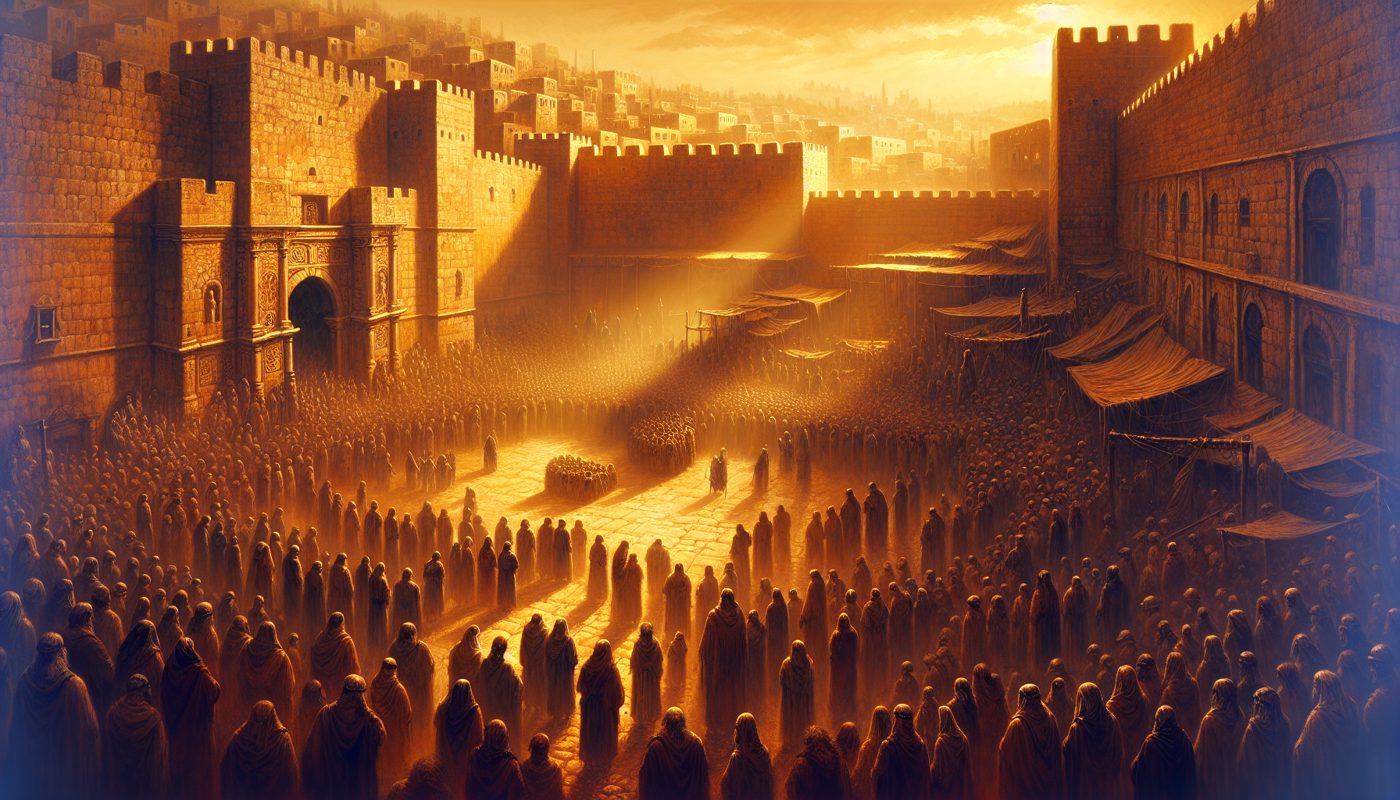
The assembly gathered as one man in the broad place before the Water Gate. They did not come because a ruler had commanded it. They came because they wanted the book of the law of Moses, and they asked Ezra the scribe to bring it. It was the first day of the seventh month, and the men and women and all who could hear with understanding stood in the open air from early morning until midday while Ezra read.
Ezra stood on a wooden pulpit that had been made for this purpose. On his right hand stood Mattithiah, Shema, Anaiah, Uriah, Hilkiah, and Maaseiah. On his left stood Pedaiah, Mishael, Malchijah, Hashum, Hashbaddanah, Zechariah, and Meshullam. When Ezra opened the book, all the people stood up. He blessed the Lord, the great God, and all the people answered with lifted hands, saying, Amen, Amen. Then they bowed their heads and worshipped the Lord with their faces to the ground.
The Levites—Jeshua, Bani, Sherebiah, Jamin, Akkub, Shabbethai, Hodiah, Maaseiah, Kelita, Azariah, Jozabad, Hanan, and Pelaiah—caused the people to understand the law while the people stood in their places. They read from the book of the law of God distinctly, giving the sense so that the people understood the reading. The words were not merely spoken; they were translated into comprehension.
But the comprehension cut. All the people wept when they heard the words of the law. They saw the gap between what the Lord had commanded and what they had done, and the weight of it pressed them to the ground. Nehemiah the governor, Ezra the priest and scribe, and the Levites who taught the people said to them, This day is holy to the Lord your God; do not mourn or weep.
Then Nehemiah said, Go your way, eat the fat and drink the sweet, and send portions to those who have nothing prepared. Do not be grieved, for the joy of the Lord is your strength. The Levites stilled the people, saying, Hold your peace, for the day is holy; do not be grieved. So the people went away to eat and drink and send portions and to make great mirth, because they had understood the words that were declared to them.
The weeping did not disappear; it was transformed into joy. The people did not celebrate because they had ignored the law. They celebrated because they had understood it, and the understanding brought both grief and gladness. The joy of the Lord became their strength, not the strength of denial or distraction, but the strength that comes from standing exposed before the word and being told to feast.
On the second day, the heads of the fathers' houses of all the people, the priests, and the Levites gathered to Ezra the scribe to give attention to the words of the law. They found written in the law that the Lord had commanded through Moses that the children of Israel should dwell in booths during the feast of the seventh month. They were to proclaim in all their cities and in Jerusalem that the people should go to the mount and fetch olive branches, wild olive branches, myrtle branches, palm branches, and branches of thick trees to make booths, as it was written.
The people went out and brought branches and made booths—everyone on the roof of his house, in their courts, in the courts of the house of God, in the broad place of the Water Gate, and in the broad place of the Gate of Ephraim. The entire assembly of those who had returned from captivity made booths and dwelt in them. Since the days of Jeshua the son of Nun until that day, the children of Israel had not done so, and there was very great gladness.
Day by day, from the first day to the last, Ezra read from the book of the law of God. They kept the feast for seven days, and on the eighth day they held a solemn assembly, according to the ordinance. The reading did not stop when the feast began. The law remained open, and the people remained listening. The joy and the reading belonged together—the joy came because they understood, and the understanding deepened because they kept listening.
Comments
Comments 0
Read the discussion and add your voice.
Members only
Sign in to join the conversation
We keep comments tied to real accounts so the discussion stays clean and trustworthy.
No comments yet. Be the first to add one.