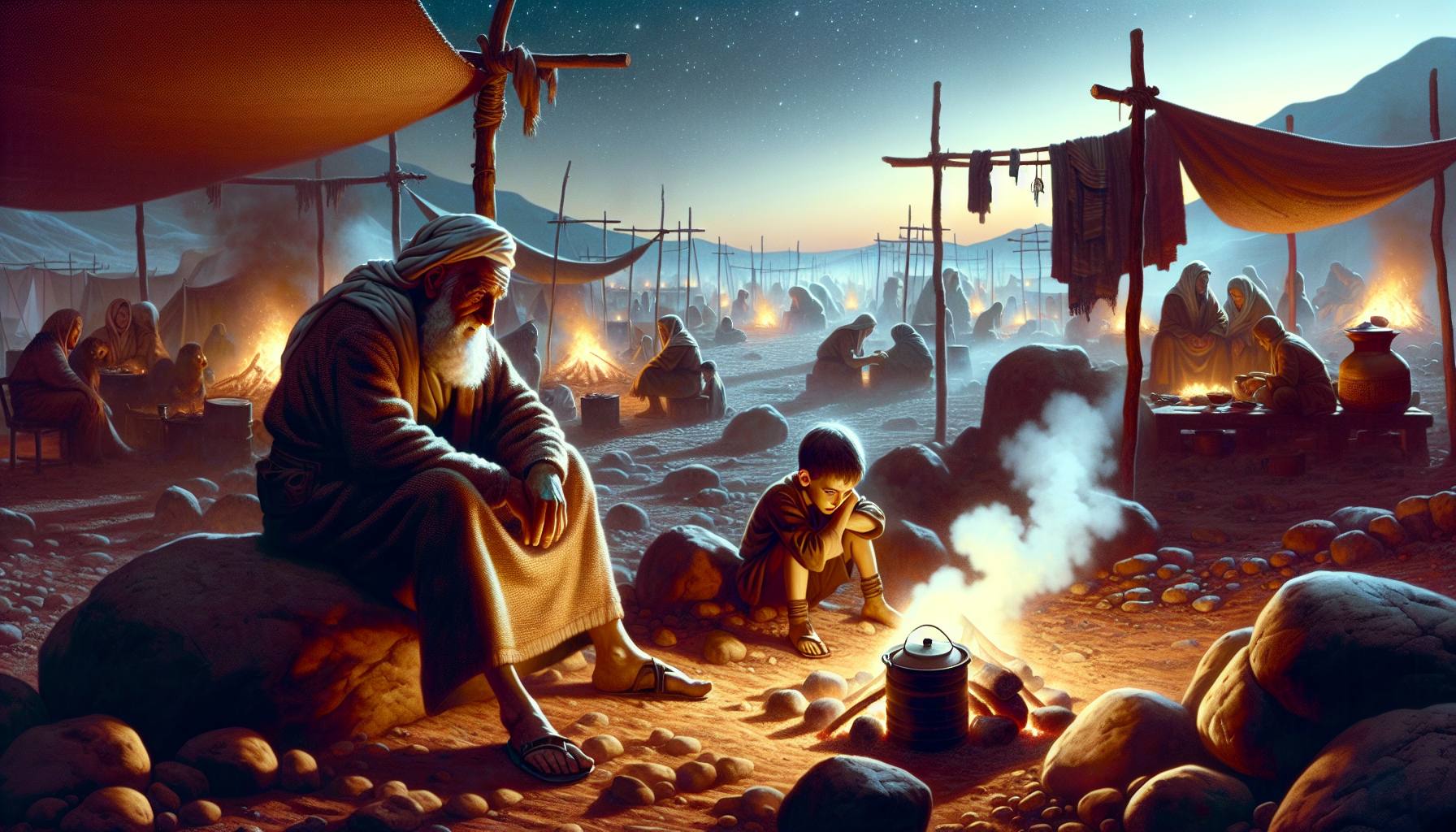
The chapter opens with a prohibition that has nothing to do with food. Before Moses lists anything edible, he forbids self-laceration and shaving the forehead for the dead. The reason is blunt: Israel is a holy people, chosen as the Lord’s own possession above all peoples on the earth. Grief practices common among neighboring nations are not permitted here. The camp’s identity is set before its menu is written.
Then the dietary laws begin. The general rule is stated first: no abominable thing may be eaten. That word, abominable, carries weight. It is the same term used elsewhere for idolatrous practices. What Israel eats is tied to whom Israel serves.
The permitted land animals are listed with a clear test. Any beast that parts the hoof, splits it completely, and chews the cud may be eaten. The ox, the sheep, the goat, and several wild game animals pass this test. The camel, the hare, and the coney are excluded because they chew the cud but do not have a divided hoof. The swine parts the hoof but does not chew the cud and is therefore unclean. The prohibition extends beyond eating: even touching the carcass of a pig is forbidden.
Water creatures have a simpler test. Anything with fins and scales may be eaten. Anything without fins and scales is unclean. No list of forbidden fish is given. The rule is broad and categorical.
Birds are handled differently. Clean birds may be eaten, but then a long list of forbidden birds follows: the eagle, the gier-eagle, the ospray, the glede, the falcon, the kite, every raven, the ostrich, the night-hawk, the sea-mew, the hawk, the little owl, the great owl, the horned owl, the pelican, the vulture, the cormorant, the stork, the heron, the hoopoe, and the bat. The list is dominated by birds of prey, scavengers, and water birds. No general test is given for birds as it is for land animals and fish. The list itself is the law.
Winged creeping things are all unclean. Clean birds are mentioned again, as if to bracket the prohibition. The effect is emphatic: Israel must know what flies and what does not.
Two final food laws follow. Anything that dies of itself may not be eaten, but it may be given to the sojourner living within the gates or sold to a foreigner. The reason is the same one that opened the chapter: Israel is a holy people to the Lord. The second law is brief and strange: a kid may not be boiled in its mother’s milk. No explanation is given. The command stands on its own.
The chapter shifts from eating to giving. The tithe of all seed, the increase of the field year by year, must be brought to the place the Lord chooses to cause his name to dwell there. The tithe includes grain, new wine, oil, and the firstborn of herd and flock. The purpose is stated plainly: that you may learn to fear the Lord your God always. The tithe is not a tax. It is instruction.
If the journey to the sanctuary is too long and the tithe too heavy to carry, the worshiper may convert it into money, bind the money in his hand, and travel to the chosen place. There the money may be spent on whatever the soul desires—oxen, sheep, wine, strong drink—and eaten before the Lord with rejoicing, the household included. The Levite must not be forsaken, for he has no inheritance of land.
Every third year the tithe is stored within the gates instead of taken to the sanctuary. The Levite, the sojourner, the fatherless, and the widow are to come and eat and be satisfied. The chapter ends with a promise: the Lord will bless all the work of your hand if you do this. The law that began with cutting for the dead ends with food for the vulnerable.