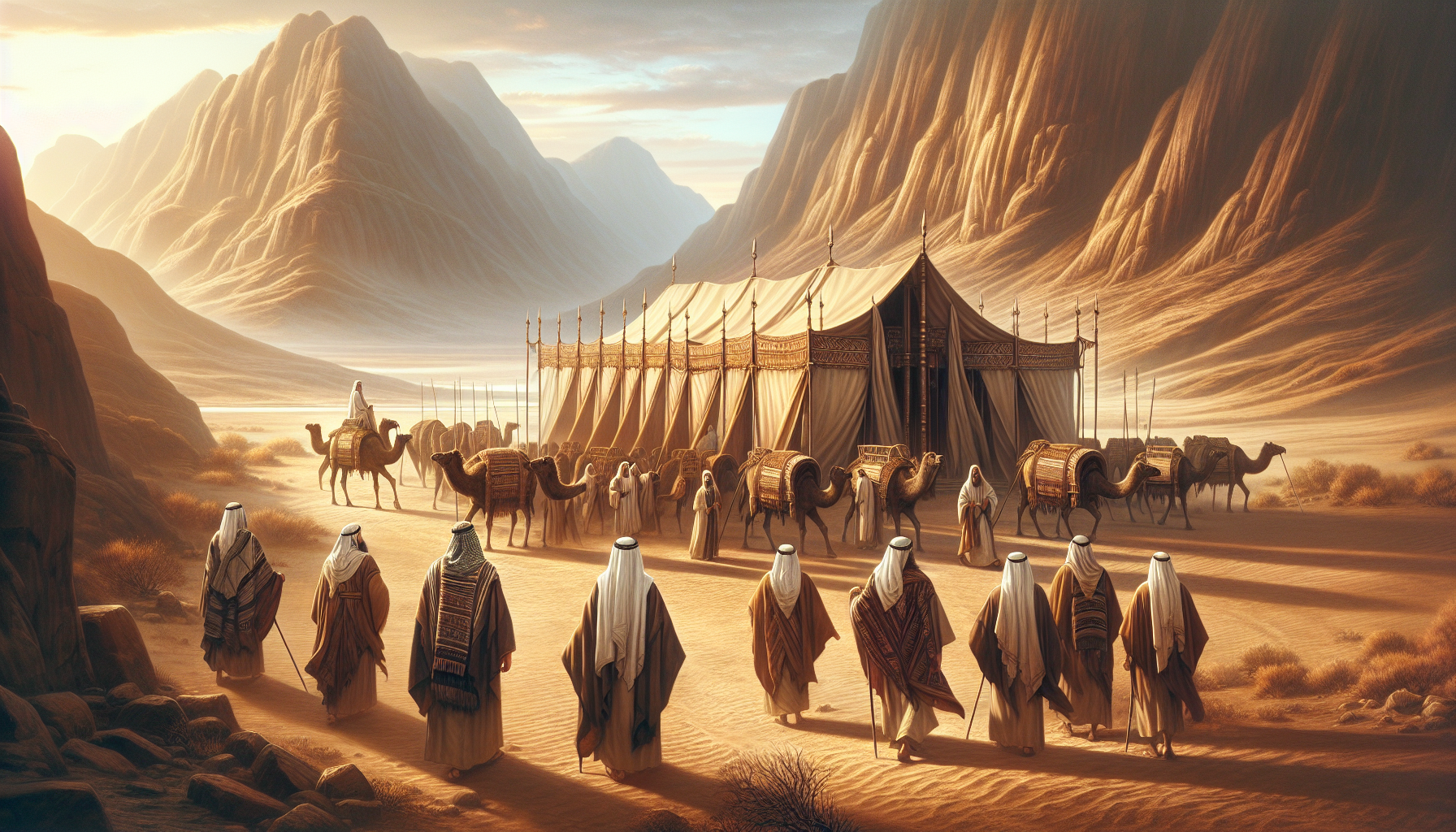
The Tabernacle stood finished, anointed, and sanctified. Moses had completed the work, and the altar and all its vessels had been consecrated with oil. Then the princes of Israel—the heads of the tribes, the men who had been numbered in the census—approached with an offering.
They brought six covered wagons and twelve oxen, one wagon for every two princes and one ox for each. They presented these before the Tabernacle, and the Lord spoke to Moses: “Take it from them, that they may be used in the service of the tent of meeting. Give them to the Levites, to every man according to his service.”
Moses took the wagons and the oxen and distributed them. To the sons of Gershon he gave two wagons and four oxen, according to their service. To the sons of Merari he gave four wagons and eight oxen, according to their service, under the direction of Ithamar the son of Aaron the priest. But to the sons of Kohath he gave none, because the service of the sanctuary belonged to them—they carried the holy objects upon their shoulders.
Then the princes offered for the dedication of the altar on the day it was anointed. They brought their oblation before the altar, and the Lord said to Moses: “They shall offer their oblation, each prince on his day, for the dedication of the altar.”
On the first day, Nahshon the son of Amminadab, prince of Judah, brought his offering: one silver platter weighing 130 shekels, one silver bowl of 70 shekels (both full of fine flour mixed with oil for a grain offering), one golden spoon of 10 shekels full of incense, one young bull, one ram, one male lamb a year old for a burnt offering, one male goat for a sin offering, and for the sacrifice of peace offerings: two oxen, five rams, five male goats, and five male lambs a year old.
On the second day, Nethanel the son of Zuar, prince of Issachar, offered the same. On the third day, Eliab the son of Helon, prince of Zebulun. On the fourth day, Elizur the son of Shedeur, prince of Reuben. On the fifth day, Shelumiel the son of Zurishaddai, prince of Simeon. On the sixth day, Eliasaph the son of Deuel, prince of Gad. On the seventh day, Elishama the son of Ammihud, prince of Ephraim. On the eighth day, Gamaliel the son of Pedahzur, prince of Manasseh. On the ninth day, Abidan the son of Gideoni, prince of Benjamin. On the tenth day, Ahiezer the son of Ammishaddai, prince of Dan. On the eleventh day, Pagiel the son of Ochran, prince of Asher. On the twelfth day, Ahira the son of Enan, prince of Naphtali.
Each prince brought the same offering: the same silver vessels, the same gold spoon, the same animals for burnt offering, sin offering, and peace offerings. The repetition is deliberate, a record of exactness. No tribe gave more than another; no prince was diminished.
The total for the dedication of the altar: twelve silver platters, twelve silver bowls, twelve golden spoons. The silver weighed 2,400 shekels by the sanctuary shekel; the gold of the spoons weighed 120 shekels. The animals for burnt offerings: twelve bulls, twelve rams, twelve male lambs a year old, with their grain offerings. For sin offerings: twelve male goats. For peace offerings: twenty-four bulls, sixty rams, sixty male goats, and sixty male lambs a year old.
When Moses went into the tent of meeting to speak with the Lord, he heard the Voice speaking to him from above the mercy seat that was upon the ark of the testimony, from between the two cherubim. And the Lord spoke to him.