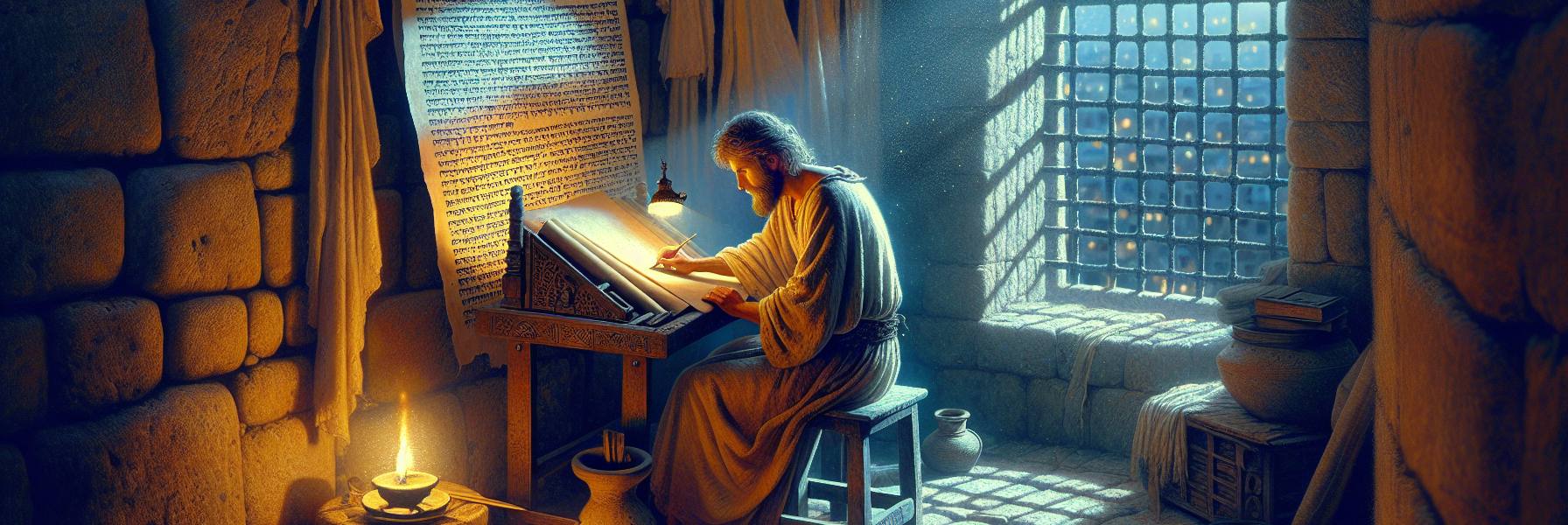

The air in Jerusalem held a particular kind of cold after the sun went down, a dry, whispering chill that slipped through the seams of doorways and bit at the knuckles. Ezra the scribe felt it as he smoothed the last edge of a new parchment on his worktable. The oil lamp guttered, casting long, dancing shadows that made the Hebrew characters he’d just inscribed seem to shift and breathe. His task for the evening was done—a copy of the Law for a synagogue in Alexandria—but his mind was not quiet. It was filled with the rubble he’d walked past that afternoon, the persistent, humbling evidence of broken walls still being rebuilt, of a people still gathering their splintered identity.
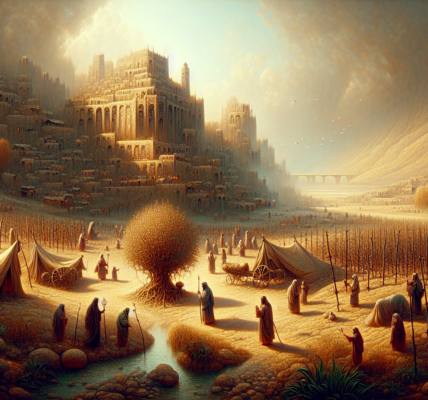
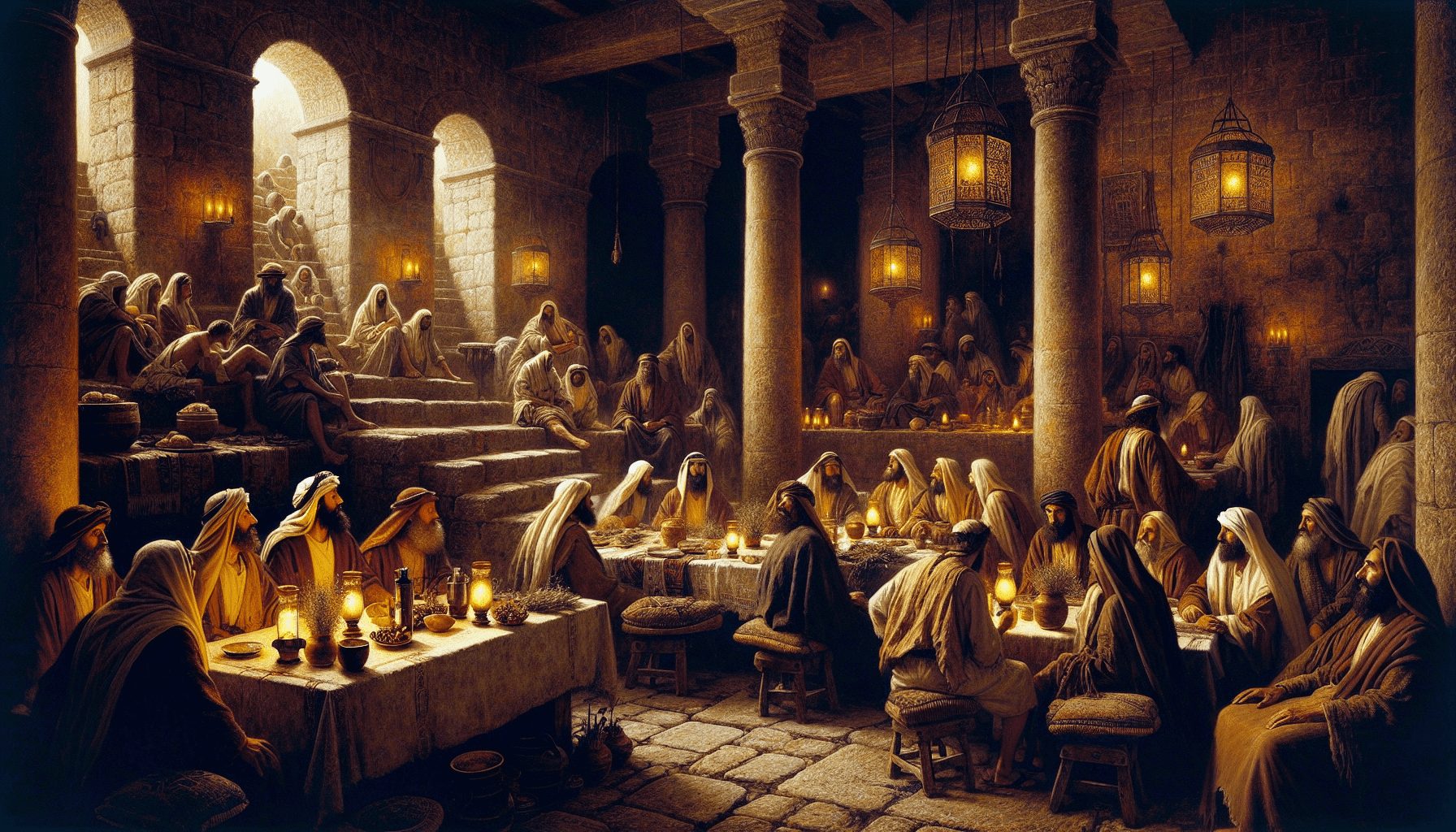
He stood, his bones protesting, and moved to the small window, pushing the shutter open wider. The night sky was a vast, black canvas, utterly clear, sown with an impossible number of stars. It was a sight that never failed to reduce him to silence. From the lower city, a faint, joyful shout echoed—a wedding party, perhaps, or simply men grateful for a full harvest. The sound of laughter in a city once known only for weeping was itself a kind of miracle.
His lips began to move, almost without his conscious thought, shaping old words that felt suddenly, urgently new. *Praise the Lord. How good it is to sing praises to our God, how pleasant and fitting.*
It *was* fitting. Not because the world was perfect, but because the Lord had not abandoned them to the dust. He thought of the returned exiles, not a mighty nation but a ragged assembly—the brokenhearted, gathered one by one from Babylon’s grandeur and Egypt’s plenty. The Lord had bandaged their wounds. He’d counted the stars and knew each by name, yet He had also counted each weary head returning to Zion. The vastness of His power did not diminish the minutiae of His care. It magnified it.
A gust of wind rushed through the window, colder now, and Ezra pulled his robe tighter. This same wind, he mused, that brought the cold. It was the breath of God’s command. He sends His orders to the earth; His word flashes forth with breathtaking speed. He spreads the snow like wool, a clean, white fleece over the dark hills of Judea. He scatters the frost like ashes from a celestial hearth. Then, with a different word, He hurls down hail like pebbles, like shards of shattered rock. Who can stand before such a winter? And then… the other word comes. The south wind breathes, the ice melts, the waters flow. The rhythms of freeze and thaw, death and life, were all syllables in a divine sentence too long for any human to fully parse.
His gaze dropped from the star-fields to the darker outlines of the city walls, still patchworked with new stone. The Lord did not delight in the raw strength of a warhorse, in the tensile power of a legionnaire’s leg. That was Pharaoh’s error, Assyria’s boast. The Lord’s delight was in those who held Him in awe, in those whose hope was not in chariots but in the steadfast love of the Maker of heaven and earth. It was a counter-intuitive truth, one that made the world’s empires seem like children brandishing sticks.
The joyful noise from the lower city had settled into a contented murmur. Peace was settling on the borders, for now. The Lord strengthened the bars of their gates—not just the iron and oak, but the unity of their hearts. He blessed their children within them. And He provided. Ezra thought of the afternoon market, the stalls heavy with late figs, pomegranates split and gleaming like jewels, barley and wheat in coarse, abundant sacks. It was He who covered the sky with clouds, who prepared the rain for the earth, who made grass grow on the hills. He gave the beasts their food, and the young ravens when they cried. Their cries were not beneath His notice.
A final thought settled on him, bringing a quiet smile. The Lord did not take pleasure in a man’s physical might. A warhorse was useless for understanding. No, His instruction, His *torah*, was given to Jacob, His laws and decrees to Israel. He had not done this for any other nation. This was the true sign of His favor: not merely bread for the belly, but wisdom for the soul. The very words Ezra copied by lamplight were the ultimate gift, a direct line to the mind of the Star-Counter, the Healer of the brokenhearted.
He closed the shutter, the room suddenly closer, warmer, holy in its quiet. The parchment on his table was no longer just a commission. It was a testament. It spoke of a God whose majesty was written in the constellations and whose mercy was etched in the mending heart of a city. He dipped his pen one last time, not to copy, but to add a line for himself in the margin, a tiny, personal echo of the psalm that now filled the room: *How good. How very good.*
He snuffed the lamp. In the dark, the words seemed to glow.