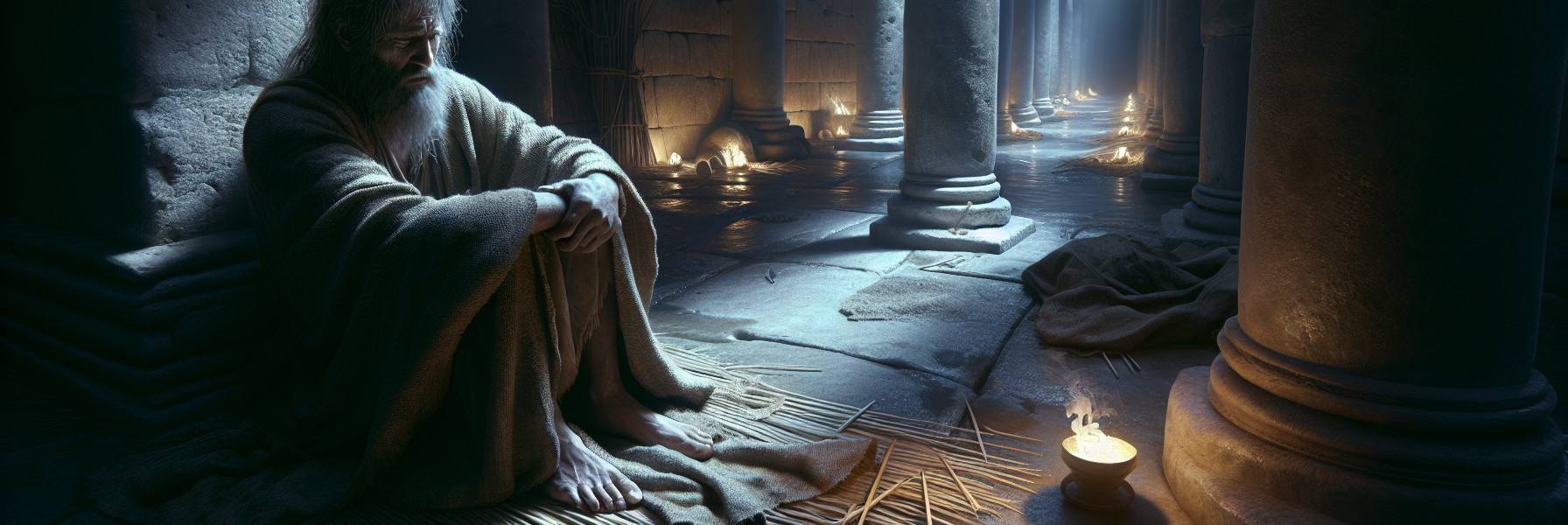

The damp of the stone floor seeped through the thin reed mat, a creeping chill that had nothing to do with the Jerusalem night. David pulled his robe tighter, but the cold was inside. It was in the hollow of his chest, a space where the warmth of kingship, the fire of victory, used to reside. Now it was just an echoing vault, every breath a reminder of the emptiness.
He had not slept. The faint scent of incense from the evening offering still clung to the air of the chamber, a sweet smell that now felt accusatory. It spoke of a purity he could no longer claim. He stared at the low-burning lamp, its flame guttering in a draft he could not feel. His eyes were gritty, raw. Every time he closed them, he saw not darkness, but the pale, terrified face of Uriah the Hittite, a good man, a loyal man, standing before him in this very room months ago, his report crisp and dutiful. And behind Uriah’s honest eyes, David saw her. Bathsheba. The memory was not a picture, but a sensation: the cool evening air on the palace roof, the distant sound of the city, the shocking, shameful leap of his own heart as he watched a woman at her bath, and the wilful, kingly decision to not look away.
It had begun there. That small, private turning. It had festered into a monstrous chain of events—the summons, the adultery, the pregnancy, the panicked cover-up, and finally, the engineered death of a blameless soldier on the front lines. He had written the order himself. He had sealed it with the king’s seal. He had sent a man to his grave with a letter in his hand.
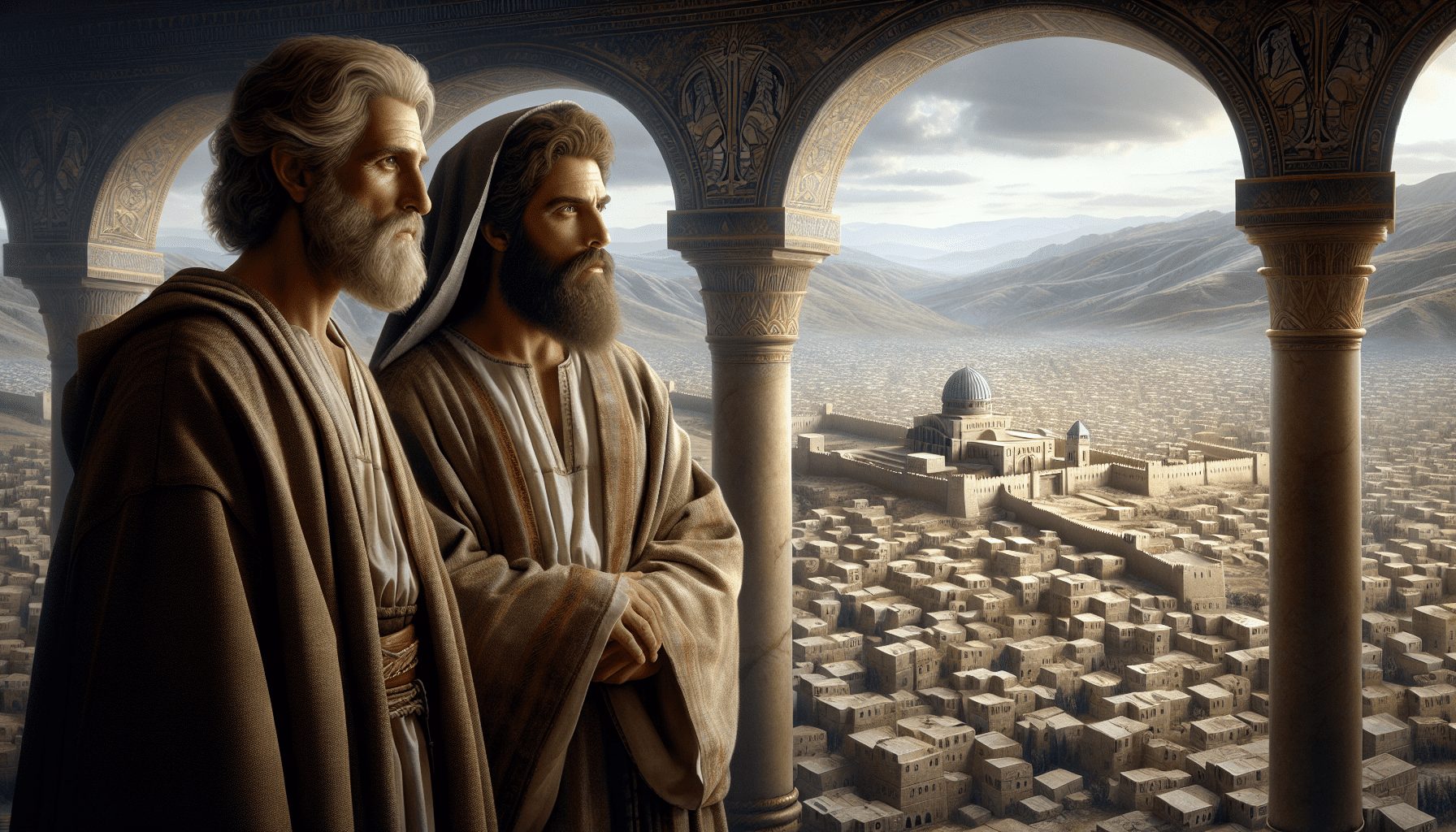
A year. A full turn of seasons had passed. The child born of that sin was gone, taken after seven days of his own desperate, fasting prayers. The court murmured that the king had mourned the child with a shocking intensity, then risen, washed, and eaten as if a weight was gone. They did not understand. The child’s death was not the weight. It was the dreadful, silent condemnation of a God who would not be mocked. The weight was the living. The weight was the knowledge that prowled his halls by day and gnawed at his bones by night. The weight was Nathan’s voice, steady and terrible in the throne room: *You are the man.*
The prophet’s parable had been a mirror held up to his soul, and in it he had seen not a king, but a thief. A murderer. A man whose heart had become a crooked, polluted thing.
A groan, low and animal, escaped him. He pushed himself up from the mat, his joints stiff. He moved to the small window, leaning his forehead against the cool limestone. The city of David lay sleeping under a blanket of stars, the same stars that had witnessed his covenant with the Lord. They seemed cold and distant now.
The words began not as a prayer, but as a confession to the stones, to the night air.
“Have mercy on me, O God.” The voice that came out was a broken thing, stripped of all royal pretense. “According to Your *hesed*… Your loving-kindness. According to the abundance of Your compassion.” He wasn’t bargaining. He wasn’t claiming the kingship. He was throwing himself upon the only quality of God he dared approach: His stubborn, covenant love, a love he had spurned.
“Blot out my transgressions.” He saw the royal scroll, the damning order to Joab. *Blot it out. Smudge the ink until it is illegible, until the record is clean.*
The plea grew more visceral. “Wash me thoroughly from my iniquity. Cleanse me from my sin.” He thought of the ritual washings, the priests scrubbing at blood and dirt. His sin wasn’t on his hands; they were clean. It was woven into the fabric of his being. It needed a deeper laundering, a divine scouring. “For I know my transgressions,” he whispered, the admission finally free. “And my sin is ever before me.”
That was the truth of it. It was the first thing he saw in the morning and the last ghost in the dark. It colored every judgment from the throne. It stood between him and the songs he used to write for the Lord. The music had died in him.
“Against You, You only, have I sinned.” It was a staggering, clarifying thought. He had wronged Bathsheba, destroyed Uriah, betrayed his army, deceived his nation. But at its root, the rebellion was vertical. It was the creature shaking its fist at the Creator, the anointed king trampling the law of the One who anointed him. He had done what was evil in *His* sight. That was the core of the torment.
He sank to his knees, the rough stone biting through the linen of his robe. “Behold, You desire truth in the inward parts.” God didn’t want just right actions. He wanted the hidden places, the secret chambers of thought and motive. And in those chambers, David saw only ruin. “And in the hidden part You will make me know wisdom.” The wisdom he needed now was not statecraft. It was the wisdom of a contrite heart.
“Purge me with hyssop, and I shall be clean.” He pictured the priest, dipping the bundle of hyssop in the blood of the sacrifice, sprinkling it on the leper, the unclean. He was that leper. He needed that sacrificial, costly cleansing. “Wash me, and I shall be whiter than snow.” A memory flickered: the rare snowfall on the hills of Bethlehem, a blinding, pure white covering the dun-colored earth and the dirty flocks. A miracle of covering. He needed a miracle.
But then the prayer turned. It was no longer just about removal; it was about restoration. “Make me hear joy and gladness,” he pleaded, “that the bones You have broken may rejoice.” The metaphor was perfect. His soul felt fractured, like a limb shattered. The healing would have to come from the same hand that broke him.
“Hide Your face from my sins.” *Don’t look at them anymore.* “And blot out all my iniquities.” A final, complete erasure.
Then, the deepest cry: “Create in me a clean heart, O God.” He did not ask for a repaired heart, or a cleaned-up one. He used the word *bara*—the word used for the creation of the heavens and the earth. He needed a creative act of God, ex nihilo, from the chaos of his own making. A new heart. A steadfast spirit. The old one was like a ship with a broken rudder, tossed by every desire, every fear. He needed a spirit resolved, anchored, fixed upon God again.
“Do not cast me away from Your presence.” The ultimate terror. To be the king who lost the Presence that made Israel distinct, that made *him* anything more than a clever warlord. “And do not take Your Holy Spirit from me.” The Spirit that had rushed upon him at Samuel’s anointing, that had guided his sling against Goliath, that had given him songs. Let it not depart as it had departed from Saul.
Now the prayer looked outward. “Restore to me the joy of Your salvation.” Not the joy of victory, or of a child, or of a woman’s love. The joy of simply being *saved*, of being in right relation. “And uphold me with a willing spirit.” A spirit that *wanted* to obey.
“Then,” he said, the words gaining a fragile strength, “I will teach transgressors Your ways.” His failure would become his curriculum. His brokenness, his credential. “And sinners shall be converted to You.”
He thought of the blood on his hands, Uriah’s blood. “Deliver me from bloodguiltiness, O God, God of my salvation.” The title stuck in his throat. Could he still call Him that? “And my tongue shall sing aloud of Your righteousness.” The music might return. Not the music of triumph, but the deeper, sadder, sweeter music of redemption.
“O Lord, open my lips.” They felt sealed shut by shame. “And my mouth shall show forth Your praise.” For the God who could forgive *this* was a God worthy of a praise he could not yet muster.
The final verses were not a negotiation, but a surrendered understanding. “You do not desire sacrifice, or else I would give it.” He could offer a thousand rams. “You do not delight in burnt offering.” The rituals were meaningless without this. “The sacrifices of God are a broken spirit.” This, here, now—this kneeling in the dark with a shattered soul. “A broken and a contrite heart—These, O God, You will not despise.”
He fell silent. The lamp flame steadied. The deep, internal cold had not vanished, but it was no longer alone. A faint, tentative warmth, like the first fragile light before dawn, touched the edges of that hollow space. It was not forgiveness yet—that would come with the morning, with Nathan’s solemn words: *The Lord also has put away your sin.* But it was the possibility of it. The door, shut and barred for so long, had a thin line of light beneath it.
David stayed on his knees as the stars began to pale. The city would stir soon. The king would have to rise, to rule, to judge, to bear the consequences of his actions for the rest of his days. But for this one suspended moment in the grey twilight, he was just a man—broken, contrite, and waiting for the sound of mercy.