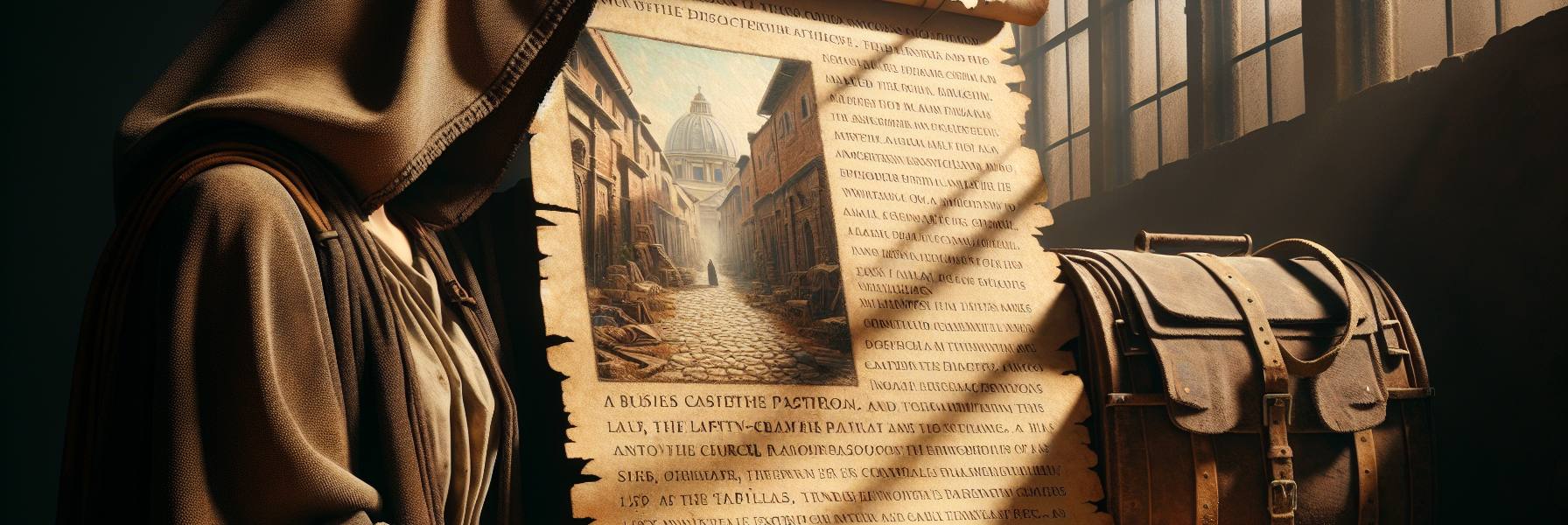

The dust of the Appian Way was a fine, persistent thing. It coated the hem of Phoebe’s travelling cloak and settled in the lines of her knuckles, clenched around the satchel’s strap. Inside, wrapped in linen, was the weight of the letter. Paul’s words, in Tertius’s neat hand, felt more burdensome with every milepost she passed. She wasn’t just delivering parchment; she was carrying a vein of doctrine, a final arterial plea from the apostle to the heart of the empire, and a web of names that felt like a whispered map of the church itself.
Her first stop was the warehouse district by the Tiber, where the smell of cured leather and damp stone fought for dominance. She found Prisca and Aquila in a back room of their workshop, shafts of midday light cutting through the gloom to catch motes of dust and the silver in Prisca’s braid. They were bending over a length of tent-cloth, their shoulders touching in a way that spoke of years of shared labour, both with their hands and for the Gospel.
“Sister,” Aquila said, his voice gravelly, his eyes sharpening as he recognised her. They embraced, the smell of hay and wool and sweat a familiar comfort. Prisca took her hands, calloused fingers squeezing. “He writes?” she asked, and Phoebe merely nodded, too weary for words. In the quiet of their living space above the shop, she unsealed the letter. As Prisca read portions aloud, her voice firm and clear, the names began to breathe.
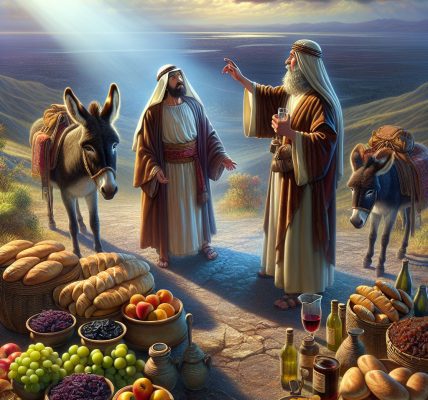
“Epaenetus,” Aquila said with a soft chuckle, pouring watered wine. “My dear firstfruit. A bundle of nerves in Corinth, all knees and elbows. Now, they say he serves the meal for the assembly in the Subura.”
Prisca’s finger traced the line. “Mary,” she murmured. “She worked *very hard* for you all. A quiet woman, but her hands were never still. Mending robes, preparing the feast, taking in the children when others were at market.” It wasn’t just a list; it was a tapestry of hidden toil.
Phoebe carried the letter with her as she navigated the city’s throbbing veins. She found Andronicus and Junia in a sun-drenched courtyard near the Aventine Hill. They were older, their faces a landscape of lines earned from Eastern roads and Roman prisons. Junia’s eyes held a fierce, knowing light. “Noteworthy among the apostles,” Paul had written. She didn’t say it, but the dignity of the phrase hung in the air between them, a quiet correction to any who might forget. They spoke of being “in Christ” before Paul himself was, their stories a living bridge back to Jerusalem, to the bewildering, terrifying days after the ascension.
In a modest insula near the grain docks, she met Urbanus and Stachys, “my beloved.” Stachys was a burly dockworker, his grip swallowing Phoebe’s whole hand. His speech was slow, deliberate. “Paul… he saw not the cargo I lift,” he said, his voice a low rumble. “He saw the weight I carried for the brothers. He called it fellowship.” It was a theology of calloused palms.
Apelles, “approved in Christ,” was a scribe with ink-stained fingers, who verified contracts in the Forum. He spoke of the constant, subtle pressure to shade a word, to omit a truth for a client’s benefit. “The approval he speaks of,” Apelles said, his gaze steady, “is not from the magistrate. It is the daily test of a heart in the marketplace.”
She was warned about those who “cause divisions and put obstacles.” It was Rufus’s mother, a woman with a spine like iron and eyes that missed nothing, who pulled Phoebe aside. She spoke not in abstract terms but of a certain Tertius—no, not the scribe, another—who had begun questioning the shared meal, insisting the Jewish believers recline separately. “It starts with a seat at the table,” the woman said, her voice hard. “It always does. It is a sickness against which Paul inoculates with these very greetings. He reminds us we are a body. You cannot create a division and kiss the peace.”
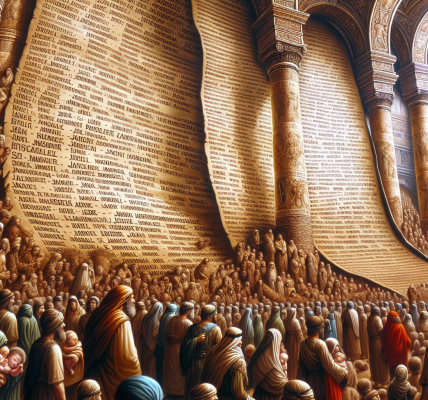
The final gatherings were in homes, at night. The risk was a quiet hum in the background, like the distant sound of the Vigiles’ footsteps. They broke bread in a lamplit triclinium belonging to Aristobulus’s household, shadows dancing on the walls. The letter was read in full then, Paul’s arguments soaring and logic coiling, finally descending into this cascade of names. As each was read—Herodion, Narcissus’s household, Tryphaena and Tryphosa, Persis the worker—heads nodded, smiles flickered. They were seen. They were known. Not by the empire, not by the census, but by an apostle in Corinth and by each other.
Phoebe stood to speak finally, her voice tired but clear. She carried Paul’s commendation, but she found her own words. “He calls you brothers and sisters,” she said, looking at faces lit gold by the oil lamps. “He calls you fellow prisoners, workers, beloved. He names you. In a city that numbers you, that reduces you to a tax liability or a potential disturbance, he names you into existence as Christ’s own.” She paused, the silence filled only by the sputter of a wick. “And in naming you, he binds you. To him. To each other. To the truth you have received. This is not a scroll of philosophy. It is a family roll.”
Later, as the group dispersed with soft murmurs and embraces, Phoebe stood by the door. The satchel was empty now. The weight was transferred. It resided in the clasp of hands, in the remembered cadence of a name spoken in love, in the shared resolve to watch for those who would unravel this delicate, precious fabric. The Roman night was cool, the stars obscured by the city’s haze and smoke. But in those rooms, in those named and knit-together lives, a different kind of light was being tended, one person, one beloved greeting, at a time.