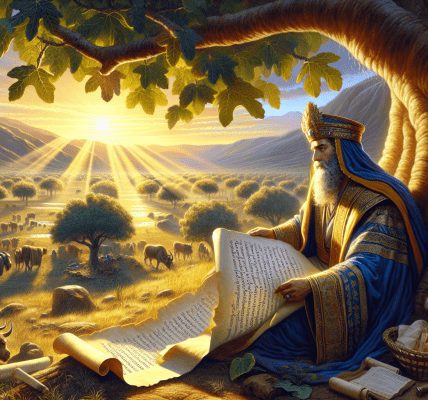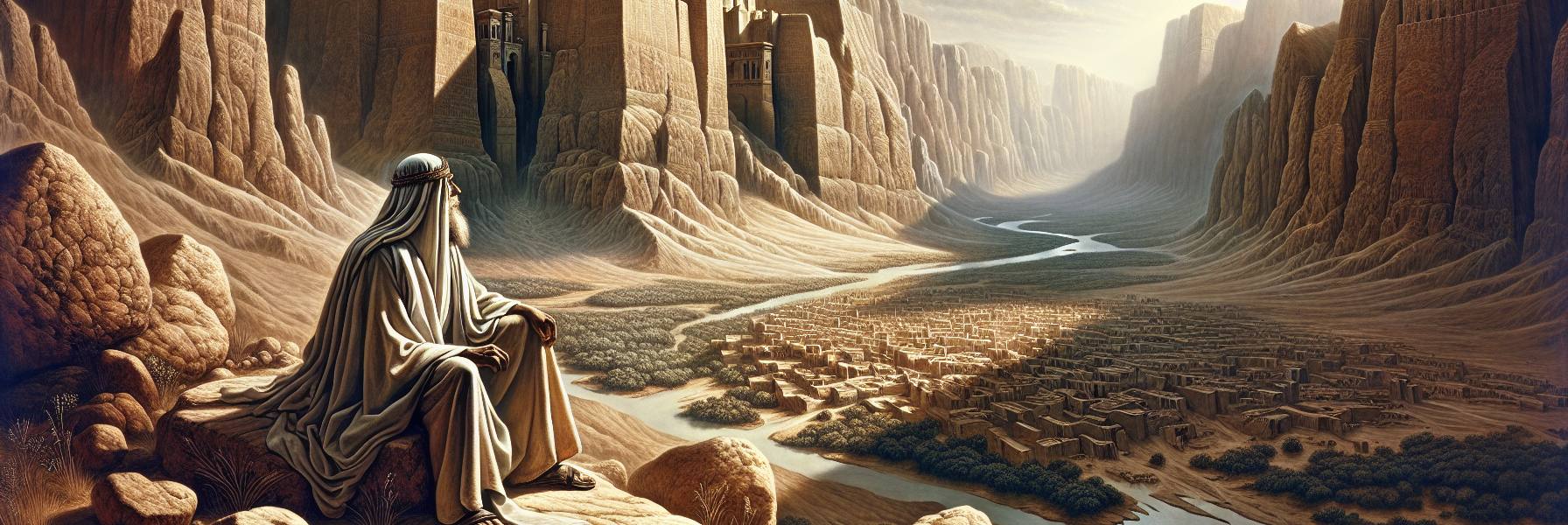

The air in Judah was dry that season, a parched stillness that seemed to press upon the hills. Nahum felt it in his bones before he saw it in his spirit. He had withdrawn to the shade of a rock face, the rough limestone warm against his back, but no peace came with the solitude. Only a gathering tension, a soundless hum on the edge of hearing.
Then it began, not as a clear voice, but as a pressure behind the eyes, a vision unfolding with the terrible clarity of a remembered nightmare.
He saw a city. Not Jerusalem. This city sprawled like a beast on a plain, its walls immense, arrogant against the horizon. Nineveh. The scent of the Tigris, thick with silt and decay, filled his nostrils though he stood miles away. He saw the muster.
A shout, raw and guttural, tore through the vision. Not a shout of triumph, but of frantic command. On the plains outside those boastful walls, metal caught the sun—not in orderly rows, but in a frantic, seething glitter. “The scatterer has come up before your face,” the understanding settled upon him. This was no ordinary siege. It was a reckoning.
He watched the defenders. They were running along the battlements, their faces pale smears of dread. “Man the ramparts!” they cried, but their hands fumbled at the shields, the scarlet leather soaking up sweat and fear. The chariots within the city were being prepared, but with a horrible, jangling haste. The horses stamped, eyes rolling white, catching the panic of the men. The chariots themselves seemed to dance in the streets, their iron fittings shrieking against the cobbles, drivers lashing them toward the gates in a desperate, uncoordinated surge.
And then the sound changed. A low, rhythmic thunder, felt in the gut before it was heard by the ear. The LORD was restoring the majesty of Jacob, but like this? Through utter devastation? The thunder resolved into hooves. Countless hooves. Through the dust clouds on the horizon, shapes formed. Chariots. But these were different. They moved with a terrifying unison, their wheels like storm-driven fire, their drivers clad in steel that shone with a dull, deadly gleam. They advanced like a single, polished weapon.
“They stumble in their march,” Nahum murmured, seeing the Ninevite commanders tripping over their own orders, their plans unravelling before the first arrow was loosed. The attackers reached the river gates—the city’s famed water defenses—and without pause, they were forced. The great gates, meant to bar the river itself, splintered inward. The palace, that vast monument of carved stone and blood-money, simply… dissolved. It was not taken; it was unveiled in its nakedness, stripped of all pretense of permanence. Its treasured idols, its plundered gold, were carried out in open view, a mocking procession. The looters moved with the methodical efficiency of harvesters.
Nahum’s vision plunged into the streets. A sound rose, a composite wail of terror. It was the sound of a voice that had once sung lewd songs of conquest, now choked. It was the sound of hands that had clutched stolen goblets, now beating against bolted doors. It was the sound of the slave-master enslaved by his own doom. “Heart like water,” the prophet whispered, and he saw it literally—men’s knees giving way, faces draining of all strength, bowels loosening. Where was the lion’s den now? Where the feeding ground of the young lion? The Assyrian symbol, rendered a pitiful ghost. The sword would find them all. It would consume them, not like a battle, but like a fire consumes dry thorns.
And then, silence. A sudden, shocking silence in the vision. The chariots were still. The dust settled. The great city, the mistress of kingdoms, sat empty, void, and waste. The faces of her people were blackened from soot and despair. The great lions, carved on every gate and pillar, stared out with blank stone eyes upon a ruin they could no longer guard. All her wealth, all her cruelty, all her pomp, was gone, carried off by those she had once plundered. The message was absolute, a word from the LORD of Hosts Himself: “I am against you.”
Nahum opened his eyes. The rock face was cool now in the twilight. The dry air of Judah carried the scent of wild thyme, not river-silt. He sat for a long time, the visceral horror of the vision slowly ebbing, leaving behind the solemn, weighty residue of truth. He did not write it down that night. Some words needed to sit in the heart before they could be shaped by the hand. The ruin of Nineveh was not just a future event. It was already finished in the courts of heaven. He had simply been allowed, for a moment, to hear the echo of its collapse.