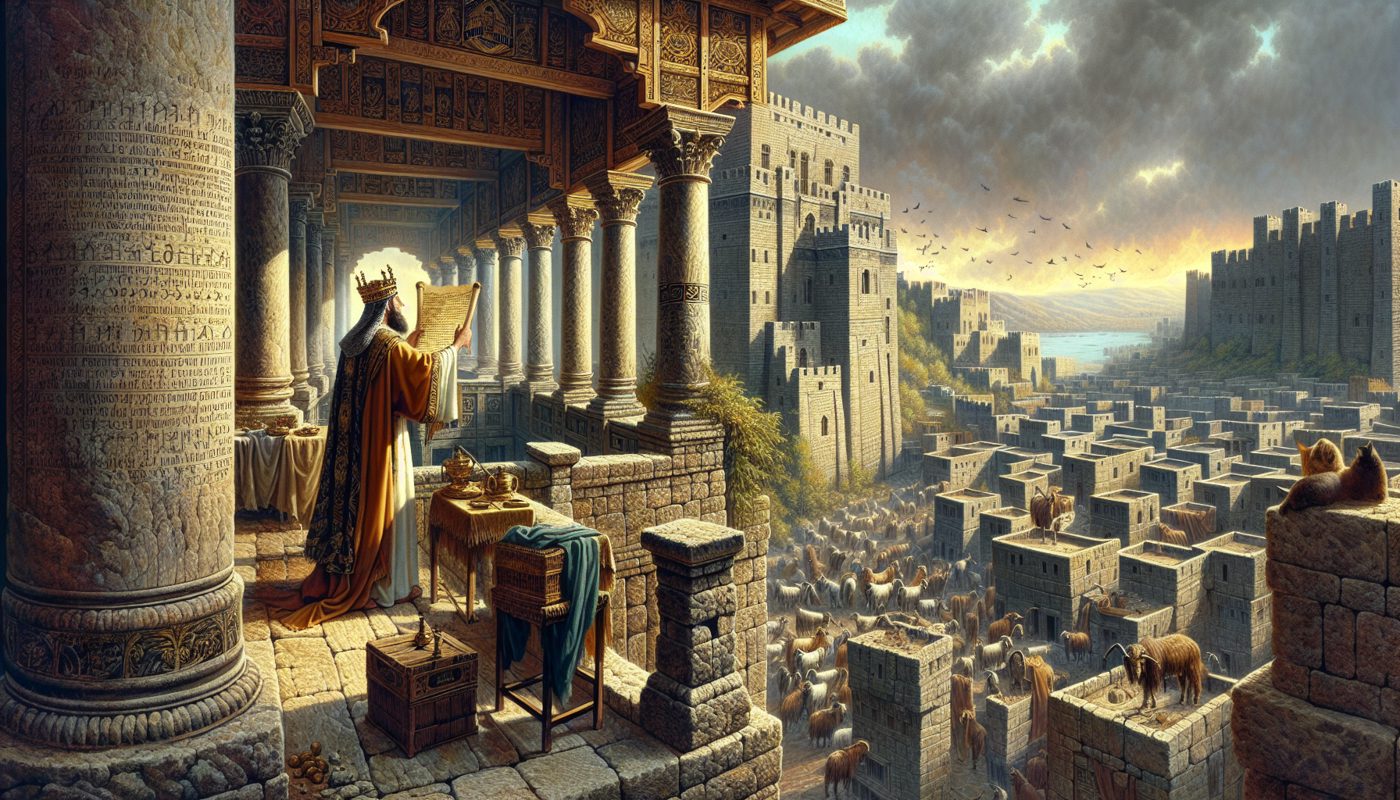
The psalm opens with a direct address: Give the king your judgments, O God, and your righteousness to the king's son. The speaker is not named here, but the superscription assigns the words to Solomon, and the closing line of the chapter marks the end of the prayers of David. The prayer is for a son who will bear the weight of the throne, and the first request is not for wealth or victory but for justice and righteousness from God himself.
The prayer immediately specifies what that justice looks like. He will judge your people with righteousness and your poor with justice. The mountains and hills are invoked to bring peace, but the action is concrete: he will judge the poor, save the children of the needy, and break the oppressor in pieces. The psalm does not abstract the king's role into vague benevolence; it names the oppressor and promises his destruction.
The scope of this reign is cosmic. They shall fear you while the sun endures, and so long as the moon, throughout all generations. The king's coming is compared to rain upon mown grass and showers that water the earth. The image is not military conquest but gentle, necessary provision. In his days the righteous shall flourish, and abundance of peace shall last until the moon is no more.
Then the psalm expands to territorial dominion. He shall have dominion from sea to sea, and from the River to the ends of the earth. The wilderness dwellers bow before him; his enemies lick the dust. The kings of Tarshish, the isles, Sheba, and Seba bring tribute and gifts. All kings fall down before him; all nations serve him. The language is imperial, but the psalm has already anchored this power in the defense of the poor.
The reason for this universal submission is stated plainly. For he will deliver the needy when he cries, and the poor who has no helper. He will have pity on the poor and needy, and save the souls of the needy. He will redeem their soul from oppression and violence, and precious will their blood be in his sight. The king's greatness is measured by his protection of the helpless, not by the size of his army.
The psalm returns to blessing. They shall live, and to him shall be given gold from Sheba. Men shall pray for him continually; they shall bless him all the day long. The prayer is reciprocal: the king blesses the poor, and the people bless the king. There is no mention of the king's personal piety or private devotion; the focus remains on what he does for the vulnerable.
Abundance of grain is promised on the top of the mountains, the fruit shaking like Lebanon, and the people of the city flourishing like grass of the earth. The prosperity is not detached from the king's justice; it flows from it. The land's fruitfulness is tied to the righteousness of the reign.
The psalm ends with a doxology. Blessed be the Lord God, the God of Israel, who alone does wondrous things. Blessed be his glorious name forever; let the whole earth be filled with his glory. Amen and Amen. Then the final line: the prayers of David the son of Jesse are ended. This psalm is the last of David's prayers, a legacy left for his son, a vision of kingship that begins with God's justice and ends with the glory of the Lord filling the earth.
Comments
Comments 0
Read the discussion and add your voice.
Members only
Sign in to join the conversation
We keep comments tied to real accounts so the discussion stays clean and trustworthy.
No comments yet. Be the first to add one.