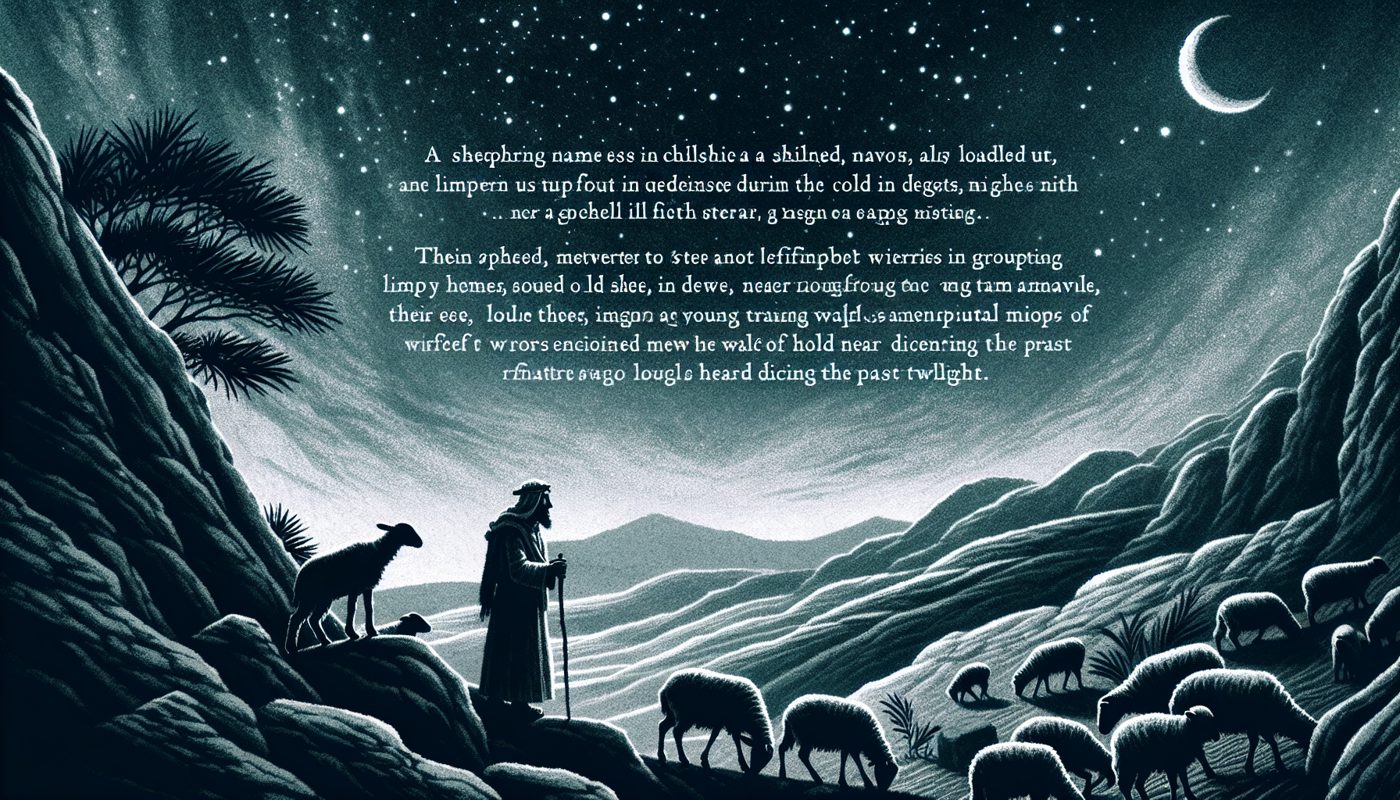
The psalm opens with the name of the Lord set above the heavens, and the poet does not climb toward that height gradually. He declares it directly: the name is excellent in all the earth, and the glory has already been placed upon the sky. There is no argument, no plea, only a statement that the visible order of the heavens is a garment for the divine name. The reader is not invited to wonder whether this is true; the psalm assumes the sky itself proves it.
Then the poet pivots to something smaller, almost jarring: strength established out of the mouth of babes and sucklings. Infants who cannot yet form sentences are the instruments that still the enemy and the avenger. The logic is not sentimental. The Lord does not need armies or arguments to silence opposition. He uses the weakest voice, the one that cannot even frame a complaint, and that voice becomes a fortress. The psalm offers no explanation for how this works. It simply reports that it does.
The poet looks up again, and this time the heavens are the work of fingers. Not the broad arm of a warrior, but the precise, delicate work of a craftsman. The moon and the stars are ordained, set in place by a specific act of arrangement. The poet is not overwhelmed by the size of the sky so much as by the care of its making. Every point of light is placed, not scattered.
And then the question comes, and it is the only question in the psalm: What is man, that you are mindful of him? The son of man, that you visit him? The question is not rhetorical in the sense of having an obvious answer. It is a genuine pause. The poet measures the distance between the ordained stars and the human being who watches them, and the distance is immense. The word 'visit' carries the weight of personal attention, not casual observation. The Lord does not merely notice humanity; he comes to it.
The answer to the question is not a measurement but a decree. Man is made little lower than God. The Hebrew phrase allows the reading 'little lower than the divine beings,' but the point is the same: the gap between the Creator and the creature is narrower than the gap between the stars and the earth. Humanity is crowned with glory and honor. The crowning is not earned; it is given. The poet does not explain why the Lord would do this. He simply states that it has been done.
Dominion follows the crown. The works of the Lord's hands are placed under the feet of the man. The psalm lists them: sheep and oxen, the beasts of the field, the birds of the heavens, the fish of the sea, and whatever passes through the paths of the seas. The list is comprehensive but not exhaustive. It covers the domesticated, the wild, the airborne, and the hidden. Nothing is exempted. The dominion is not a permission slip; it is a charge.
The psalm ends where it began, with the name of the Lord excellent in all the earth. The repetition is not decorative. It frames the entire meditation. The poet started with the glory above the heavens, moved through the weakness of infants and the ordaining of stars, asked the question about man, received the answer of dominion, and then returned to the name. The structure itself is a kind of circle: the name encloses everything, including the crowned man who rules under it.
The psalm does not promise that human dominion will be exercised wisely or well. It does not describe the fall, the curse, or the failure of kings. It simply records what the Lord has done. The heavens are his work. The infant is his weapon. The man is his viceroy. The name is his. The poet does not ask for anything. He does not confess sin or beg for deliverance. He looks at the sky, remembers the decree, and declares that the name is excellent.
Comments
Comments 0
Read the discussion and add your voice.
Members only
Sign in to join the conversation
We keep comments tied to real accounts so the discussion stays clean and trustworthy.
No comments yet. Be the first to add one.