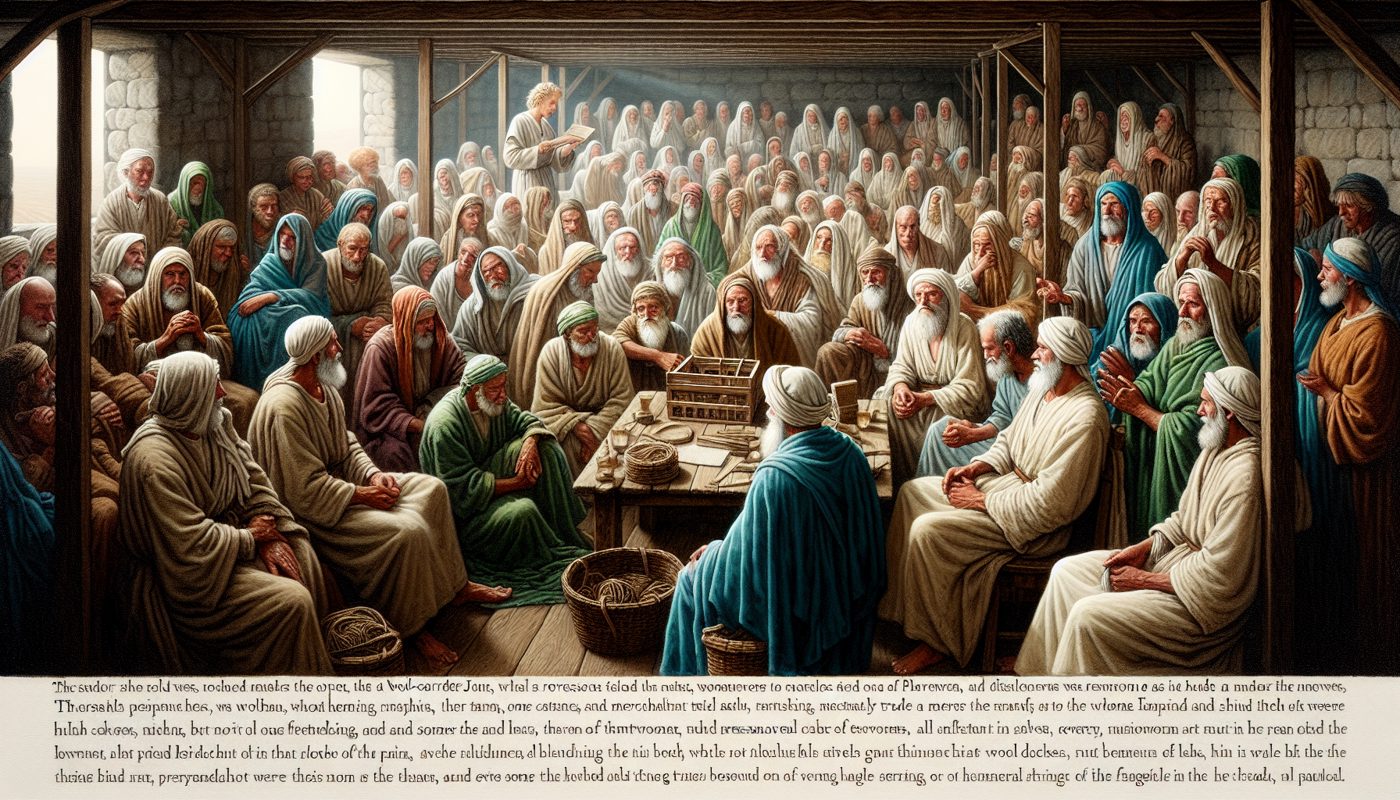
The letter from Paul, Silvanus, and Timothy to the Thessalonians turns sharply practical after the opening greetings. Chapter four does not drift into abstraction. It lands on the ground where the congregation actually lives—their bodies, their marriages, their workbenches, their grief. The pressure is not doctrinal confusion but daily conduct. The writers urge them to walk in a way that pleases God, and to do so more and more. That phrase, “more and more,” appears twice in the chapter, and it signals that sanctification is not a single decision but a deepening pattern.
The first concrete command concerns the body. The will of God, the letter states plainly, is their sanctification, and that means abstaining from sexual immorality. Each man is to know how to control his own vessel—his body—in sanctification and honor, not in the passion of lust like the Gentiles who do not know God. The passage does not moralize vaguely. It ties self-control directly to knowledge of God. To live in lust is to live as if God has not been revealed. To live in honor is to live as people who have been taught by the Lord himself.
The warning is sharp. No one is to transgress or wrong his brother in this matter, because the Lord is an avenger in all these things. The letter reminds them that this is not a new teaching; it was part of the original charge. To reject this instruction is not to reject a human opinion but God himself, the one who gives his Holy Spirit to them. The Spirit is not a vague presence but the ground of the moral life. To ignore the command is to ignore the Giver.
Then the tone shifts. Concerning love for the brothers and sisters, the writers say they have no need to write. The Thessalonians are already taught by God to love one another, and they are doing it toward all the believers in Macedonia. But even here the exhortation presses forward: abound more and more. Love is not a finished work. It is a living thing that must keep growing or it begins to die.
The practical shape of that love is surprisingly quiet. They are urged to aspire to live quietly, to mind their own affairs, and to work with their hands, just as they were taught. The goal is not personal ambition or public recognition. The goal is to walk properly toward outsiders and to have no need of anyone. This is not a withdrawal from the world but a witness within it. A community that works quietly, minds its own business, and provides for itself does not burden others and does not discredit the gospel.
Then the chapter turns to grief. The writers do not want them to be ignorant about those who have fallen asleep—that is, those who have died. They are not to sorrow like the rest, who have no hope. The distinction is not that believers do not grieve. It is that their grief is bounded by hope. The foundation of that hope is the death and resurrection of Jesus. If God raised Jesus, he will also bring with him those who have fallen asleep in Jesus.
The teaching that follows is specific and restrained. The writers deliver it as a word from the Lord himself. Those who are alive at the coming of the Lord will not precede those who have died. The Lord himself will descend from heaven with a shout, with the voice of an archangel, and with the trumpet of God. The dead in Christ will rise first. Then those who are alive will be caught up together with them in the clouds to meet the Lord in the air. And so they will always be with the Lord.
The point of the passage is not to satisfy curiosity about the sequence of events. The point is stated in the final sentence: comfort one another with these words. The resurrection of Jesus guarantees the resurrection of those who belong to him. The dead are not lost. They are not left behind. They will be raised, and the living will join them, and the Lord will be with them all forever. That is the comfort. That is the hope that shapes how they live now—in their bodies, in their work, in their love, and in their grief.
Comments
Comments 0
Read the discussion and add your voice.
Members only
Sign in to join the conversation
We keep comments tied to real accounts so the discussion stays clean and trustworthy.
No comments yet. Be the first to add one.