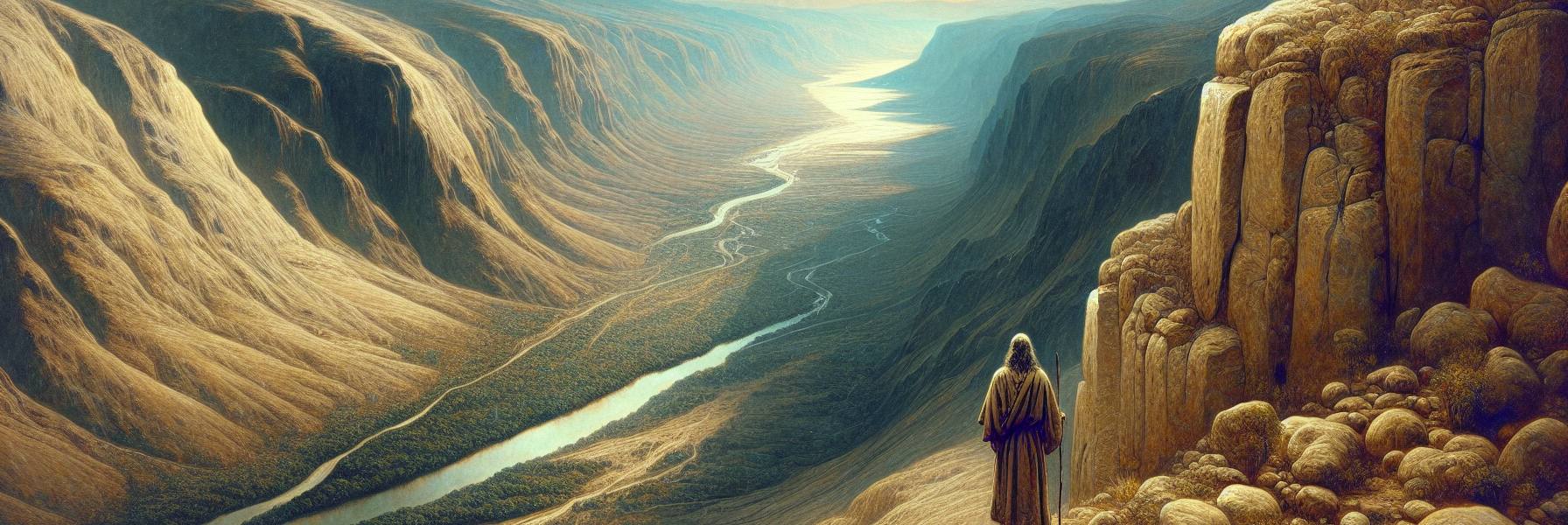

The air on the summit of Pisgah was thin, sharp as a flint knife, and carried the scent of distant rain from lands Moses would not touch. It was a cruel mercy, this view. Before him, unfurled like a divine tapestry, lay the whole of the Promise: the grey-green ribbon of the Jordan twisting through the rift, the patchwork of forests and fields of Gilead beyond, and further still, the hazy, sun-bleached plains where Jericho’s walls stood silent. To the north, the dark bulk of mountains; to the south, the fading amber of the wilderness. It was all there, every oath sworn to Abraham, Isaac, and Jacob, rendered in soil and stone and light.
He was one hundred and twenty, yet his eye was not dim, nor his natural vigor abated. That was the strangest part. His body, though tired from the decades of standing, of lifting heavy hands in prayer and judgment, did not feel like a house about to collapse. It felt like a well-worn tool, its edge still keen, being laid aside not because it was broken, but because the work for which it was forged was complete. A different work was now beginning, one for other hands—Joshua’s hands, those steady, dependable hands he had laid them upon just days before.
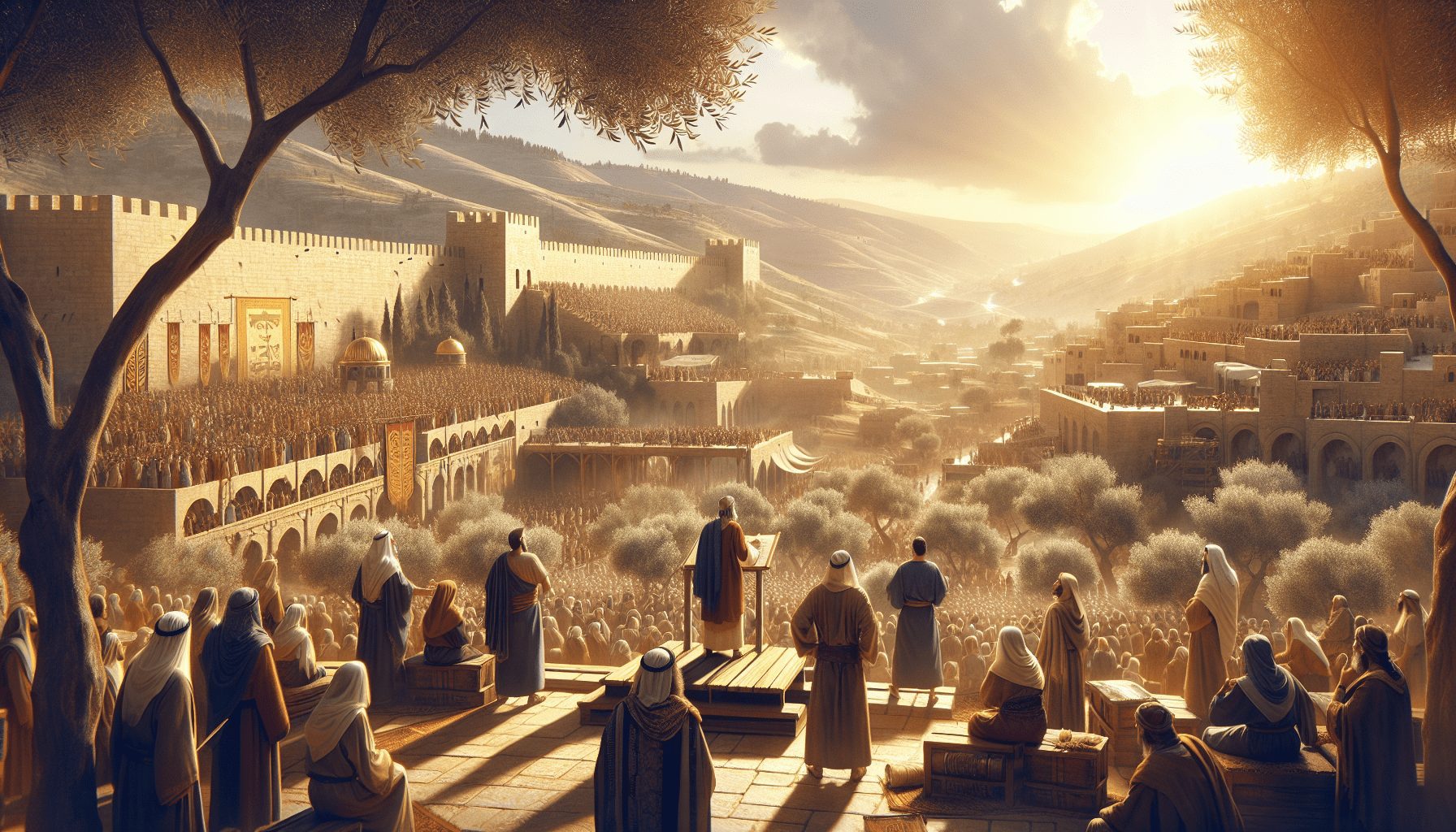
The people were down there, a vast, murmuring camp on the plains of Moab. He could not see their individual faces from this height, but he knew them. He knew the set of Reuben’s shoulders, the quick laughter of the children of Judah, the solemn patience of Levi. He knew their hearts, their fickle tides of faith and fear. He had carried them, not as a burden, but as a weight sewn into the very fabric of his soul. Soon, that weight would be transferred. The thought brought not relief, but a profound, unnameable hollowing.
He remembered the argument, if it could be called that. It was more a plea poured out on barren ground. “Let me go over, I pray, and see the good land beyond the Jordan.” The answer had been final, a door shut with a quiet, immovable sound. “Enough from you. Speak no more to me of this matter.” There was a justice in it, a terrible, perfect justice. The rock at Meribah. The moment of heat and human frustration when he had struck the stone twice, as if the water came from his own power, his own anger, and not from the command of the Holy One. “You did not uphold my holiness among the people.” The words still echoed. He had been the conduit, and for a flash, he had let the vessel itself claim the glory. So he would see, but not cross. He would anoint, but not enter.
A presence settled beside him, not with sound, but with a change in the quality of the light. It was not an angel. Moses did not turn his head, but the last stiffness left his spine. It was the LORD.
No burning bush here, no cloud of terrifying darkness. Here, on this lonely peak, it was a companionship of silence. Together, they looked out. And the LORD showed him all the land: “This is the land of which I swore to Abraham, to Isaac, and to Jacob, ‘I will give it to your offspring.’ I have let you see it with your eyes, but you shall not go over there.”
The guide was pointing out the inheritance to the one who would not inherit it. And in that moment, seeing it through the eyes of the One who promised it, the hollow in Moses’s spirit filled not with possession, but with completion. The seeing was enough. It was the full stop on the sentence of his life. He had been shown the truth of the promise, not as a possession to be grasped, but as a reality to be witnessed. Faith was, in the end, sight.
Then, on that mountain, in the land of Moab, Moses the son of Amram, the friend of God, died. The text would say the LORD buried him, but no one saw it. There was no procession, no lament chanted over a graveside. One moment he was there, his old eyes drinking in the expanse of God’s faithfulness. The next, he was gone. The mountain was empty, save for the wind and the vast, silent view.
Somewhere, in a valley in the land of Moab, a grave existed, but its place remains unknown to this day. It was a fitting end. No shrine would be built, no bones would become relics. He belonged entirely to the story now, not to a plot of earth. He was free of it.
Down on the plains, the people wept. For thirty days, the wailing filled the air, the sound of a people orphaned from the only leader most had ever known. Joshua bin Nun was filled with the spirit of wisdom, for Moses had laid his hands upon him. But wisdom takes time to root, and grief comes first.
And so the story turned a page. There has not arisen a prophet since in Israel like Moses, whom the LORD knew face to face. None with that terrifying, intimate proximity, who performed such signs and wonders, whose hand was so strong against a kingdom to let a people go. But he was a servant. And servants, even the greatest of them, complete their task and rest. The land still waited, the promise still beckoned, and the people, their tears still wet on their cheeks, lifted their eyes from the barren mountain to the river they would soon cross, carrying with them not his bones, but his law, and the memory of a face that had shone from simply being in the presence of God.