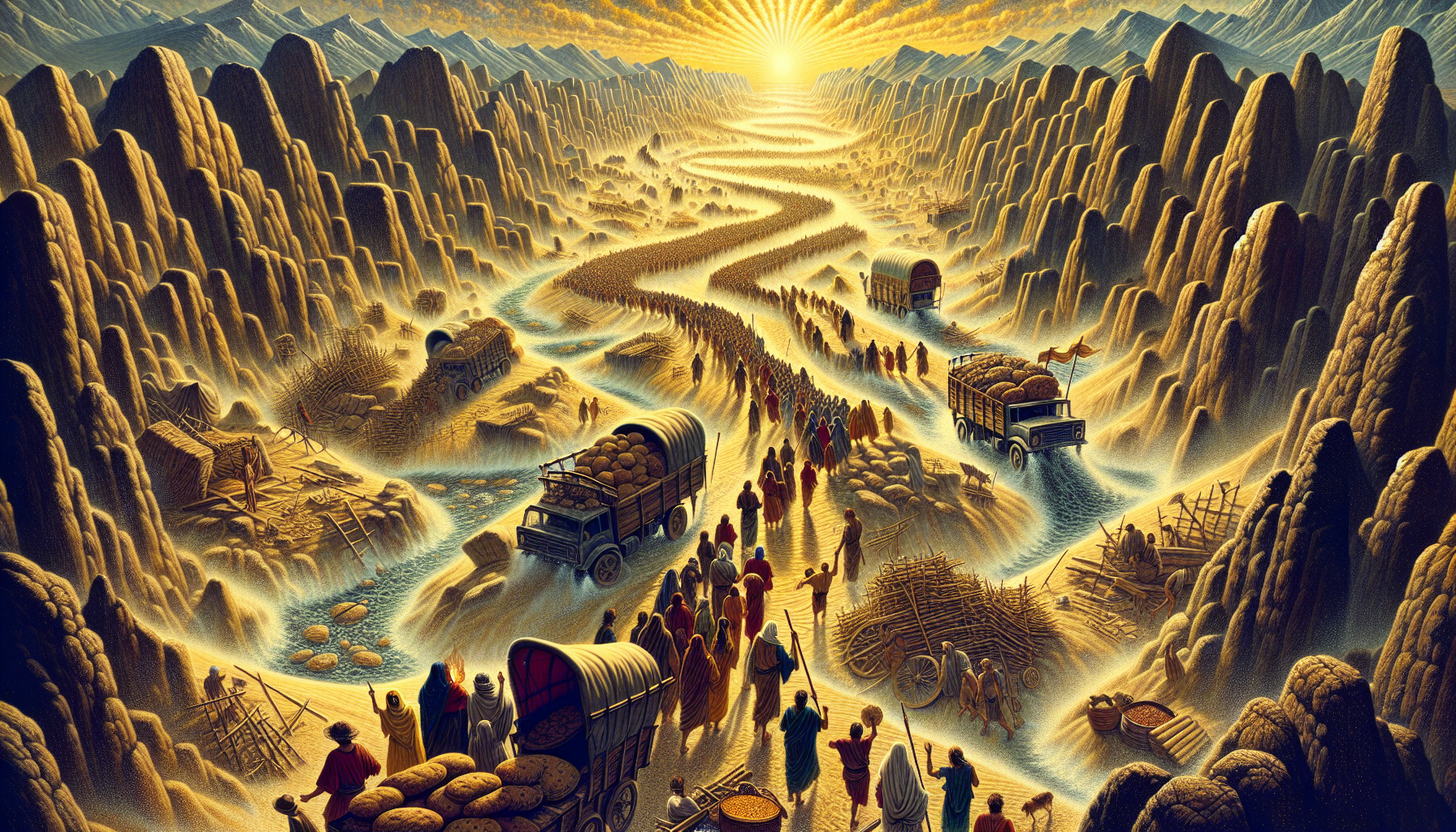
The command came after years of circling. The Lord told Moses that the people had compassed Mount Seir long enough. They were to turn north. That single instruction ended a generation of waiting and began a movement through borders that were not theirs to take.
The first border belonged to the children of Esau, who lived in Seir. The Lord gave precise terms. Israel was to pass through their territory, but they were not to provoke them. They would buy food and water with money. They would receive no land, not even a foot's length, because Mount Seir had been given to Esau as a possession. The Lord had blessed Israel in all the work of their hands. He had known their walking through the great wilderness. For forty years He had been with them, and they had lacked nothing. But that blessing did not entitle them to what was not theirs.
So Israel passed by their brothers, the children of Esau, traveling from Elath and Ezion-geber into the wilderness of Moab. The Lord spoke again. They were not to vex Moab or contend with them in battle. Ar had been given to the children of Lot. The Lord added a parenthetical note about the Emim, a people great and tall as the Anakim, who once lived there, and the Horites who dwelt in Seir before Esau's descendants destroyed them. The pattern was older than Israel. The Lord had given land to other peoples before He gave it to Israel.
Then came the crossing of the brook Zered. The text marks it with a precise number. Thirty-eight years had passed since Kadesh-barnea. That was the time it took for all the men of war from that generation to be consumed from the camp, as the Lord had sworn. The hand of the Lord was against them until they were gone. The crossing of the Zered was not a military advance. It was a funeral procession for a generation that had refused to enter the land.
When that generation was dead, the Lord spoke again. Moses was to pass over Ar, the border of Moab, and approach the children of Ammon. The same prohibition applied. They were not to vex them or contend with them. The land of Ammon had been given to the children of Lot. The Lord again noted the former inhabitants, the Rephaim, whom the Ammonites called Zamzummim, a people great and tall as the Anakim. The Lord had destroyed them before the Ammonites, just as He had done for Esau in Seir and for the Caphtorim who destroyed the Avvim as far as Gaza. The land was not empty. It had been cleared by the Lord for others before Israel arrived.
Then the instruction changed. The Lord told Israel to rise up and cross the valley of the Arnon. He had given Sihon the Amorite, king of Heshbon, into their hand. They were to begin to possess his land and contend with him in battle. The Lord announced that He would begin to put the dread of Israel on the peoples under heaven. They would hear the report and tremble.
Moses sent messengers from the wilderness of Kedemoth to Sihon with words of peace. He asked only to pass through on the highway, turning neither right nor left, buying food and water for money, as Esau and Moab had allowed. But Sihon refused. The Lord hardened his spirit and made his heart obstinate, so that He might deliver him into Israel's hand.
Sihon came out with all his people to battle at Jahaz. The Lord delivered him before Israel. They struck him, his sons, and all his people. They took all his cities and utterly destroyed every inhabited city, with the women and the little ones. They left none remaining. Only the cattle and the spoil of the cities they took as plunder. From Aroer on the edge of the valley of the Arnon to Gilead, no city was too strong for them. The Lord delivered all before them.
But they did not approach the land of the children of Ammon, the side of the river Jabbok, the cities of the hill country, or anywhere the Lord their God forbade them. The difference between Sihon and the others was not Israel's strength. It was the Lord's command. Where He said no, they bought water. Where He said yes, they took cities. The long turn north ended not in a negotiated passage but in a war that cleared the way to the Jordan.