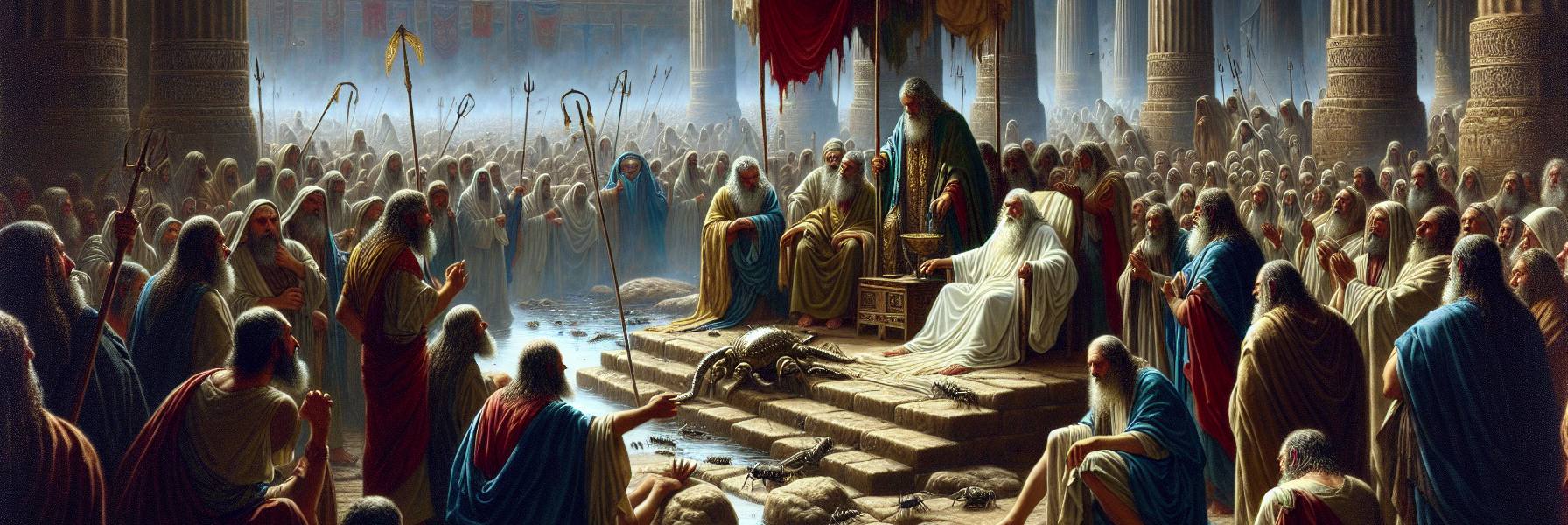

The air in Memphis hung thick, a wool blanket soaked in the Nile’s damp breath. It was the kind of heat that made thought difficult, a heavy stillness broken only by the drone of flies. The previous plagues—blood, frogs, lice—had been like violent arguments, loud and impossible to ignore. This new silence felt worse.
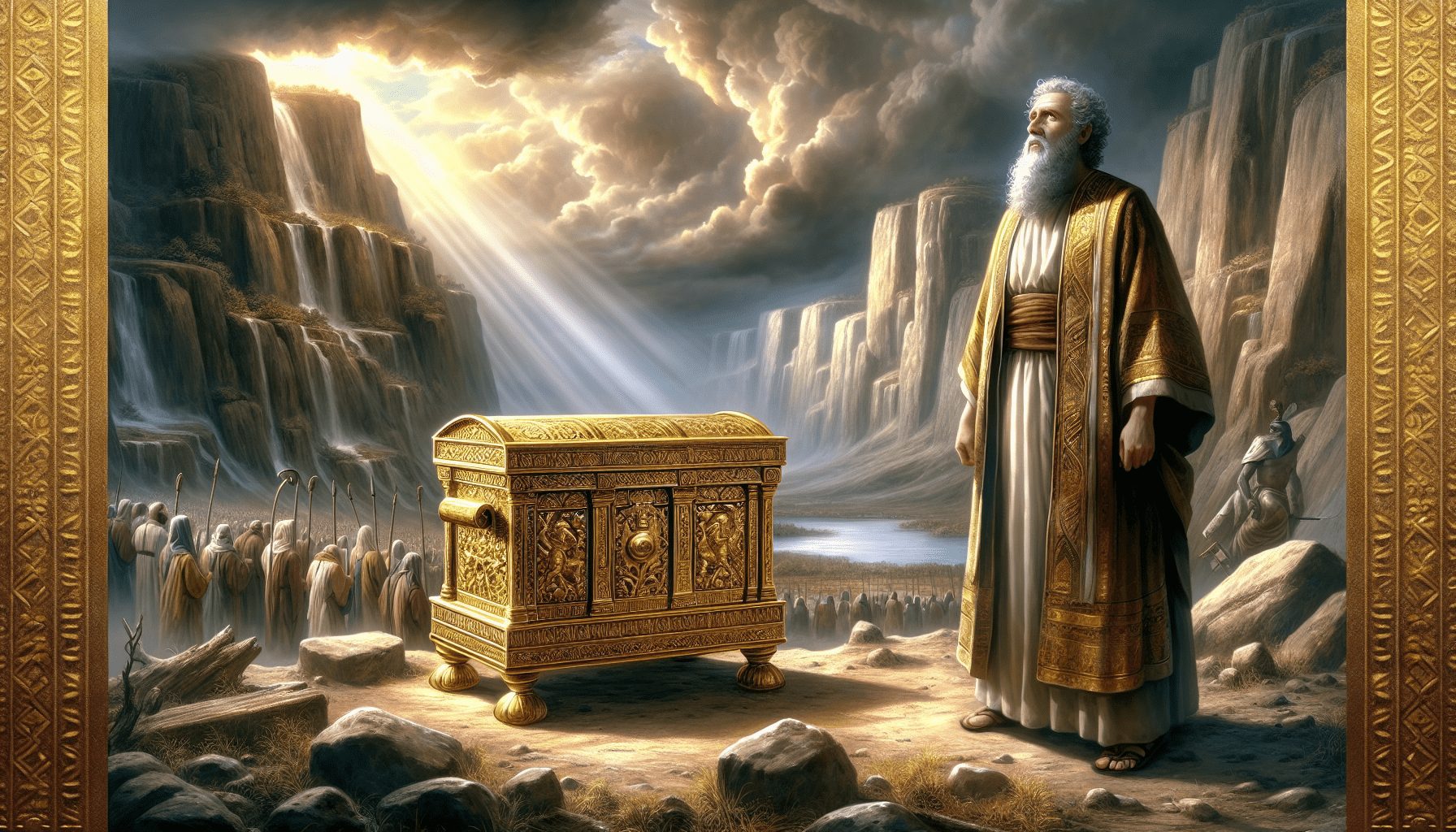
Moses and Aaron came again to the great stone court where Pharaoh took the morning air. They did not shout. Their words were measured, falling into the humid quiet like stones into deep water. “Thus says Yahweh, the God of the Hebrews,” Moses began, his voice carrying a weary gravity. “Let my people go, that they may serve me.”
Pharaoh, seated on a shaded dais, fanned himself slowly. The courtiers around him stood stiffly, their eyes flicking between their king and the two Hebrew men. They had seen the river die, had heard the nights roar with frogs. They were beginning to understand the pattern, the dreadful, escalating rhythm of it.
“For if you refuse to let them go,” Moses continued, his gaze steady, “and still hold them, behold, the hand of Yahweh will strike your livestock in the field—the horses, the donkeys, the camels, the herds and the flocks—with a very severe pestilence.”
A murmur, quickly stifled, rippled through the Egyptian officials. Their wealth was land and beast. Pharaoh’s lips thinned. “You speak of cattle. I have cattle beyond counting. The gods of Egypt are strong.”
The distinction came the next day, and it was a cleaving of reality itself. Out in the broad pastures west of the city, a herdsman for the royal stables watched as a fine stallion, sweating in the dawn light, suddenly shuddered. It was not a fly-bite shiver, but a deep, systemic convulsion. The beast let out a strangled whinny, its legs buckling as if the bones within had turned to sand. It fell, and did not rise. By midday, the fields were a tableau of strange, silent carnage. The great humped backs of camels lay still as dunes. Oxen with their sides heaving one moment were cold the next. A strange, swift decay seemed to follow the breath of death, the air over the pastures turning sweet and foul at once.
Yet in the land of Goshen, where the Hebrews dwelled, the animals lowed and stamped as usual. A boy could lead his family’s single, scrawny donkey to water and it would drink, healthy and oblivious. The line was invisible but absolute, drawn by a hand no Egyptian priest could see or comprehend. The report brought to Pharaoh was whispered, fearful. “Not one of the livestock of Israel has died.”
Pharaoh sent men to see. They returned pale. It was true. The god of the Hebrews was not just powerful; he was discriminating. He could partition life and death with a terrifying precision. The king’s heart, as the storytellers would later say, was heavy. But it was not soft. It hardened like mud in the sun, cracking at the edges with stubborn pride. He would not let them go.
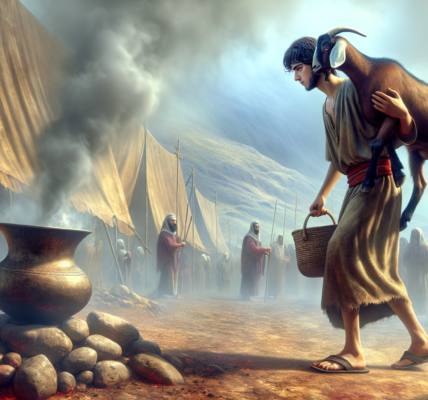
Then came the instruction, simple and terrible. Yahweh told Moses to take handfuls of soot from a kiln—the common, black dust of burnt brick, the very symbol of the Hebrews’ bondage—and toss it toward heaven in Pharaoh’s sight. Moses did this at the city’s edge, where the brickfields began. He scoached ash from a worker’s pit, the grit darkening his palms, and with a slow, deliberate motion, cast it into the still air.
It did not simply dissipate. It became a fine, pervasive dust over all the land of Egypt. And where it settled, it became a festering dust. It began on the skin of the palace guards first—a redness, an itching, then a rising. Blisters broke out that swelled into boils, angry and pustulant. Not the discreet blemishes of illness, but erupting, painful sores that made the touch of linen agony and the weight of a sandal strap a torment.
It spread everywhere. In the market, merchants scratched helplessly at their arms, their wares forgotten. In the temples, priests could not perform their purifications, their own bodies unclean and broken. The magicians, those men who had once mimicked the earlier signs with their secret arts, could not even stand before Moses. The boils were upon them too, covering their legs and feet, so that they retreated, hobbling and defeated. Their arts were meaningless against this raw, physical affliction.
The palace was not spared. Courtiers who had once plotted and preened now moved stiffly, faces tight with the effort of ignoring the pain. The story is told that even Pharaoh, in the privacy of his chambers, was not immune. The divine dust respected no title. He sat on his throne, a monarch in linen and gold, his skin burning and itching beneath his robes, his dignity pierced by a thousand tiny, fiery lances.
For a moment, it seemed the shell of his resolve might crack. Yahweh spoke to Moses again, a final warning before the weather itself would be unleashed: “For by now I could have stretched out my hand and struck you and your people with pestilence, and you would have been cut off from the earth. But for this purpose I have raised you up, to show you my power, so that my name may be proclaimed in all the earth.”
The words were a chisel against stone. They spoke of a purpose larger than Pharaoh’s pride, a narrative in which even his stubbornness played a part. It was a humbling too vast to accept.
The boils remained. There was no bargaining this time, no plea for intercession. The suffering was universal, a great equalizer of pain. Yet when Moses delivered the ultimatum of the coming hail—a storm such as Egypt had never seen—Pharaoh’s heart, seared by pain and inflamed by pride, found a new density. He looked at his suffering people, he felt his own flesh on fire, and he heard the warning of the storm. And he chose, actively and stubbornly, to refuse. He would not let the people go.
The silence after Moses left was different now. It was the silence of a land holding its breath, a people nursing their sores, and a king, sitting in isolated, painful splendor, hardening himself against the very signs that screamed for surrender. The air still stank of dead livestock beyond the walls. The skin of a nation wept. And the stage was set for ice to fall from a clear sky.