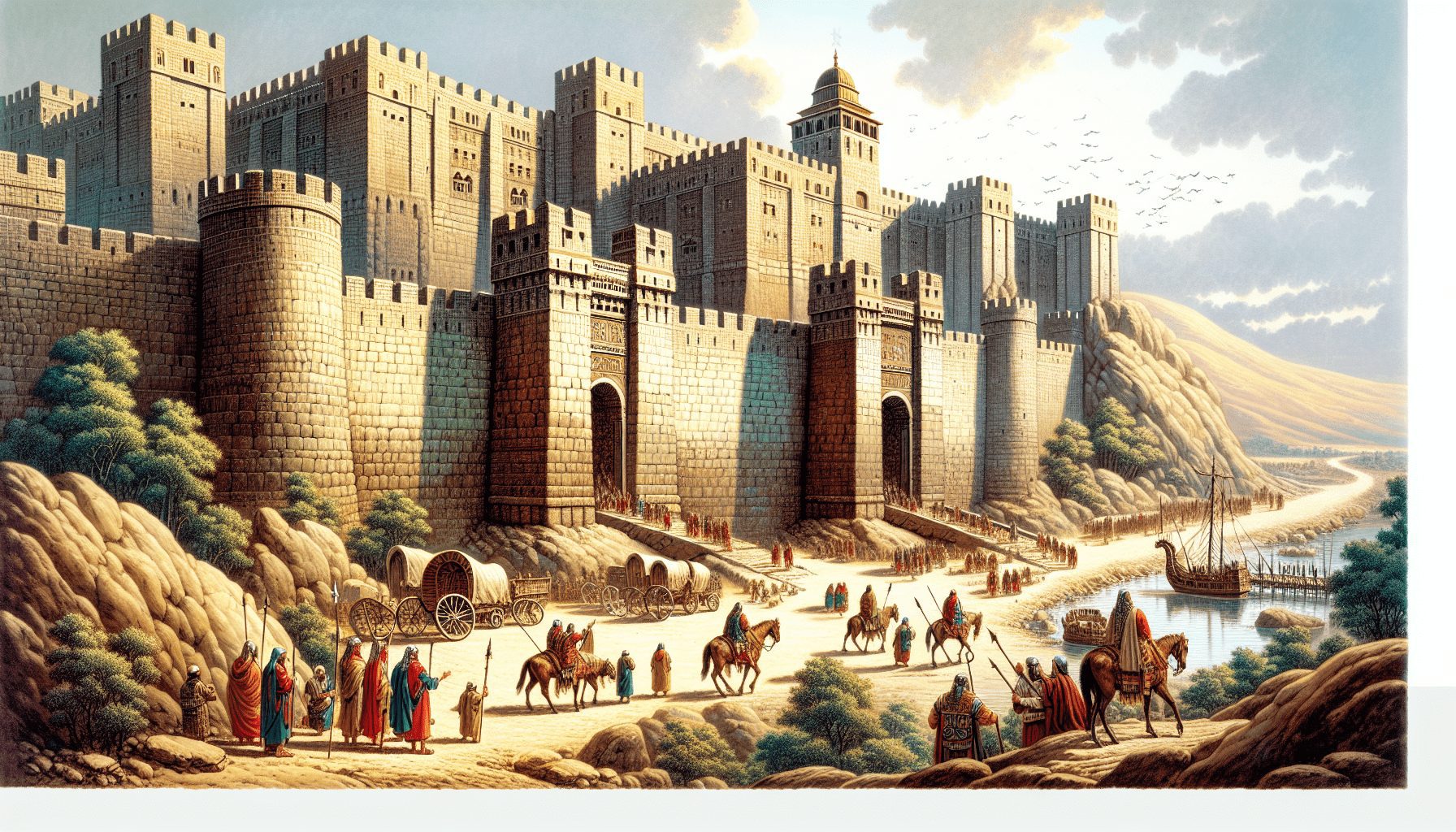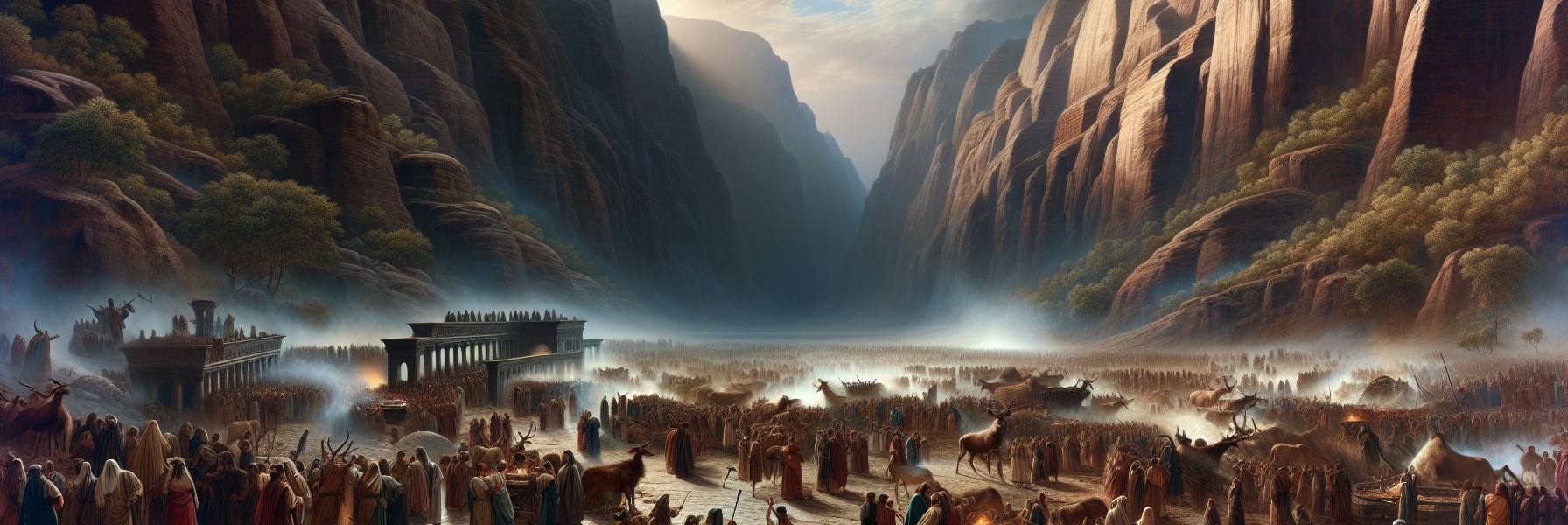

The heat that day was the thick, woolen kind, pressing down on the slopes of Zion until the very stones seemed to exhale dust. I was among the crowd, having come up for the morning sacrifice, the air already heavy with the scent of woodsmoke and seared fat. The priests moved with the weary efficiency of men performing a well-worn task. It was all as it should be, and yet, a dullness had settled over the ritual, a routine as predictable as the sun’s path.
Then the world changed.
It did not begin with a sound, but with a silence—a sudden, profound vacuum that swallowed the lowing of the bullocks and the murmur of the assembly. The light, that harsh white glare, deepened, bled into a bronze hue as if the sky were a bowl of hammered metal. No cloud gathered, yet a shadow fell across the Temple mount, cold and sharp. We turned as one body, our breaths held.
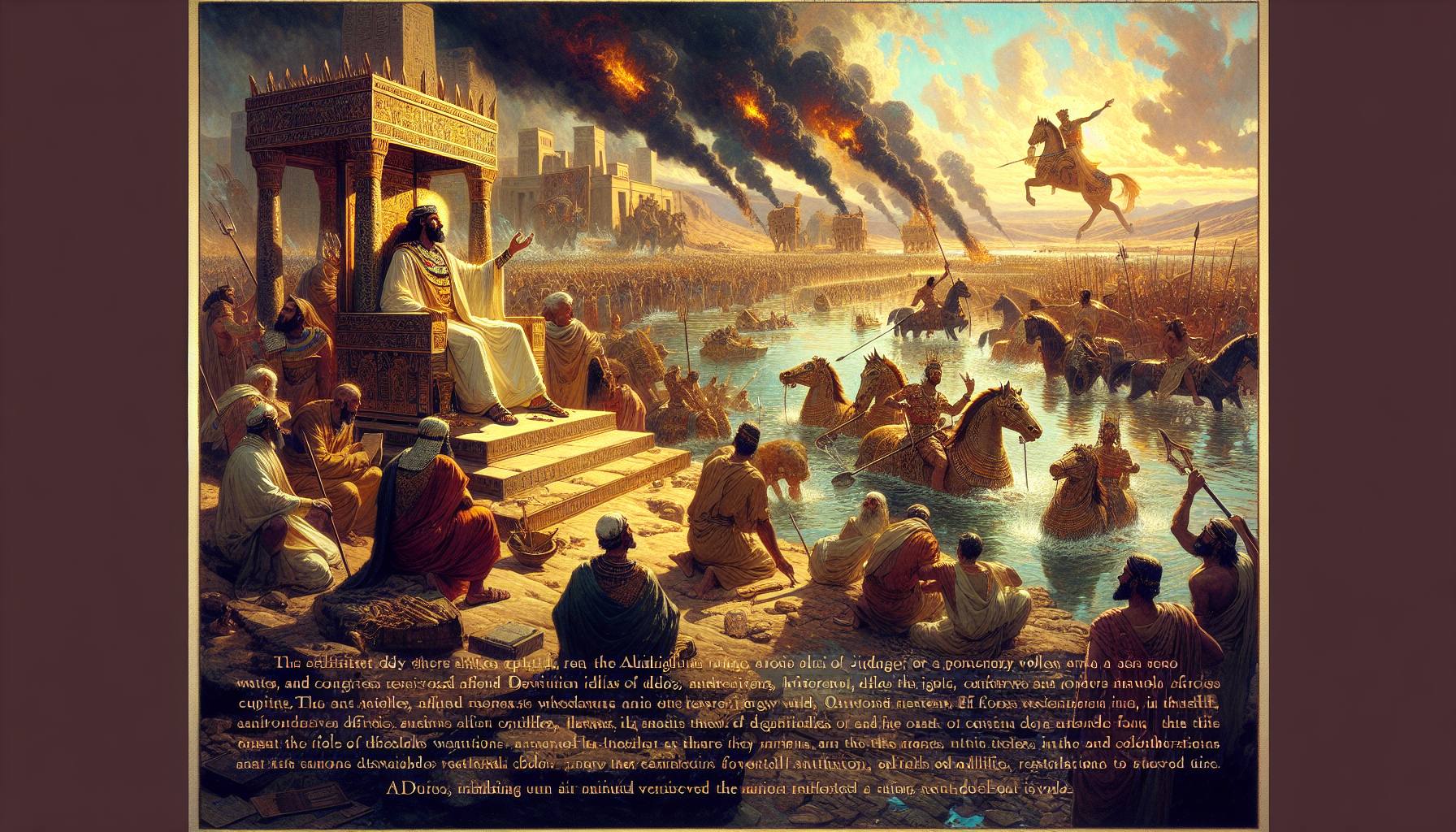
From the north, from the place of terrible majesty, He came. Not in a form one could describe, but as a consuming presence, a relentless focus that made the air vibrate. It was El, Elohim, Yahweh. The radiance around Him was not the gentle light of dawn, but the devouring blaze of a refiner’s fire, a purity that seared the eyes of the soul. Before Him went a tempest of sheer holiness, scattering our complacency like chaff. This was not the God of our tidy liturgies. This was the Mighty One who had summoned the earth from the rising of the sun to its setting.
His voice, when it came, was not a single tone. It was the crackle of a forest aflame, the deep groan of tectonic foundations shifting, the clarity of a bell shattering frozen air. He spoke, and the heavens themselves were His witness, the firm earth His appointed judge.
“Gather to me my consecrated ones,” the voice thundered, and it was not an invitation but a command that pulled at our very bones. “Those who made a covenant with me by sacrifice!”
A collective tremor went through us. We were the addressed. We, with our meticulous offerings and our recited psalms. The altar, a moment ago the center of our universe, now seemed a trivial thing, a child’s toy before the speaking volcano.
And He laid us bare. He spoke not to the foreigner or the idolater first, but to *us*.
“Not for your sacrifices do I rebuke you,” the voice continued, a terrible patience in its cadence. “Your burnt offerings are continually before me. I will not take a bull from your house, nor goats from your folds.”
We shifted, confused. Had we not given everything required? Did the Law not command these very things?
“For every beast of the forest is mine,” the Voice clarified, and in its resonance I saw it—the infinite herds on a thousand hills, the birds tracing patterns over deserts we had never seen, all moving to the rhythm of His will. “If I were hungry, I would not tell you. Do I eat the flesh of bulls, or drink the blood of goats?”
The absurdity of it crashed down. We had been treating the Almighty like a petty chieftain, offering tributes to placate a hunger He did not possess. We had reduced relationship to transaction. The smell of the sacrifices, so potent a moment before, now seemed acrid, almost insulting.
Then the focus shifted, sharpened like a sword point. “What right have you to recite my statutes, or take my covenant on your lips? For you hate discipline, and you cast my words behind you.”
My own heart stuttered. I thought of the muttered prayers, the envy nursed in secret while my hands were raised in worship, the gossip shared in the shadow of the Temple wall. We had divorced the deed from the heart. We saw a thief running with his companions and nodded in tacit approval. We kept company with adulterers. Our mouths framed deceit; our tongues harnessed slander like a team of oxen.
“You have done these things, and I have been silent.”
That line fell heavier than any accusation. His silence had not been approval, but a dreadful patience, a space for repentance we had mistaken for indifference. We had constructed a god in our own image—one who cared for ritual correctness but turned a blind eye to the rot within the home, the treachery between brothers.
“You thought I was exactly like you.”
The sentence hung in the molten air. It was the core of our sin. We had tailored the Holy One of Israel to fit our comforts, our prejudices, our small-heartedness.
“But I will reprove you,” the voice declared, and it was a promise of terrifying mercy. “I will set the charges before your eyes.”
A wave of despair threatened to engulf us. What could we do? The Law condemned us. Our rituals were declared empty. We were trapped.
And then, the tempest of judgment paused. The tone, though still unspeakably powerful, changed. It was like the shift from the fury of a storm to the clear, piercing call that follows it.
“Offer to God a sacrifice of thanksgiving,” He said. The words were simple, disarming. Not a bull, not a flock, but gratitude. A heart acknowledging its source. “And perform your vows to the Most High.”
This was the narrow gate. Not the abolition of sacrifice, but its transformation. The external act was to be the overflow of an internal reality—a life of thanks, a promise kept. The ritual was not discarded; it was infused with meaning it had lacked.
“Call upon me in the day of trouble,” the Voice concluded, its resonance now holding a note of heartbreaking proximity. “I will deliver you, and you shall glorify me.”
The Mighty One, the Judge who had just laid heaven and earth as witnesses against us, was now the promised deliverer. The choice was laid bare. We could continue with the empty form, which He despised, or we could turn—in our trouble, in our failure, in our need—and call. The glorification would not be in our flawless performance, but in His faithful rescue.
The strange light began to soften. The crushing presence lifted, not vanishing, but receding into that same everyday holiness that upholds the world. The heat returned, but it was different. The sun felt cleansed.
I looked down at my own hands, empty. I had come with a purchased lamb. I would leave with a covenant renewed on terms I had barely understood. The altar fire still burned, but now it seemed a humble pointer to a greater flame. The true sacrifice, I understood now, was the broken and thankful heart itself. And the Judge of all the earth, in His terrifying mercy, would not despise it.