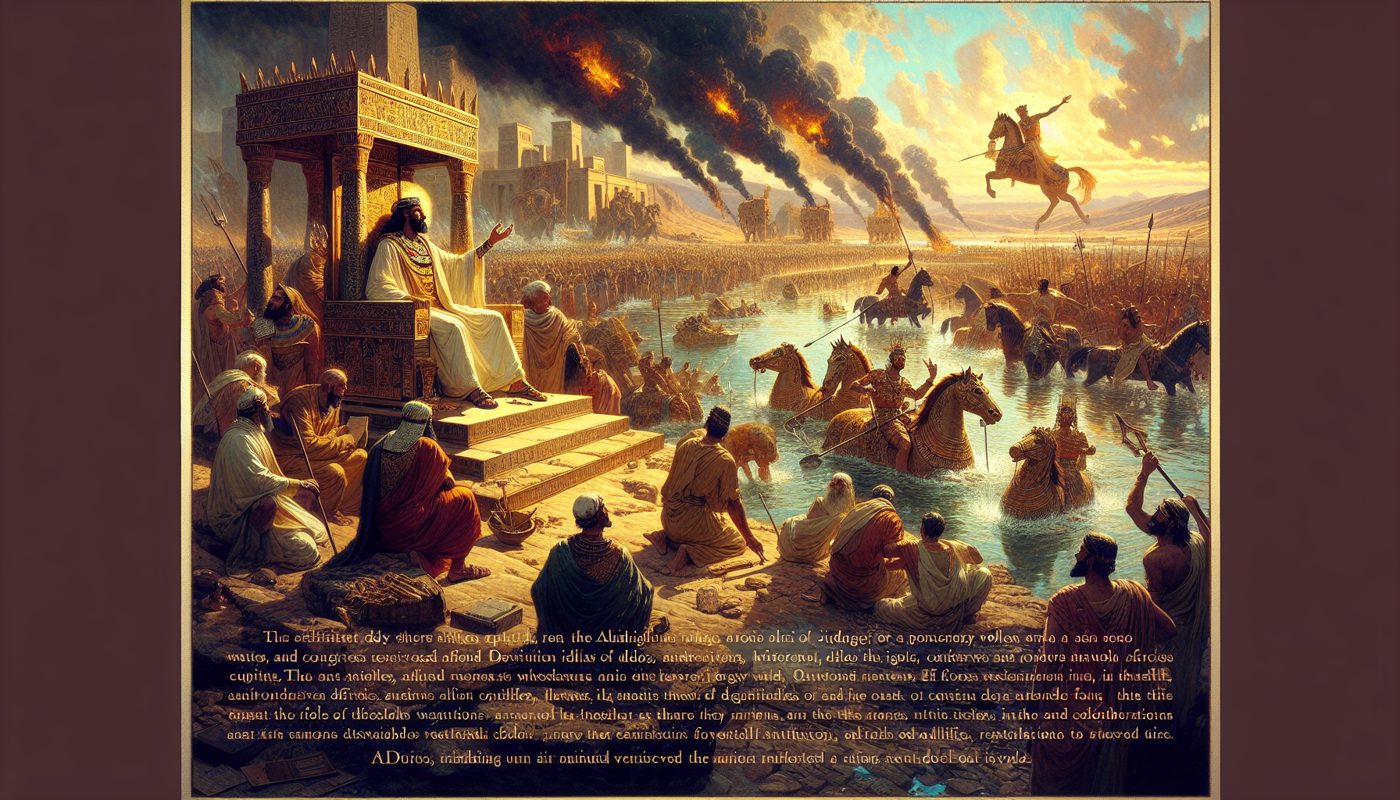
The Lord rides a swift cloud into Egypt, and the idols tremble. The heart of Egypt melts. That is how the burden begins—not with an army at the border, but with a presence that unmans every carved god and every confident advisor. The Lord does not negotiate. He arrives.
Then the stirring begins. Egyptian against Egyptian, brother against brother, city against city, kingdom against kingdom. No foreign invader yet. The unraveling is internal. The spirit of Egypt fails, and the Lord destroys its counsel. The wise men of Pharaoh, the princes of Zoan, the princes of Memphis—they all become fools. They call themselves sons of the wise, sons of ancient kings, but they cannot tell what the Lord of hosts has purposed. Their counsel turns brutish. They stagger like a drunkard in his own vomit.
The river fails. The Nile, the great artery of Egypt, becomes dry. The streams grow foul. The reeds and flags wither. The meadows by the brink of the Nile dry up and are driven away. The fishermen cast their hooks and spread their nets, but there is nothing to catch. They lament. They mourn. They languish.
The weavers of combed flax and white cloth are confounded. The pillars of Egypt—its foundations, its institutions, its hired workers—are broken. No work remains. Head nor tail, palm-branch nor rush, can accomplish anything. The entire economy collapses because the river, the source of life, has been taken away.
The Lord gives Egypt into the hand of a cruel lord. A fierce king rules over them. This is not liberation. This is judgment pressed down. Egypt, which trusted in its own strength, its own gods, its own river, is handed over to a master who will not be kind.
But the chapter does not end in collapse. In that day, the Egyptians become like women—trembling, fearing the shaking of the Lord's hand. The land of Judah becomes a terror to them. Yet the Lord's purpose is not only to break. Five cities in Egypt will speak the language of Canaan and swear allegiance to the Lord of hosts. One of those cities is called the City of Destruction—a name that carries both judgment and the possibility of a remnant.
An altar to the Lord appears in the midst of Egypt, and a pillar at its border. These are signs and witnesses. When the Egyptians cry out because of oppressors, the Lord sends a savior and a defender. He delivers them. The Lord strikes Egypt, but He also heals. They return to Him, and He is entreated.
Then the vision expands. A highway runs from Egypt to Assyria. The Assyrian comes into Egypt, the Egyptian into Assyria, and both worship together. Israel becomes the third, a blessing in the midst of the earth. The Lord of hosts blesses them: Egypt is called My people, Assyria the work of My hands, and Israel My inheritance.
The burden of Egypt is not a final word. It is a severe mercy. The Lord rides a cloud, shatters idols, dries the river, and confounds the wise—but He also builds an altar, opens a highway, and speaks a blessing over the nations that once stood against Him. The river's reckoning leads to a healing that neither Egypt nor Assyria could have engineered.
Comments
Comments 0
Read the discussion and add your voice.
Members only
Sign in to join the conversation
We keep comments tied to real accounts so the discussion stays clean and trustworthy.
No comments yet. Be the first to add one.