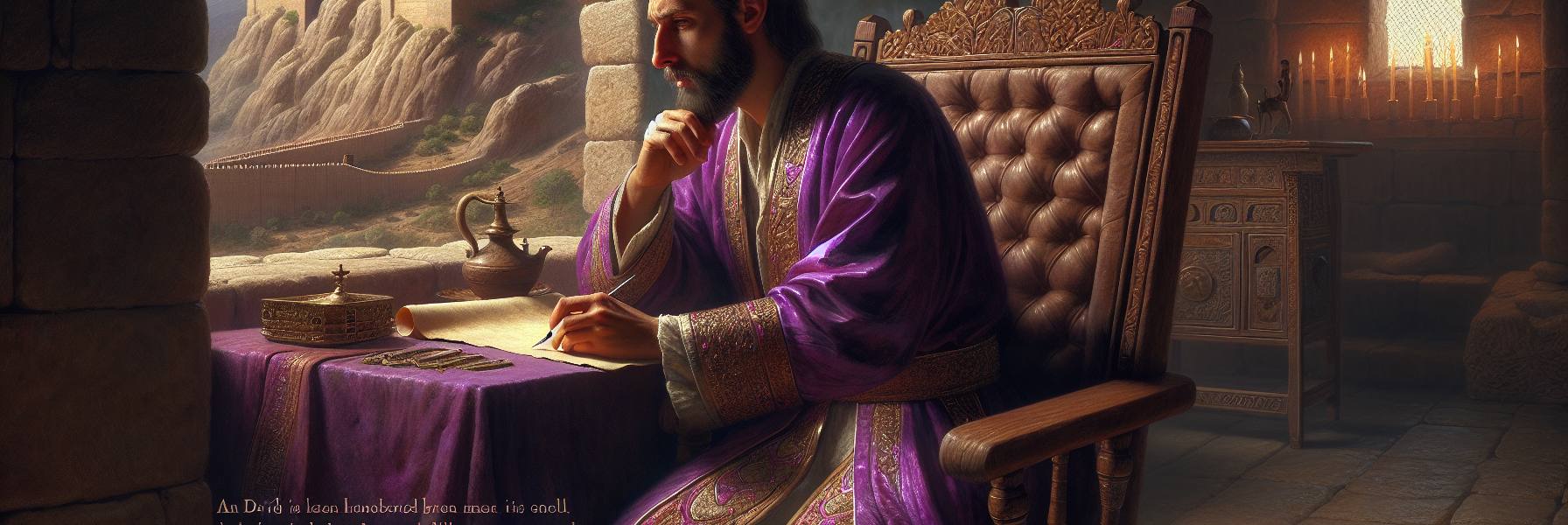

The memory of the cave was a cold stone in his belly, even now, years later, seated on a cedar chair smoothed by time. David shifted, the royal purple heavy on his shoulders, and stared at the blank parchment. The court scribe had left hours ago, the lamps were trimmed low, and the palace of Jerusalem was a silent fortress around him. It was in the quiet that the ghosts spoke loudest. Not the ghost of Saul, nor even the whispering ghost of Bathsheba’s husband, but the ghost of himself—the young man, all sinew and terror, tasting grit and despair in the Adullam cave.
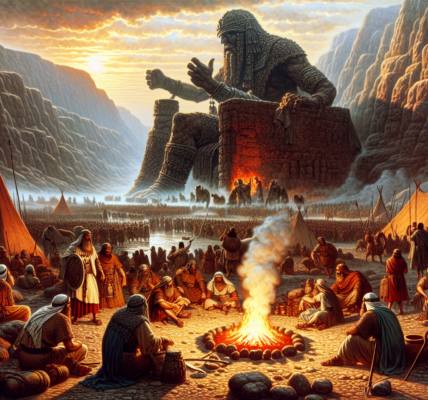
He could smell it still: wet limestone, the goat-skin of his few companions, the faint metallic scent of fear-sweat. Saul’s army, three thousand strong, was a net drawn tight across the hills of the wilderness. He had been a partridge driven to ground. His prayer then wasn’t the polished plea of a king, but the raw, animal cry of a creature facing the snare. *I love you, O Lord, my strength.* The words formed in his mind now, not as theology, but as the desperate affirmation he had gasped into the cave’s dank darkness. It was a claim made in defiance of all evidence. Where was strength when you were huddled in a hole?
He dipped the reed pen. The ink was black as a moonless night. He began to write, not a chronicle, but the truth of the feeling.
*The cords of Sheol entangled me; the snares of death confronted me.*
It wasn’t just Saul. It was the whole closing-in of the world. The betrayal of the men of Keilah, the constant, grinding fear that turned food to ash in the mouth. Death wasn’t a future event; it was a present atmosphere, thick and suffocating. He remembered the specific quality of the light at the cave’s mouth—a narrow, brilliant stripe of white against the utter black. The division felt absolute. Out there, was capture, spears, the final mockery. In here, only hiding.
But then came the remembering. Not an audible voice, but a solidity that entered his bones. A recollection older than memory. *The Lord is my rock, and my fortress, and my deliverer.* The cave walls, which had felt like a tomb, began to feel like something else. They were solid. They were shelter. They were, in their unyielding stone, a faint echo of a different, unshakeable reality. His prayer from the depths didn’t coil back on itself in despair. It shot upward, a single, clean arrow of distress.
And then… the feeling changed. It was no longer recollection. It was invasion.
The parchment seemed to grow hot under his hand. He wasn’t just describing; he was reliving. The distant rumble wasn’t thunder from the Hebron hills, but from the very foundations. The cave hadn’t trembled that day, but his spirit had. He saw it, not with his eyes, but with the prophet’s sight that terror and faith sometimes grant. The Lord was not a passive recipient of prayers. He was a coming.
*He parted the heavens and came down; dark clouds were under his feet.*
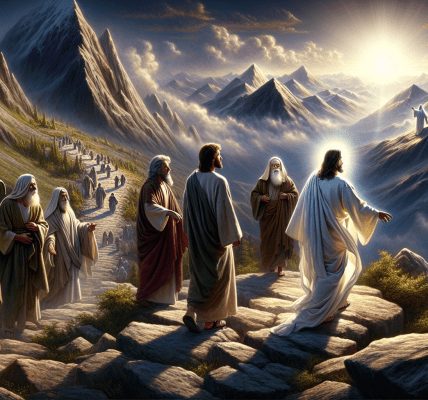
David’s writing sped, the letters becoming angular, urgent. This was no gentle savior. This was the God of Sinai, cloaked in the primal violence of creation and storm. The God who answered the cry of the trapped was the same God who unwove chaos. He rode the cherub, wings of the wind screaming. The darkness He made His canopy—not the darkness of the cave, but the terrible, hiding darkness of His secret place, the thick clouds dark with water. From the brilliance before Him, hail and coals of fire broke through. This was the delivery: not a quiet unlocking of the snare, but the annihilation of the snare-maker.
*The Lord thundered from heaven; the voice of the Most High resounded.*
And the voice had a target. It wasn’t a general rebuke. It was specific, personal, scathing. It was for Saul, for the Ahimelechs who betrayed, for all the cold, efficient machinery of oppression that had sought to grind him into the dust. God’s arrows were lightning, scattering them. His rebuke was a dry wind from the desert, blasting the breath from their lungs. He drew David out of many waters—not with a careful hand, but with the furious, cleansing force of a flash flood tearing through a wadi, stripping away the enemy’s footing.
Why? The question echoed from the past into the quiet royal chamber. David’s pen slowed. The fury of the deliverance was matched only by its inexplicable grace. *He brought me out into a broad place; he rescued me because he delighted in me.*
The words hung in the lamplight. *Delighted in me.* The young outlaw, smelling of sheep and blood, hiding in a hole. The adulterer, the murderer. The failed father. The king whose very throne was a monument to God’s baffling, stubborn choice. There was no “because” that could follow that. No merit. Only the mysterious, unshakable delight of a God who chooses, who loves first. The rescue was not a transaction. It was an act of fierce, possessive love.
The rest flowed from that. The broadening of the path. The teaching of his hands for war. The bronze bow that did not break. The pursuit of his enemies, not to the cave’s mouth, but to their complete end. He saw their faces, not in triumph, but in a kind of awed sadness—they cried out, but there was no one to save them. They were broken, dust before the wind.
He finished, the psalm complete. He set the pen down. His hand ached. The ghost of the young man in the cave was quiet now, not banished, but answered. The deliverance had not been a single event. It was the ongoing story of his life. The Lord had become his lamp, turning the deepest darkness into mere shadow. By this God he could leap over a wall. Not just the wall of a Philistine fortress, but the walls of his own heart.
Outside, a guard changed posts, the soft thud of a spear-butt on stone. The sound was solid, real. David looked at his hands, the veins prominent now, the skin thinning. They were the hands of an old man, a king. But they were, and would forever be, the hands God had trained for war, and the hands God had held in the darkness. He rolled the parchment slowly. The ink glistened. It was not a perfect record. It was messy, violent, beautiful, and true. It was his story. It was, he hoped, the story of anyone who had ever, from a pit of their own making or one thrust upon them, cried out from the depths and found the Rock.