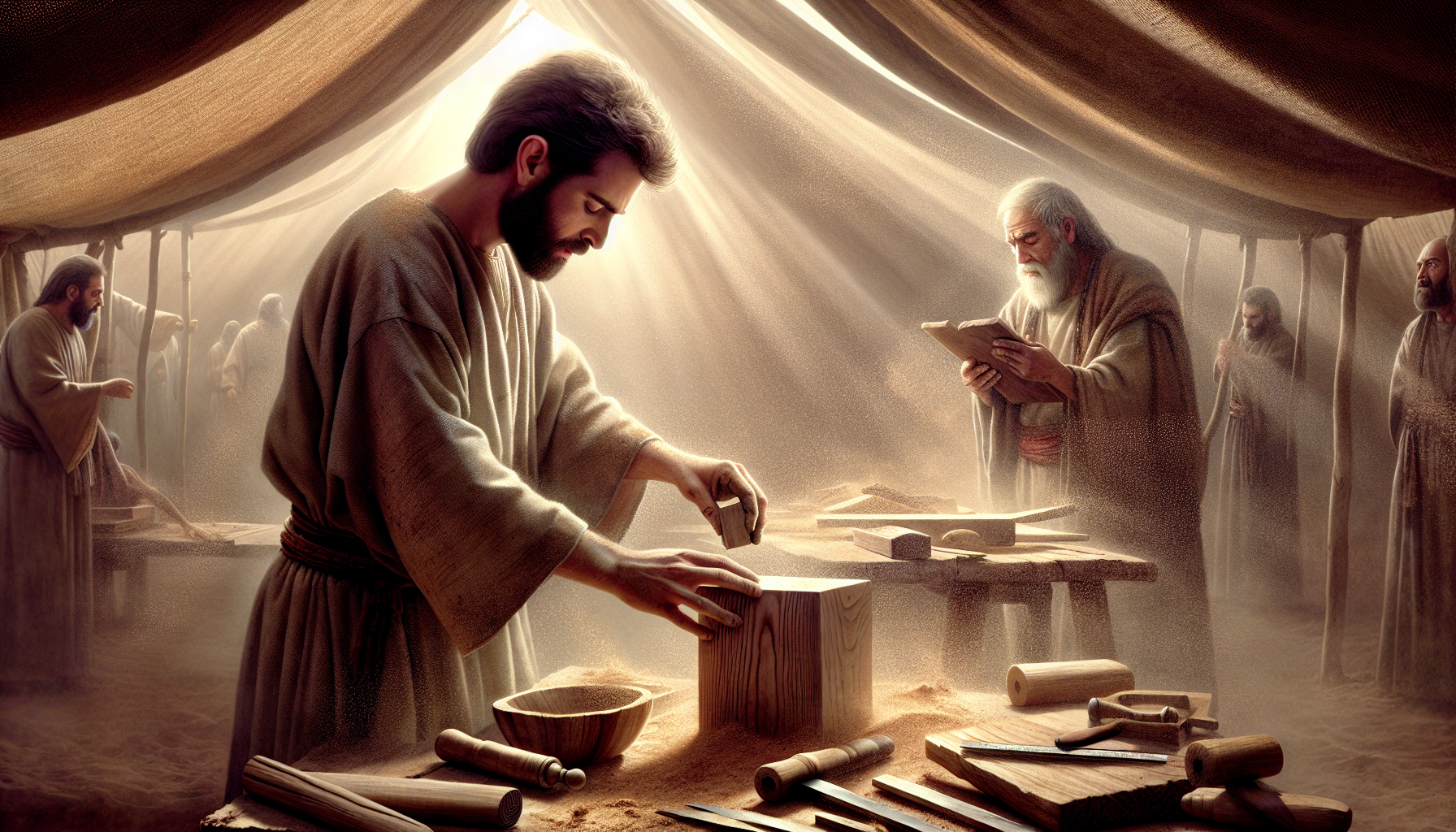
The instructions for the altar of incense arrive in the middle of the tabernacle’s construction order, and they carry a specific weight. This is not an altar for the public courtyard, where blood and grain and drink are poured out. It is a small piece of furniture, a cubit square and two cubits high, made of acacia wood and overlaid entirely with pure gold. Its horns are to be carved from the same block, not added later. A crown of gold runs around its top, and beneath that crown, on two opposite sides, are gold rings for the carrying poles. The poles themselves are acacia wood overlaid with gold. This altar is built to move, but it is also built to stay in one place: before the veil that hangs in front of the ark of the testimony, before the mercy-seat, where the Lord says He will meet with Moses.
The use of this altar is strictly regulated. Every morning, when Aaron dresses the lamps, he is to burn incense of sweet spices on it. Every evening, when he lights the lamps, he burns it again. This is to be a perpetual incense before the Lord throughout their generations. The prohibition is absolute: no strange incense, no burnt offering, no meal offering, no drink offering may be placed on it. This altar is for smoke and fragrance only, and the smoke rises as a specific kind of presence before the Lord.
Once a year, Aaron is to make atonement upon the horns of this altar. He does it with the blood of the sin offering of atonement. That annual act consecrates the altar itself, marking it as most holy to the Lord. The incense altar is not a secondary piece of equipment; it is tied directly to the yearly purification of the sanctuary.
Then the Lord speaks to Moses about a different matter: the census. When the people are numbered, every man who is counted must give a ransom for his soul to the Lord, so that no plague comes upon them during the numbering. The amount is fixed: half a shekel, according to the shekel of the sanctuary, which is twenty gerahs. The rich are not to give more, and the poor are not to give less. The half shekel is the same for every man from twenty years old and upward. This money is appointed for the service of the tent of meeting, and it serves as a memorial before the Lord, making atonement for their souls.
The Lord then commands the making of a laver of brass, with a base of brass, to be placed between the tent of meeting and the altar. It is to hold water for washing. Aaron and his sons must wash their hands and their feet at this laver whenever they enter the tent of meeting or come near the altar to minister. The command is blunt: they must wash, or they will die. This is a perpetual statute for them and for their descendants throughout their generations.
The Lord gives Moses the recipe for the holy anointing oil. It is a blend of flowing myrrh, sweet cinnamon, sweet calamus, cassia, and olive oil, compounded after the art of the perfumer. This oil is to be used to anoint the tent of meeting, the ark of the testimony, the table and all its vessels, the lampstand and its vessels, the altar of incense, the altar of burnt offering with all its vessels, and the laver with its base. The anointing sanctifies these objects, making them most holy. Whatever touches them becomes holy. Aaron and his sons are also anointed and sanctified, so that they may minister as priests.
The oil is not to be poured on ordinary human flesh. No one is to make any like it for common use. It is holy, and it must remain holy. Anyone who compounds a similar mixture or puts any of it on a stranger is to be cut off from his people.
The Lord gives a separate recipe for the incense itself. It is made of sweet spices: stacte, onycha, galbanum, and pure frankincense, each in equal weight, compounded after the art of the perfumer, seasoned with salt, pure and holy. Some of it is to be beaten very small and placed before the testimony in the tent of meeting, where the Lord will meet with Moses. This incense is most holy. No one is to make any like it for themselves. Whoever makes it to smell it is to be cut off from his people.
The chapter moves through three distinct but connected domains: the incense altar and its yearly atonement, the census ransom that protects the people from plague, and the consecration of the priests and the sacred space through oil and incense. Each element is guarded by boundaries. The incense cannot be imitated. The oil cannot be duplicated. The washing is a matter of life and death. The census payment is equal for every man, regardless of wealth. The altar itself is reserved for a single kind of offering. The Lord is not leaving room for improvisation or innovation. The holiness of the tabernacle depends on precision, and the precision is given in detail because the consequences of getting it wrong are severe.
The altar of incense stands before the veil, close to the ark, close to the mercy-seat. It is the place where smoke rises daily, and where blood is applied yearly. It is small, portable, and overlaid with gold. It is not for the crowd. It is for the priest alone, and for the Lord who meets him there.