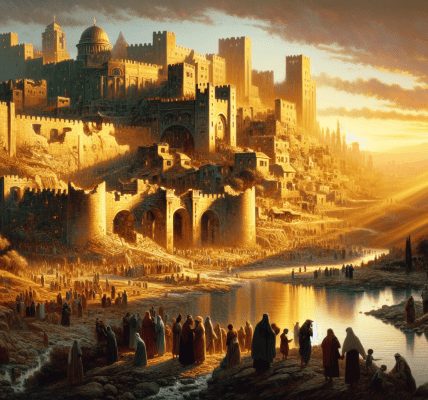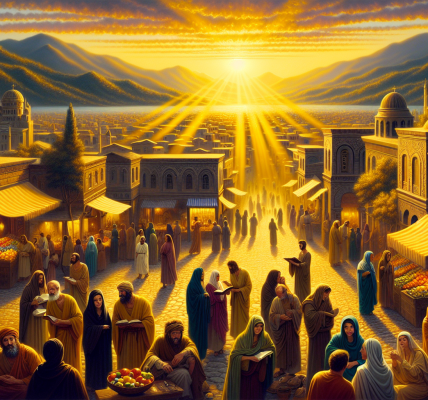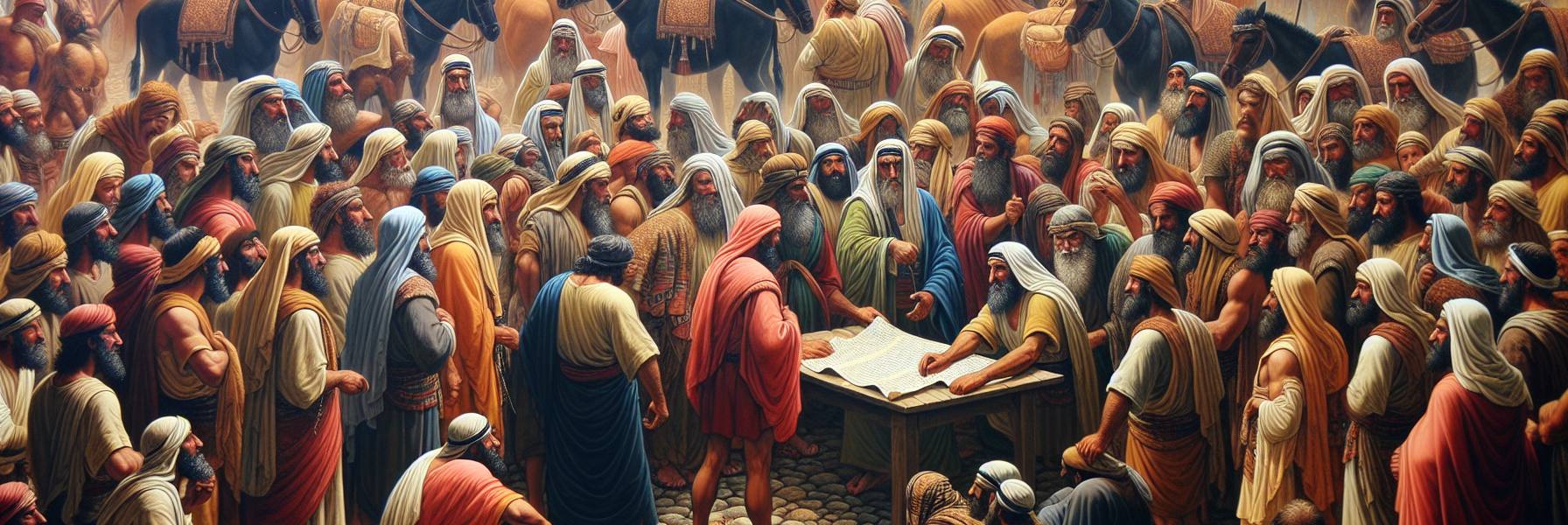

The heat rose from the cobblestones in visible shimmers, distorting the legs of the donkeys and the sandaled feet of the men who led them. It was the kind of dry, relentless heat that made the air itself feel like a weight, pressing down on Jerusalem, seeping into the very mortar between the stones. Inside a cool, shadowed chamber, a different kind of fever gripped the men gathered around the king.
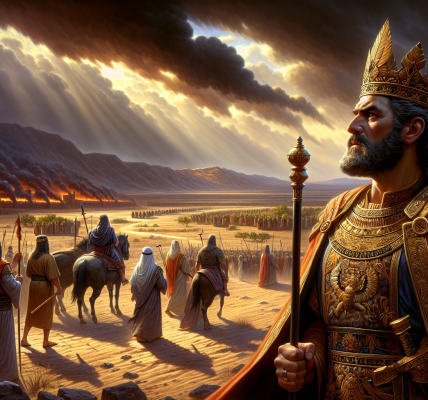
Hezekiah’s advisors, their faces slick with a sweat not entirely born of the climate, leaned over a table. On it lay a scroll, a treaty drafted in the precise, formal script of a Egyptian scribe. The words promised chariots, horses, a mighty army to stand against the Assyrian wolf at the door. The price was heavy, in gold and in pride, but fear has a way of making costly things seem reasonable.
“It is our only path,” one of the elders insisted, his voice a low thrum. “We cannot face the Assyrian horde alone. Pharaoh’s arm is strong. His protection is a sure refuge.”
From the corner, where the light from a high window cut a sharp diagonal across the floor, a different voice spoke. It was Isaiah, the prophet. He had not been invited to this council, but he had come anyway, drawn, it seemed, by the same spiritual decay that he now denounced.
“Woe to the rebellious children,” he said, the words not loud, but carrying through the room like a chill draft. He did not look at the scroll. His gaze was on the king, on the faces of the men. “You carry out a plan, but it is not mine. You make an alliance, but it is not of my Spirit, that you may add sin to sin. Who set out to go down to Egypt, without asking for my direction?”
An uncomfortable silence fell. One of the younger officials, a man named Jareb, flushed. “The Assyrian will strip our land bare. He will carry our children into captivity. We must have horses. We must have chariots. What would you have us do? Trust in whispers and dreams?”
Isaiah’s eyes were old, older than the stones of the city. “The protection of Pharaoh shall turn to your shame, and the shelter in the shadow of Egypt to your humiliation. For his officials are at Zoan, and his envoys reach Hanes, but they all come to shame because of a people that cannot profit them, that brings neither help nor profit, but shame and disgrace.”
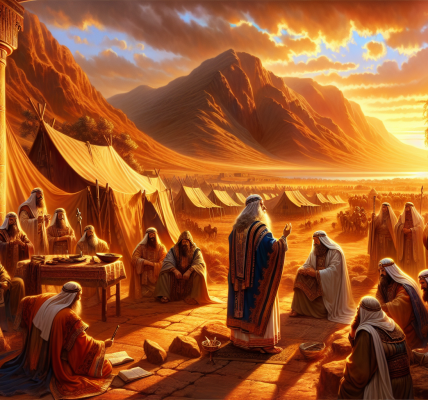
He stepped forward into the light, and his shadow fell across the treaty. “A prophecy concerning the beasts of the Negev: Through a land of trouble and anguish, from where come the lioness and the lion, the viper and the flying serpent, they carry their riches on the backs of donkeys, their treasures on the humps of camels, to a people that cannot help them. Egypt’s help is worthless and empty; therefore I have called her ‘Rahab Who Sits Still.’”
He spoke then not of politics, but of their hearts. He called them rebellious people, lying children, children unwilling to hear the instruction of the Lord. They said to the seers, “Do not see,” and to the prophets, “Do not prophesy to us what is right; speak to us smooth things, prophesy illusions. Leave the way, turn aside from the path, let us hear no more about the Holy One of Israel.”
The words hung in the air, accusation and diagnosis in one. They did not want a God who was holy; they wanted a god who was convenient, a deity of their own design who would bless their strategies and sanctify their fears.
Isaiah’s tone shifted. The judgment did not vanish, but it was enveloped by a sorrow so profound it was almost a physical presence in the room. “Therefore thus says the Holy One of Israel: ‘Because you despise this word and trust in oppression and perverseness and rely on them, therefore this iniquity shall be to you like a breach in a high wall, bulging out, about to collapse, whose breaking comes suddenly, in an instant.’”
He described the breaking of that wall not with a triumphant shout, but with the quiet finality of a falling stone. It would be shattered so completely it would not be salvaged, not even for pottery, just shards.
And then, as if the very act of pronouncing judgment had exhausted its purpose, his voice softened further, weaving a new thread into the grim tapestry. It was the thread of grace.
“Therefore the Lord waits to be gracious to you, and therefore he exalts himself to show mercy to you. For the Lord is a God of justice; blessed are all those who wait for him.”
He painted a different picture for them then. A picture of a people, yes, in Zion, in Jerusalem. They would weep no more. He would surely be gracious at the sound of their cry. As soon as he hears it, he will answer. And though the Lord give you the bread of adversity and the water of affliction—a reference to the siege they so feared—their Teacher would not hide himself anymore. Their own eyes would see him. And their ears would hear a word behind them, saying, “This is the way, walk in it,” when they turn to the right or to the left.
It was a promise of intimacy, of a guidance not from scrolls or treaties, but from a voice whispering in the quiet of the soul.
He spoke of the day they would defile their idols, the silver and the gold, as unclean things, throwing them away to the moles and the bats. And then the Lord would give rain for the seed, and the bread from the ground would be rich and plentiful. The cattle would graze in wide pastures. The streams would run with water. The light of the moon would be as the light of the sun, and the light of the sun would be sevenfold, like the light of seven days. It was a vision of a creation restored, a covenant fulfilled.
Finally, he returned to the present threat, the Assyrian. But he reframed it entirely. The Lord would come from afar, burning with his anger. His tongue would be like a devouring fire. His breath, like an overflowing stream, would sift the nations with the sieve of destruction. And then, for Zion, there would be a song, and a gladness of heart. The Assyrian would be shattered by the voice of the Lord, by the rod that he wields. And Topheth, the place of burning, had long been prepared for a king—not for a king of Judah, but for the king of Assyria.
The council was dismissed without a decision that day. The men filed out, some angry, some pensive, all unsettled. The treaty with Egypt remained on the table, its promises now seeming flimsy, like parchment left too long in the sun.
Outside, the heat had not broken. But for a moment, as Isaiah’s last words echoed in the silence, it felt as if a different kind of wind had stirred—a wind from a place not measured by geography, carrying not the dust of the desert, but the scent of rain on parched earth, a whisper of a grace that waits, and a justice that will not be silenced.