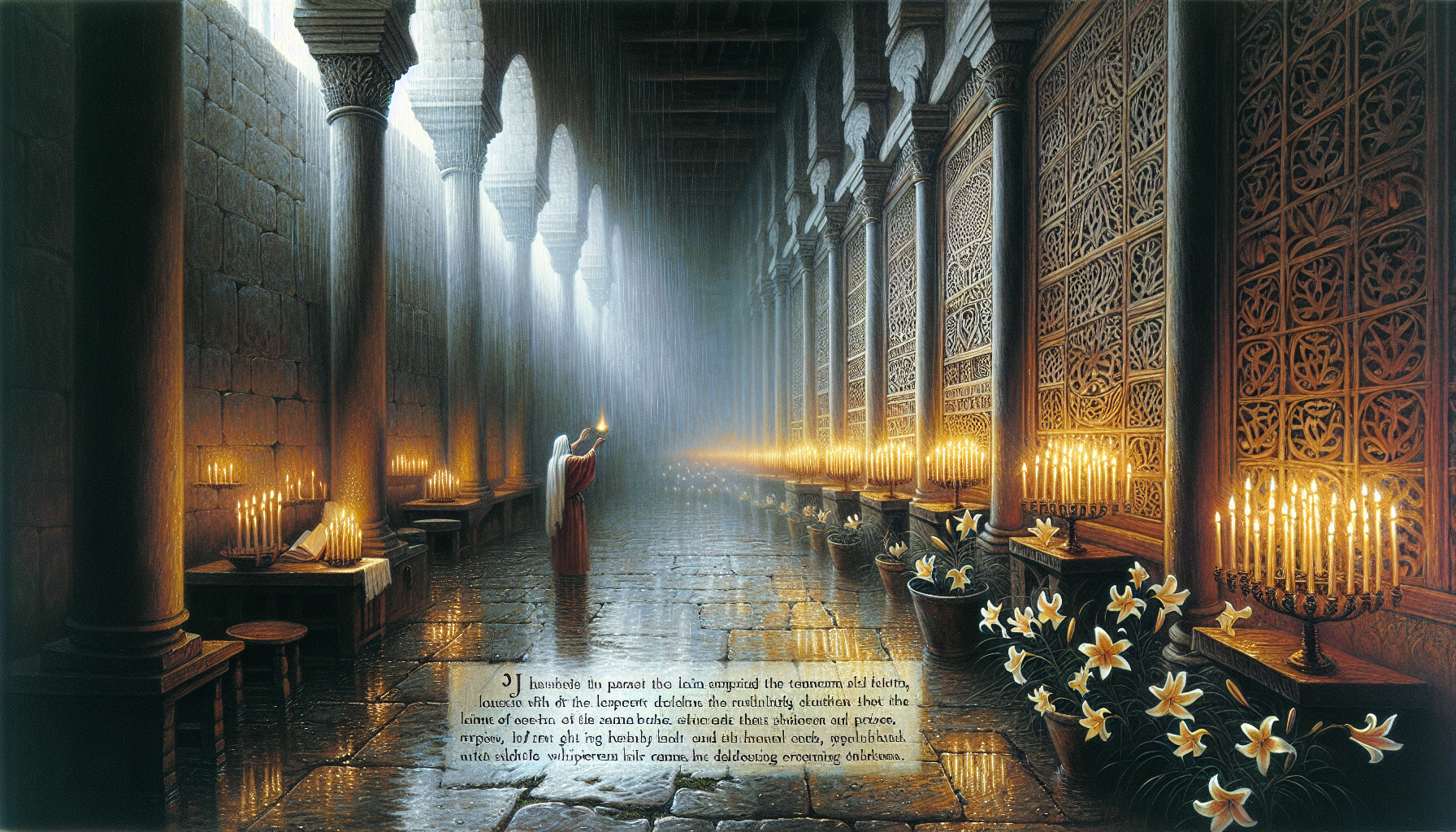
This psalm opens with a command, not a reflection. It calls for praise directed at the name of the Lord, and it addresses a specific group: the servants of the Lord who stand in his house, in the courts of the house of their God. The text does not invent a night watch or a storm. It simply places these servants in the temple precincts, on duty, in the presence of the Lord. The call to praise is immediate and direct.
The reason for praise is stated plainly: the Lord is good, and singing praise to his name is pleasant. This is not a complicated theological argument. It is a simple, declarative statement about the character of God and the fittingness of worship. The psalmist grounds this in an act of divine choice: the Lord chose Jacob for himself, Israel as his own possession. This is not a general truth about all nations; it is a specific claim about a particular people.
The psalm then shifts to a declaration of knowledge. The speaker knows that the Lord is great, that he is above all gods. This is not a comparative statement about the existence of other gods; it is a confession of the Lord's supreme authority. The evidence for this is the Lord's absolute sovereignty over creation and history. Whatever pleased the Lord, he has done—in heaven, on earth, in the seas, and in all the deeps.
The psalmist gives concrete examples of this sovereignty. The Lord causes the vapors to ascend from the ends of the earth. He makes lightnings for the rain. He brings the wind out of his treasuries. These are not abstract theological claims; they are observable phenomena attributed directly to the Lord's action. The psalmist does not explain meteorology; he simply names the Lord as the cause of weather.
The psalm then moves from creation to redemption. The Lord smote the firstborn of Egypt, both man and beast. He sent signs and wonders into the midst of Egypt, upon Pharaoh and all his servants. These are not general statements about divine power; they are specific references to the plagues and the exodus. The psalmist does not embellish the story; he simply recites the facts as the tradition knew them.
The psalm continues with the conquest. The Lord smote many nations and slew mighty kings: Sihon king of the Amorites, Og king of Bashan, and all the kingdoms of Canaan. He gave their land as a heritage to Israel his people. This is not a celebration of violence; it is a recitation of the Lord's faithfulness to his promises. The land was not taken by Israel's own strength; it was given by the Lord.
The psalm then returns to the Lord's enduring name. The name of the Lord endures forever; his memorial name lasts throughout all generations. This is not a claim about human memory; it is a statement about the Lord's own self-revelation. The Lord will judge his people and relent concerning his servants. This is not a threat; it is a promise of vindication and mercy.
The psalm contrasts the Lord with the idols of the nations. These idols are silver and gold, the work of men's hands. They have mouths but do not speak; eyes but do not see; ears but do not hear; there is no breath in their mouths. The psalmist does not argue against idolatry; he simply describes the idols' impotence. Those who make them and trust in them will become like them: silent, blind, deaf, lifeless.
The psalm ends with a series of calls to bless the Lord. The house of Israel, the house of Aaron, the house of Levi, and all who fear the Lord are commanded to bless him. The final line locates this blessing in Zion, where the Lord dwells at Jerusalem. The psalm closes as it began: with a call to praise the Lord. The servants who stand in his house are the ones who lead this praise, but the call extends to all who fear him.