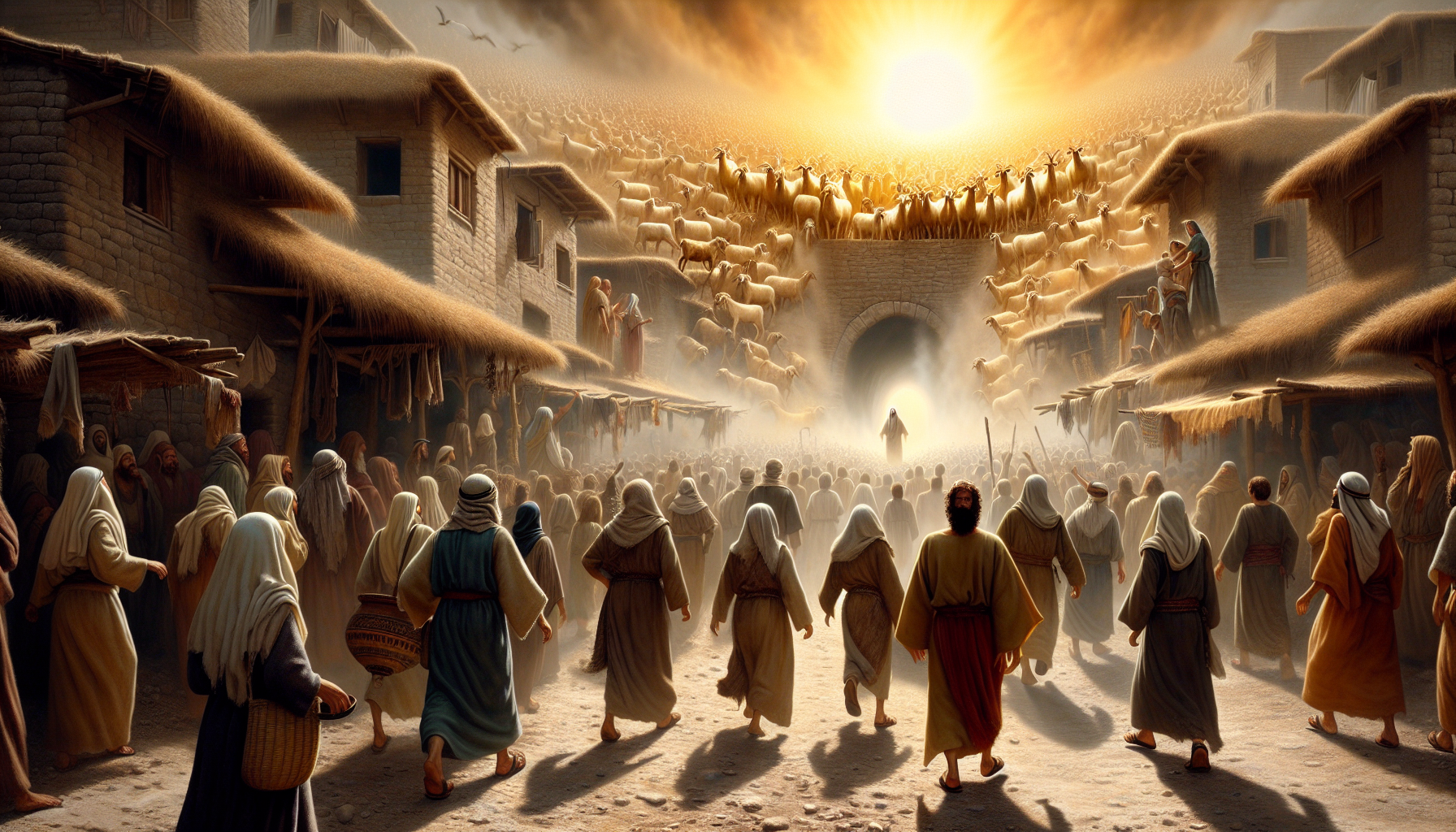
The chapter opens with a report of bloodshed. Some present tell Jesus about Galilaeans whose blood Pilate mingled with their sacrifices. Jesus does not offer comfort or explanation. He asks whether those victims were greater sinners than other Galilaeans. He answers his own question: no. But unless you repent, he says, you will all perish in the same way. Then he brings up another disaster—the tower of Siloam that fell and killed eighteen people. Were they worse offenders than everyone else in Jerusalem? No. But unless you repent, you will all likewise perish. The pressure is immediate. The question is not why the innocent suffer. The question is whether the living will turn.
Jesus tells a parable about a fig tree planted in a vineyard. A man comes looking for fruit on it for three years and finds none. He tells the vinedresser to cut it down, because it is wasting the ground. The vinedresser asks for one more year. He will dig around it and put manure on it. If it bears fruit next year, good. If not, it can be cut down. The parable does not name the tree. It does not explain the owner or the vinedresser. It simply hangs the threat of judgment over fruitlessness, with a single season of grace.
Then Jesus is teaching in a synagogue on the Sabbath. A woman is there who has had a spirit of infirmity for eighteen years. She is bent over and cannot straighten herself at all. Jesus sees her, calls her, and says she is loosed from her infirmity. He lays his hands on her. Immediately she is made straight and glorifies God. The healing is quick, public, and physical. Nothing in the text describes her face, her clothes, or the dust on the floor. What matters is that she was bound and that Jesus loosed her on the Sabbath.
The ruler of the synagogue is indignant. He does not address Jesus directly. He speaks to the crowd and says there are six days for work. People should come on those days to be healed, not on the Sabbath. Jesus answers him directly. He calls the rulers hypocrites. On the Sabbath, he says, each of you unties his ox or his donkey from the stall and leads it to water. This woman is a daughter of Abraham, bound by Satan for eighteen years. Should she not be loosed from this bond on the Sabbath? The logic is simple. If an animal gets water on the Sabbath, a human being gets freedom.
His adversaries are put to shame. The multitude rejoices at all the glorious things done by him. The tension between the healing and the objection is not resolved by debate. It is resolved by the act itself. The woman stands straight. The crowd celebrates. The rulers have nothing to say.
Jesus then speaks about the kingdom of God. It is like a mustard seed that a man took and planted in his garden. It grows into a tree, and the birds of the air lodge in its branches. It is like leaven that a woman took and hid in three measures of meal until the whole batch was leavened. Both images are small, hidden, and unstoppable. The kingdom does not arrive with a public announcement. It grows from something almost invisible.
Someone asks Jesus whether only a few will be saved. He does not give a number. He tells them to strive to enter through the narrow door. Many will try and will not be able. When the master of the house gets up and shuts the door, those outside will knock and say they ate and drank in his presence and that he taught in their streets. He will tell them he does not know where they come from and calls them workers of iniquity. There will be weeping and gnashing of teeth when they see Abraham, Isaac, Jacob, and all the prophets in the kingdom of God while they themselves are thrown out. People will come from east, west, north, and south and sit down in the kingdom. The last will be first, and the first will be last.
Some Pharisees come to Jesus at that very hour and tell him to leave because Herod wants to kill him. Jesus tells them to go tell that fox that he casts out demons and performs cures today and tomorrow, and on the third day he is perfected. He must go on his way today, tomorrow, and the following day, because it cannot be that a prophet perish outside Jerusalem. Then he speaks directly to Jerusalem. Jerusalem kills the prophets and stones those sent to her. He has often wanted to gather her children together as a hen gathers her brood under her wings, but they would not. Their house is left desolate. They will not see him again until they say, Blessed is he who comes in the name of the Lord.
The chapter moves from a warning about repentance to a healing on the Sabbath to parables of the kingdom to a lament over Jerusalem. The bent woman is not the center of the chapter. She is one piece of a larger argument about who gets in, who is shut out, and what kind of fruit the Lord is looking for. The narrow door is not a metaphor for effort. It is a fact of the text. The question is whether the fig tree will bear fruit in the time it has left.