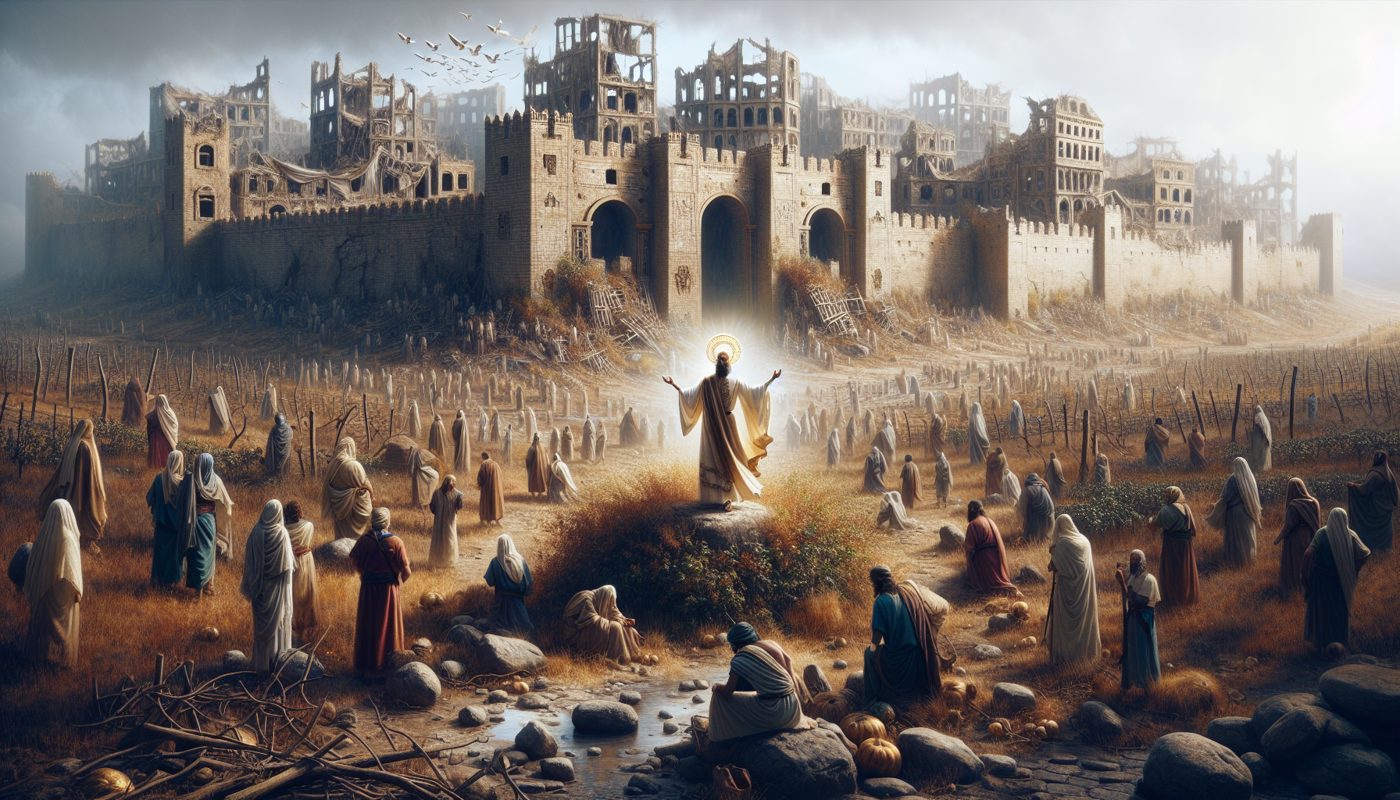
The chapter opens with a claim that carries the weight of divine commission. The Spirit of the Lord is upon the speaker, and the Lord has anointed him. This is not a ceremonial anointing with oil poured from a horn. It is a sending, a setting apart for a specific set of tasks: to preach good news to the meek, to bind up the brokenhearted, to proclaim liberty to captives, and the opening of the prison to those who are bound. The list is concrete. The work is not abstract.
The proclamation has a calendar. The speaker announces the year of the Lord’s favor and, alongside it, the day of vengeance of God. The two belong together in this announcement. Favor and vengeance are not separated by centuries. They are declared in the same breath. The year is not a vague season. It is a defined time when God acts to comfort all who mourn.
To those who mourn in Zion, the Lord appoints a direct exchange. Ashes are replaced with a garland. Mourning is replaced with the oil of joy. A heavy spirit is replaced with the garment of praise. The result is not merely personal comfort. Those who receive this exchange are called trees of righteousness, a planting of the Lord, so that he may be glorified. The transformation is visible and public.
The promise then moves from individuals to the land itself. The ancient ruins will be rebuilt. The former desolations will be raised up. The waste cities, the desolations of many generations, will be repaired. The chapter does not explain how long the desolations have stood. It simply states that they will be addressed. The work of rebuilding is not assigned to the same hands that tore down. The builders are the ones who receive the garland and the oil.
A shift in social roles follows. Strangers will feed the flocks. Foreigners will work as plowmen and vinedressers. The people of Zion, once humiliated, will be named priests of the Lord and ministers of God. They will eat the wealth of the nations and boast in their glory. The shame of the past is replaced with a double portion. Dishonor is replaced with rejoicing in their portion. Everlasting joy is the stated inheritance.
The Lord himself speaks to explain the justice behind this reversal. He loves justice. He hates robbery with iniquity. He will give recompense in truth and make an everlasting covenant. The covenant is not described in detail here. It is simply named as a guarantee. The seed of these people will be known among the nations. Those who see them will acknowledge them as the seed the Lord has blessed.
The speaker then shifts into a first-person declaration of joy. He will greatly rejoice in the Lord. His soul will be joyful in God. The reason is clothing: the Lord has clothed him with the garments of salvation and covered him with the robe of righteousness. The imagery is that of a bridegroom decking himself with a garland and a bride adorning herself with jewels. The joy is not inward only. It is displayed.
The chapter closes with a natural metaphor. As the earth brings forth its bud and a garden causes what is sown to spring forth, so the Lord God will cause righteousness and praise to spring forth before all the nations. The process is organic and certain. The ground does not refuse the seed. The Lord does not withhold the harvest. The final image is not a building or a throne. It is growth, visible and public, before the eyes of every nation.
Comments
Comments 0
Read the discussion and add your voice.
Members only
Sign in to join the conversation
We keep comments tied to real accounts so the discussion stays clean and trustworthy.
No comments yet. Be the first to add one.