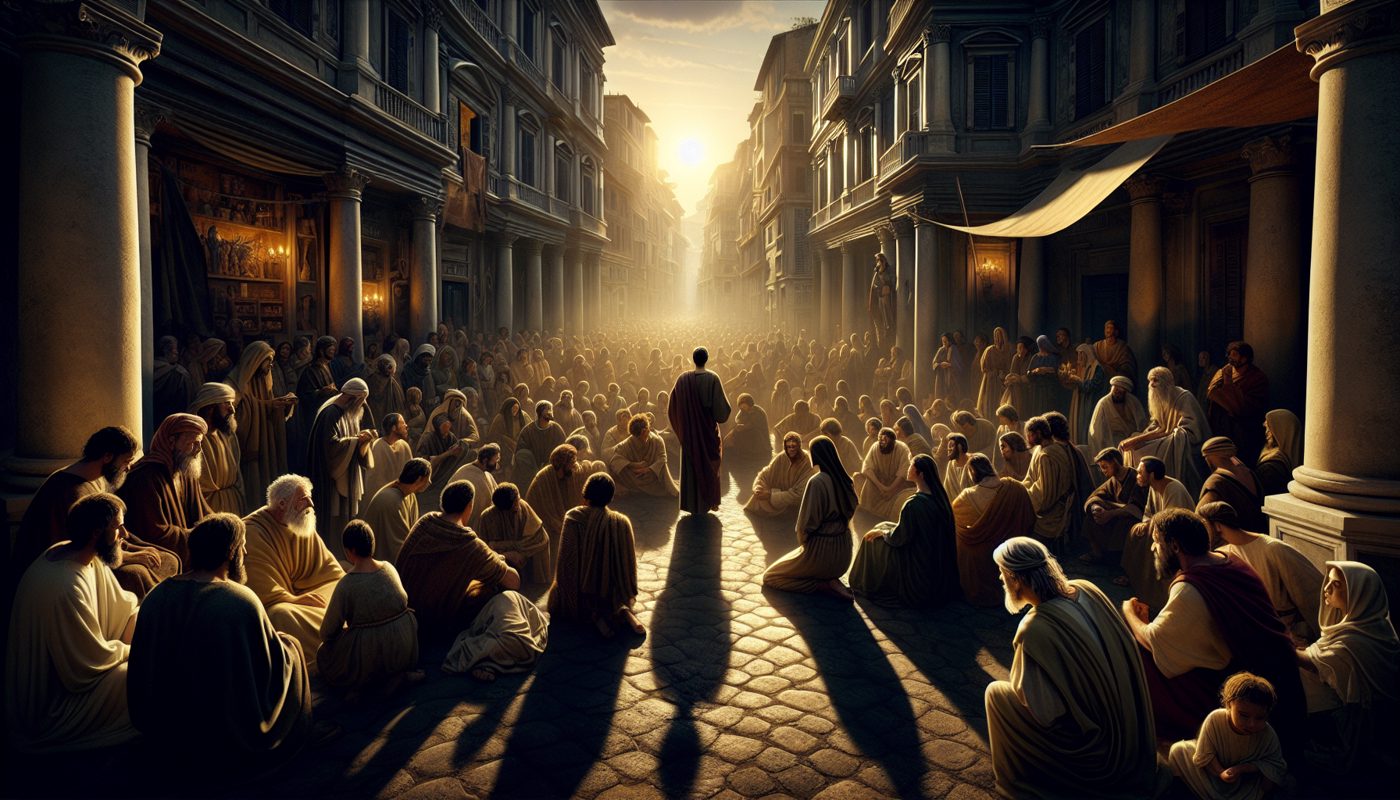
The apostle Paul presses a question that would have unsettled any Jewish believer in Rome: what advantage is there in being a Jew, and what profit is there in circumcision? He answers plainly—much in every way, first of all because the Jews were entrusted with the very oracles of God. But that privilege does not shield them from the deeper problem. If some were unfaithful, their unfaithfulness does not nullify the faithfulness of God. Let God be true and every human being a liar, as it is written.
Paul anticipates a dangerous objection. If human unrighteousness serves to highlight God's righteousness, then how can God still judge the world? And if the truth of God abounds to his glory through human falsehood, why should the liar be condemned? Paul dismisses the logic outright. The condemnation of those who reason this way is just. He will not allow the grace of God to become a license for evil, though he knows some slanderously report that he teaches exactly that.
So Paul presses the charge home. Are Jews better than Gentiles? No, not at all. He has already laid it to the charge of both Jews and Greeks that they are all under sin. He piles up citations from the Psalms and the prophets to prove the point: there is none righteous, no not one; there is none who understands; there is none who seeks after God. All have turned aside; together they have become worthless. There is none who does good, not even one.
The indictment grows more vivid. Their throat is an open grave; they use their tongues to deceive. The venom of asps is under their lips. Their mouth is full of cursing and bitterness. Their feet are swift to shed blood; ruin and misery mark their paths, and the way of peace they have not known. There is no fear of God before their eyes.
Paul then explains why the law speaks to those under the law. It is not to give them a path to boast, but to stop every mouth and bring the whole world under the judgment of God. By the works of the law no flesh will be justified in his sight, for the law brings only the knowledge of sin.
But now, Paul announces, a righteousness of God has been manifested apart from the law, though the law and the prophets bear witness to it. This righteousness comes through faith in Jesus Christ to all who believe. There is no distinction, for all have sinned and fall short of the glory of God.
They are justified freely by his grace through the redemption that is in Christ Jesus. God set him forth as a propitiation, through faith in his blood, to demonstrate his righteousness. In his forbearance, God had passed over the sins committed beforehand; now, at the present time, he shows his righteousness so that he might be just and the justifier of the one who has faith in Jesus.
Where then is boasting? It is excluded. Not by a law of works, but by a law of faith. Paul concludes that a person is justified by faith apart from the works of the law. Is God the God of Jews only? Is he not also the God of Gentiles? Yes, of Gentiles also, since God is one. He will justify the circumcised by faith and the uncircumcised through faith.
Does this faith nullify the law? Not at all. Paul insists that faith establishes the law. The law's own witness to righteousness is fulfilled, not discarded, when a person is justified by faith in Christ.
Comments
Comments 0
Read the discussion and add your voice.
Members only
Sign in to join the conversation
We keep comments tied to real accounts so the discussion stays clean and trustworthy.
No comments yet. Be the first to add one.