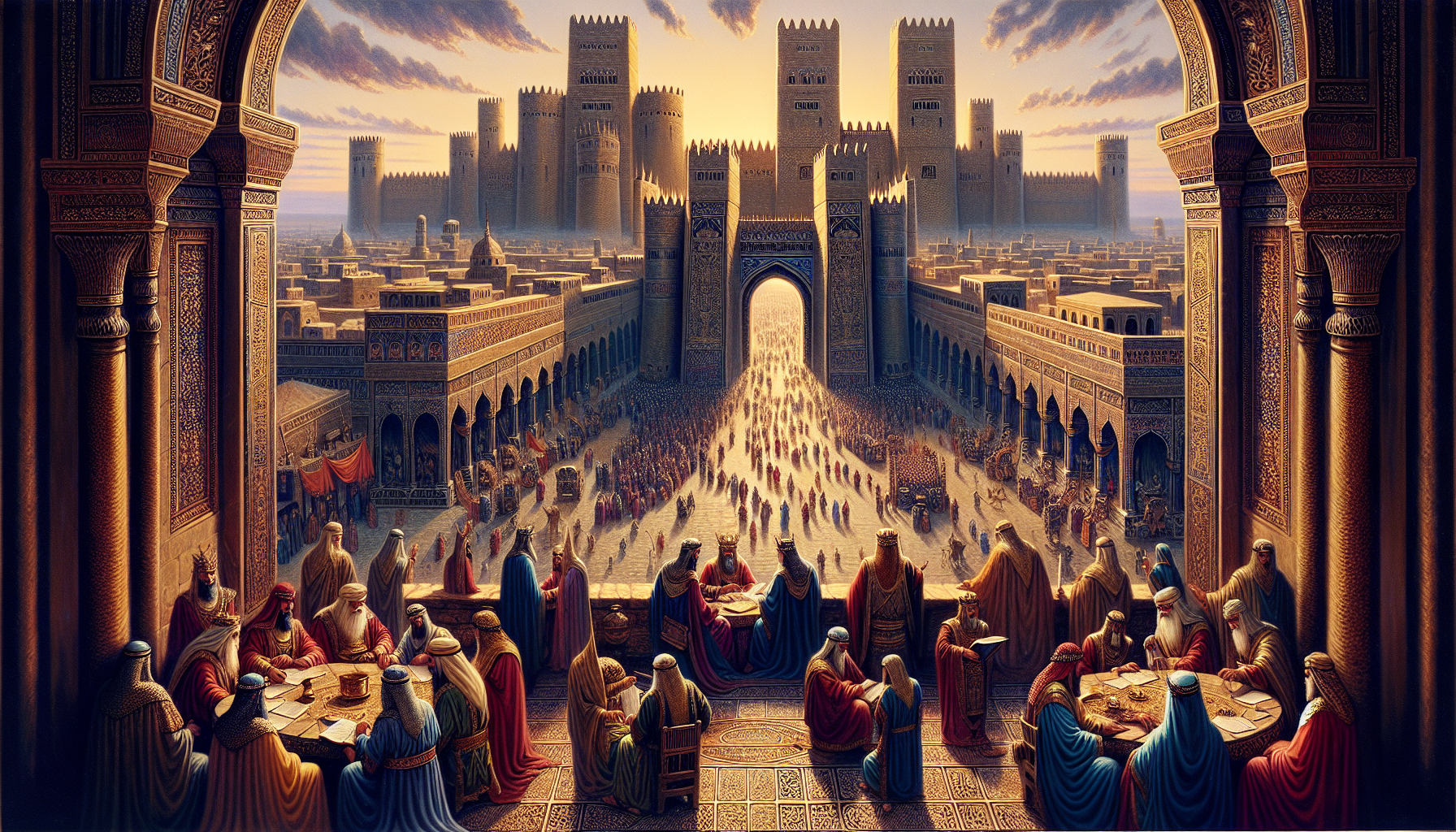
The king’s anger cooled, and he remembered Vashti. What she had done, and what had been decreed against her, lingered in his mind. But the servants who ministered to him proposed a remedy: fair young virgins should be sought throughout the provinces, gathered to Shushan the palace, placed under the custody of Hegai the king’s chamberlain, given things for purification, and the one who pleased the king would be queen instead of Vashti. The thing pleased the king, and he did so.
In Shushan the palace there was a certain Jew named Mordecai, son of Jair, son of Shimei, son of Kish, a Benjamite. He had been carried away from Jerusalem with the captives taken with Jeconiah king of Judah, whom Nebuchadnezzar king of Babylon had carried away. Mordecai had brought up Hadassah—that is, Esther—his uncle’s daughter, for she had neither father nor mother. The maiden was fair and beautiful, and when her parents died, Mordecai took her as his own daughter.
When the king’s commandment and decree were heard, many maidens were gathered to Shushan the palace, to the custody of Hegai. Esther was taken into the king’s house, to the custody of Hegai, keeper of the women. She pleased him and obtained kindness from him. He speedily gave her her things for purification, with her portions, and seven maidens meet to be given her out of the king’s house. He removed her and her maidens to the best place of the house of the women.
Esther had not made known her people nor her kindred, for Mordecai had charged her that she should not make it known. And Mordecai walked every day before the court of the women’s house, to know how Esther did and what would become of her.
The process for each maiden was fixed. After twelve months of purification—six months with oil of myrrh, six months with sweet odors and the things for purifying the women—she would go in to the king. Whatever she desired was given her to take from the house of the women to the king’s house. In the evening she went, and on the morrow she returned to the second house of the women, to the custody of Shaashgaz, the king’s chamberlain, who kept the concubines. She came in unto the king no more, except the king delighted in her and called her by name.
When Esther’s turn came—she was the daughter of Abihail, Mordecai’s uncle, who had taken her for his daughter—she required nothing but what Hegai the king’s chamberlain appointed. And Esther obtained favor in the sight of all who looked upon her.
So Esther was taken to King Ahasuerus into his house royal in the tenth month, which is the month Tebeth, in the seventh year of his reign. The king loved Esther above all the women, and she obtained favor and kindness in his sight more than all the virgins. He set the royal crown upon her head and made her queen instead of Vashti.
Then the king made a great feast for all his princes and his servants—Esther’s feast. He made a release to the provinces and gave gifts according to the bounty of the king. When the virgins were gathered together the second time, Mordecai was sitting in the king’s gate. Esther had not yet made known her kindred nor her people, as Mordecai had charged her, for she did the commandment of Mordecai like as when she was brought up with him.
In those days, while Mordecai sat in the king’s gate, two of the king’s chamberlains, Bigthan and Teresh, who kept the threshold, were wroth and sought to lay hands on King Ahasuerus. The thing became known to Mordecai, who showed it to Esther the queen. Esther told the king in Mordecai’s name. When inquisition was made and the matter was found to be so, they were both hanged on a tree. And it was written in the book of the chronicles before the king.