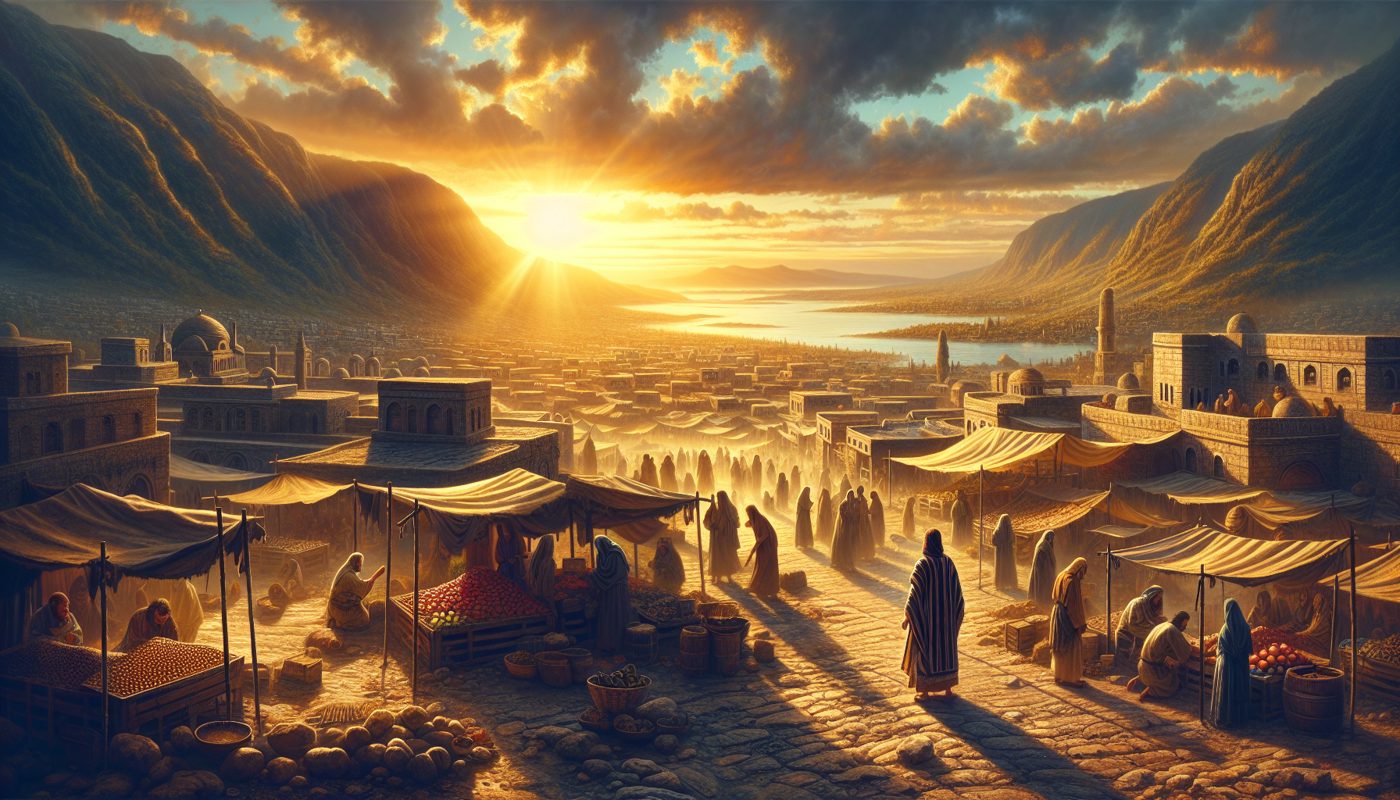
The Lord spoke to Hosea again. The command was the same as before, but the circumstances were worse. Go again, the Lord said, and love a woman who is loved by another man, a woman who has been unfaithful. The Lord did not soften the command. He did not explain why the prophet had to endure this a second time. He simply told Hosea to love her the way the Lord loved Israel, even though Israel had turned to other gods and loved raisin cakes offered to idols.
Hosea did not argue. He went and found the woman, and he bought her back. The price was fifteen pieces of silver and a homer and a half of barley. That was the cost of a slave, not a wife. She had sunk that low. He paid the full price and brought her home, but he did not take her back as a wife the way things had been before.
Instead, Hosea laid down terms. He told her she would stay with him many days. She would not play the harlot anymore. She would not belong to any other man. And he told her that he would act the same way toward her. He would be faithful, but the relationship would be restrained. There would be no intimacy for a long time. She would have to learn what it meant to wait, to be kept, to belong to one man without the privileges of a full marriage.
That waiting period was not just for Gomer. The Lord made it clear that the command carried a larger meaning. The children of Israel would also abide many days without a king, without a prince, without sacrifice, without a sacred pillar, without an ephod, and without household idols. Everything they had relied on for identity and worship would be stripped away. The throne would be empty. The altar would be cold. The priests would have no ephod to consult. The teraphim, those small household gods they had kept on the shelf, would be useless.
That was the sentence. Israel would sit in a long silence, unable to worship the Lord the way they had known, unable to turn to the idols they had loved. They would have nothing. No king to lead them. No prince to rally behind. No sacrifice to cover sin. No pillar to mark a sacred place. No ephod to seek guidance. No teraphim to whisper false promises. They would be left empty, waiting.
But the waiting was not the end. The Lord said that afterward the children of Israel would return. They would seek the Lord their God. They would seek David their king. The language pointed to a future restoration, but the chapter did not describe it in detail. It simply said they would come with fear, trembling, to the Lord and to His goodness in the latter days. The fear was not terror. It was the kind of reverence that comes after a long exile, after the silence, after the stripping away of everything false.
The chapter ended there. It did not say how long the waiting would last. It did not describe the return. It did not name the king who would come. It left the reader with the image of a prophet buying back an adulterous woman and a nation sitting in the dust, waiting for the goodness of the Lord to appear.
The command to Hosea was not a metaphor. It was a real purchase, a real marriage, a real waiting period. The Lord did not ask Hosea to imagine what unfaithfulness felt like. He made him live it. He made him pay the price and then wait. That was the kind of love the Lord had for Israel. Not a distant affection, but a costly, patient, restrained love that would not let go even when the beloved had sold herself to others.
Comments
Comments 0
Read the discussion and add your voice.
Members only
Sign in to join the conversation
We keep comments tied to real accounts so the discussion stays clean and trustworthy.
No comments yet. Be the first to add one.