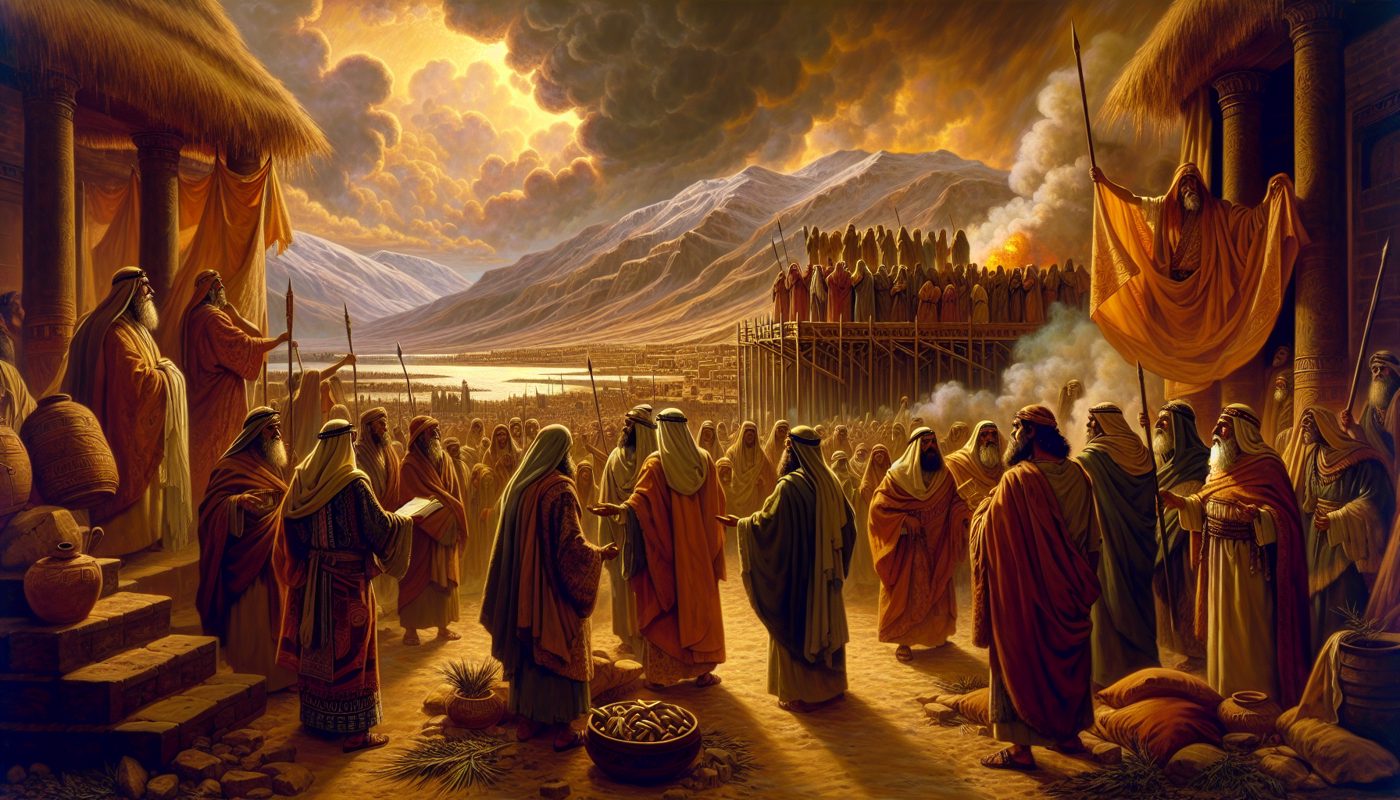
In the fourth year of King Darius, in the ninth month called Chislev, a delegation from Bethel arrived in Jerusalem. They came with Sharezer and Regem-Melech, men sent to entreat the favor of the Lord. Their question, put to the priests of the Lord of hosts and to the prophets, was a practical one: should they continue to weep and fast in the fifth month, as they had done for so many years?
The word of the Lord came to Zechariah, but not as a direct answer to the delegation alone. The Lord told him to speak to all the people of the land and to the priests. The question was turned back on them. When they fasted and mourned in the fifth and seventh months for seventy years, the Lord asked, did they fast for Him? Did they fast for the Lord, even for the Lord?
The Lord pressed the matter further. When they ate and when they drank, did they not do it for themselves? The fasts and feasts alike were hollow if the heart was not turned toward God. The Lord reminded them of the words He had cried out by the former prophets, when Jerusalem was still inhabited and prosperous, with its surrounding cities, the South, and the lowland all occupied.
Then the word of the Lord came again to Zechariah, sharpening the point. The Lord of hosts had spoken plainly: execute true judgment, show kindness and compassion every man to his brother. Do not oppress the widow, the fatherless, the sojourner, or the poor. Let none of you devise evil against his brother in your heart.
But the people refused to hear. They pulled away the shoulder, stopped their ears so they would not hear. They made their hearts like an adamant stone, determined not to hear the law and the words that the Lord of hosts had sent by His Spirit through the former prophets. Because of this, great wrath came from the Lord of hosts.
The Lord declared the consequence plainly. As He cried and they would not hear, so when they cry, He will not hear. He would scatter them with a whirlwind among nations they had not known. The land would be made desolate after them, so that no one passed through or returned. They had laid the pleasant land desolate.
The delegation from Bethel had come asking about a ritual. The Lord answered by exposing the condition of the heart that had brought the exile in the first place. The fasts were not the problem. The problem was that the fasts had never been about Him, and the people had never obeyed what He had already said.
The chapter does not record what the delegation said in response. The question of the fifth-month fast is left hanging, absorbed into a larger indictment. The Lord did not give a yes or no about continuing the fast. He gave a diagnosis that reached back seventy years and forward into the consequences that had already fallen.
Comments
Comments 0
Read the discussion and add your voice.
Members only
Sign in to join the conversation
We keep comments tied to real accounts so the discussion stays clean and trustworthy.
No comments yet. Be the first to add one.