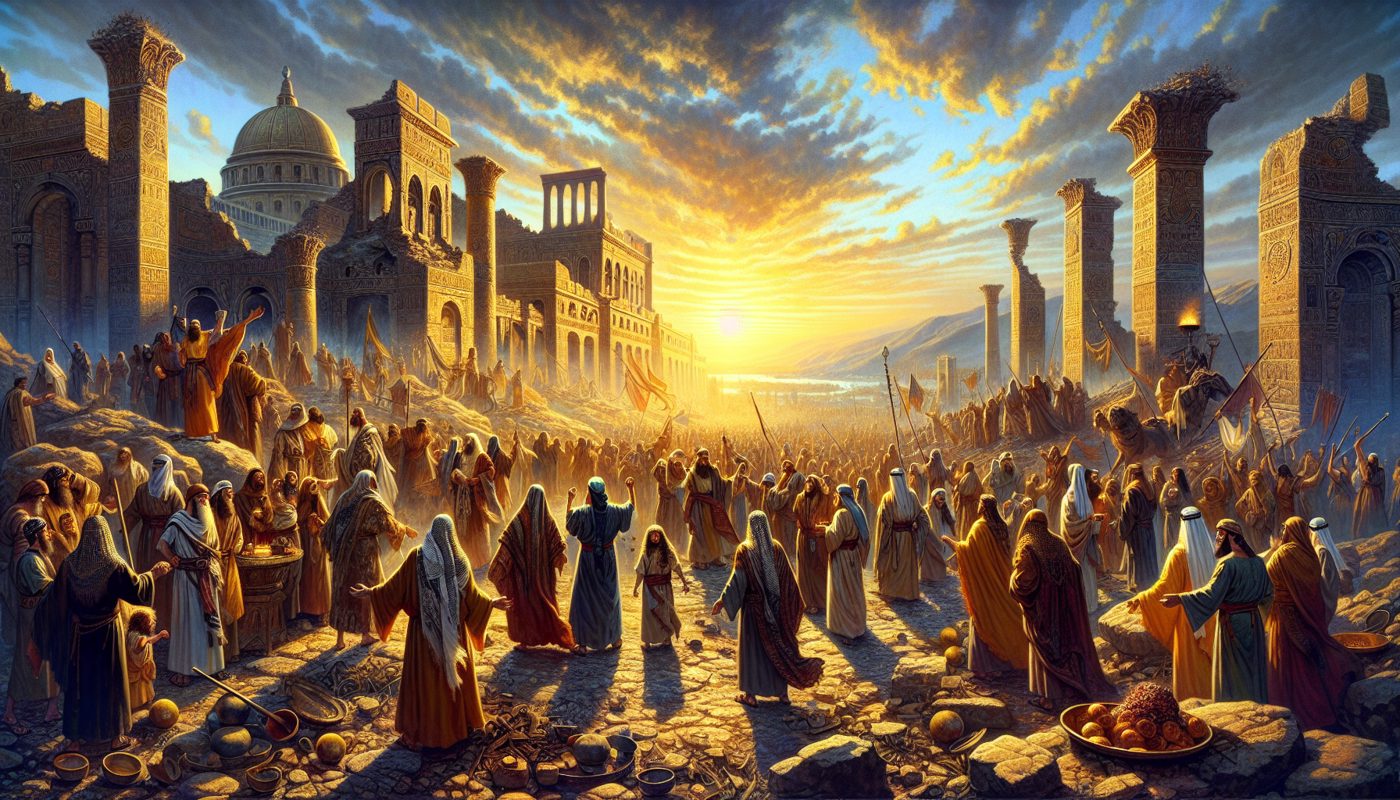
The seventh month arrived, and the people of Israel gathered in Jerusalem as one man. They had returned from exile to a city still broken, but the calendar demanded what the ruins could not cancel: the Feast of Tabernacles, the sacred assemblies, the offerings prescribed in the law of Moses. So Jeshua the priest and Zerubbabel the governor rose with their brothers and built the altar of the God of Israel on its old base, before the foundation of the temple itself was laid.
The text gives the reason plainly: fear was upon them because of the peoples of the countries. The surrounding nations were hostile, and the returned exiles were few and vulnerable. Yet they did not wait for safety before they worshiped. They set the altar on its base and began offering burnt offerings morning and evening, as the law required, even while the ground around them was still littered with the debris of Nebuchadnezzar's destruction.
From the first day of the seventh month, they offered the daily burnt offerings. They kept the Feast of Tabernacles according to the written ordinance, with the prescribed number of offerings for each day. Then they continued with the offerings for the new moons and all the consecrated feasts of the Lord, along with the freewill offerings of anyone who chose to bring a gift. The altar stood and the smoke rose, but the foundation of the temple had not yet been laid.
They also gave money to the masons and carpenters, and provided food, drink, and oil to the men of Sidon and Tyre to bring cedar logs from Lebanon by sea to Joppa. This they did under the grant that Cyrus king of Persia had given them. The work of rebuilding the house of the Lord had begun in earnest, but it would take time.
In the second year of their return to Jerusalem, in the second month, Zerubbabel and Jeshua, together with the priests, the Levites, and all who had come out of captivity, appointed the Levites from twenty years old and upward to oversee the work of the house of the Lord. Jeshua and his sons and brothers, Kadmiel and his sons, the sons of Judah, and the sons of Henadad with their sons and brothers the Levites, all stood together to supervise the workmen.
When the builders laid the foundation of the temple, the priests in their vestments stood with trumpets, and the Levites, the sons of Asaph, stood with cymbals, to praise the Lord according to the order of David king of Israel. They sang responsively, praising and giving thanks to the Lord: “For he is good, for his lovingkindness endures forever toward Israel.”
And all the people shouted with a great shout when they praised the Lord, because the foundation of the house of the Lord was laid. But the sound was not uniform. Many of the priests, Levites, and heads of fathers' houses who were old enough to have seen the first temple wept with a loud voice when they saw this new foundation. Others shouted aloud for joy. The two noises mingled until the people could not distinguish the shout of joy from the sound of weeping. The noise was heard far off.
The chapter does not explain what the old men saw when they wept. It does not say whether they wept from grief at what was lost or from relief that something had been restored. It only records that the weeping and the shouting rose together, indistinguishable, and that the sound carried. The altar had been rebuilt, the foundation laid, and the worship of the Lord had resumed in Jerusalem. But the memory of what had been destroyed was still present in the voices of those who had seen it.
Comments
Comments 0
Read the discussion and add your voice.
Members only
Sign in to join the conversation
We keep comments tied to real accounts so the discussion stays clean and trustworthy.
No comments yet. Be the first to add one.