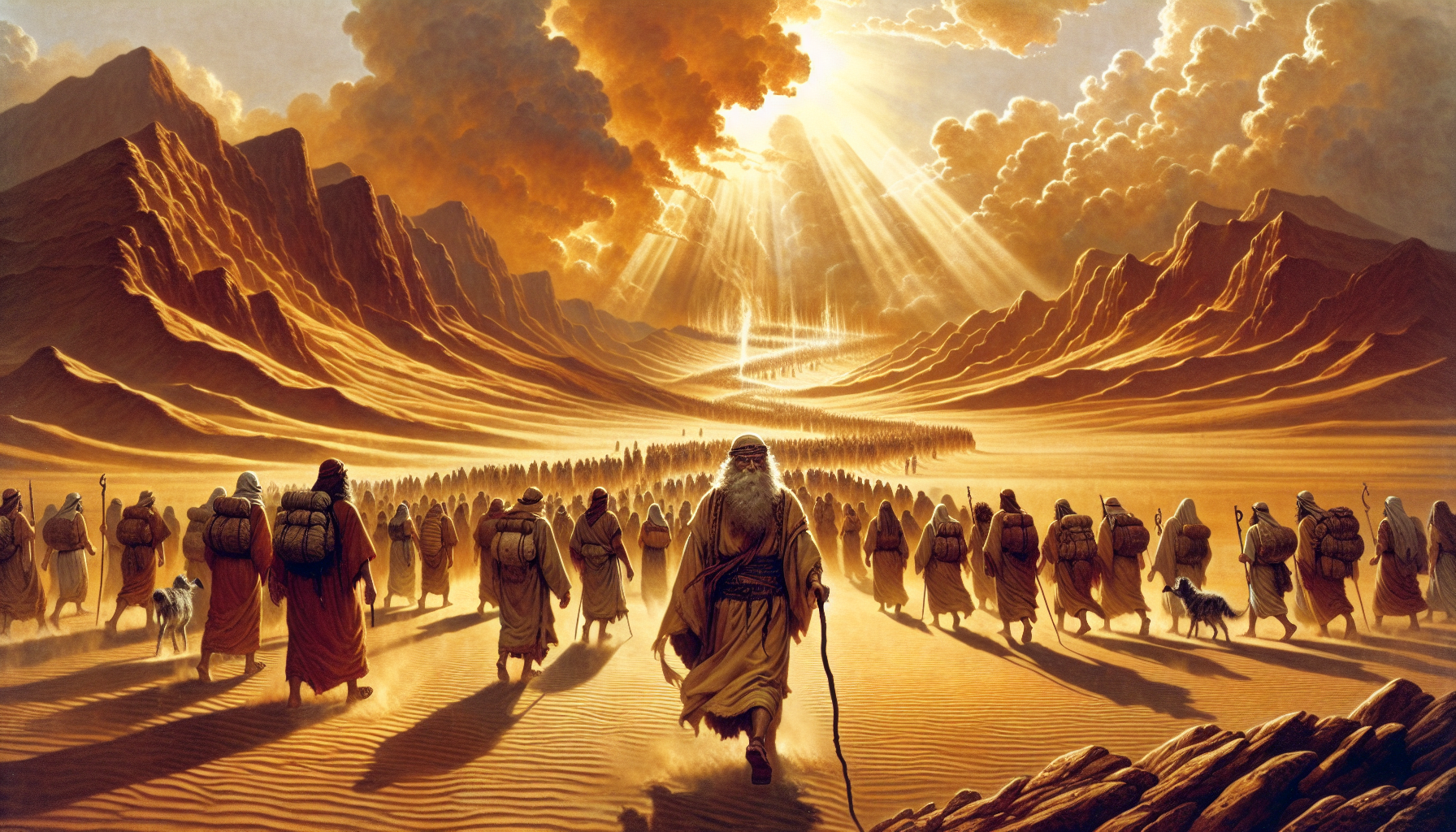
Numbers 33 is a bare itinerary, a list of forty-two encampments between Rameses and the plains of Moab. It does not pause to describe the manna, the water from the rock, the golden calf, or the rebellions. It gives only the names—Rameses, Succoth, Etham, Pi-hahiroth, Marah, Elim, and so on—and the fact that Moses wrote them down at the Lord’s command. The chapter is a record, not a story, and its power lies in what it refuses to embellish.
The opening verses set the frame. The children of Israel went out from Rameses on the fifteenth day of the first month, the day after the Passover, with a high hand in the sight of all the Egyptians. While the Egyptians were burying their firstborn, the Lord executed judgments on their gods. That is the only theological commentary the chapter offers on the exodus itself. Everything else is movement.
From Succoth to Etham, then back to Pi-hahiroth before Migdol, then through the sea into the wilderness of Etham. The route is not a straight line. It doubles back, loops around, and presses into dry country. At Marah there was no water, but the chapter does not mention the bitter water being sweetened. At Rephidim there was no water for the people to drink, but the chapter does not mention the rock struck by Moses. The events that fill Exodus and Numbers are absent here. Only the geography remains.
The list continues through the wilderness of Sinai, Kibroth-hattaavah, Hazeroth, Rithmah, and on through a string of names that most readers will never encounter again: Rimmon-perez, Libnah, Rissah, Kehelathah, mount Shepher, Haradah, Makheloth, Tahath, Terah, Mithkah, Hashmonah. The repetition is relentless. They journeyed from X and encamped in Y. They journeyed from Y and encamped in Z. The pattern does not break until the fortieth year.
At mount Hor, the chapter records the death of Aaron. He went up the mountain at the Lord’s command and died there in the fifth month of the fortieth year. He was one hundred twenty-three years old. The verse is clinical. No mourning scene, no eulogy, no transfer of the high priestly garments. Aaron simply dies, and the journey continues.
The Canaanite king of Arad heard that Israel was coming, but the chapter does not say what he did. It moves on to Zalmonah, Punon, Oboth, Iye-abarim on the border of Moab, then Dibon-gad, Almon-diblathaim, the mountains of Abarim before Nebo, and finally the plains of Moab by the Jordan at Jericho. The encampment stretched from Beth-jeshimoth to Abel-shittim. Forty years after leaving Egypt, they were camped within sight of the land.
Then the Lord spoke to Moses in the plains of Moab. The speech is direct and conditional. When you cross the Jordan into Canaan, you must drive out all the inhabitants, destroy their figured stones, their molten images, and their high places. Take possession of the land and dwell in it, because the Lord has given it to you. The inheritance is to be divided by lot, according to the size of each tribe.
But the command carries a warning. If you do not drive out the inhabitants, those you let remain will become pricks in your eyes and thorns in your sides. They will vex you in the land where you dwell. And what the Lord planned to do to them, he will do to you. The chapter ends there, with the threat hanging over the inheritance.
The itinerary is not a travelogue. It is a legal document, a witness to the fact that Israel moved from place to place under the Lord’s direction, and that the journey had a terminus. The list of names proves that the generation that left Egypt did not wander aimlessly. They followed a route that Moses recorded, and they arrived at the border of the land. The rest depended on whether they would obey the command to clear the land completely.
Numbers 33 does not celebrate the journey. It certifies it. The forty-two encampments are the evidence that the Lord led his people step by step, and that the promise made at Rameses was still in force when they reached the Jordan. The chapter is a ledger, and the final entry is a warning.