The chapter opens with a direct collision. The people murmur, and the Lord hears it. There is no slow build, no diplomatic warning. Fire breaks out from the Lord and consumes the edge of the camp. The place is named Taberah, meaning burning, because that is what happened. The people cry to Moses, Moses prays, and the fire stops. But the problem is not fire. The problem is what the fire exposed.
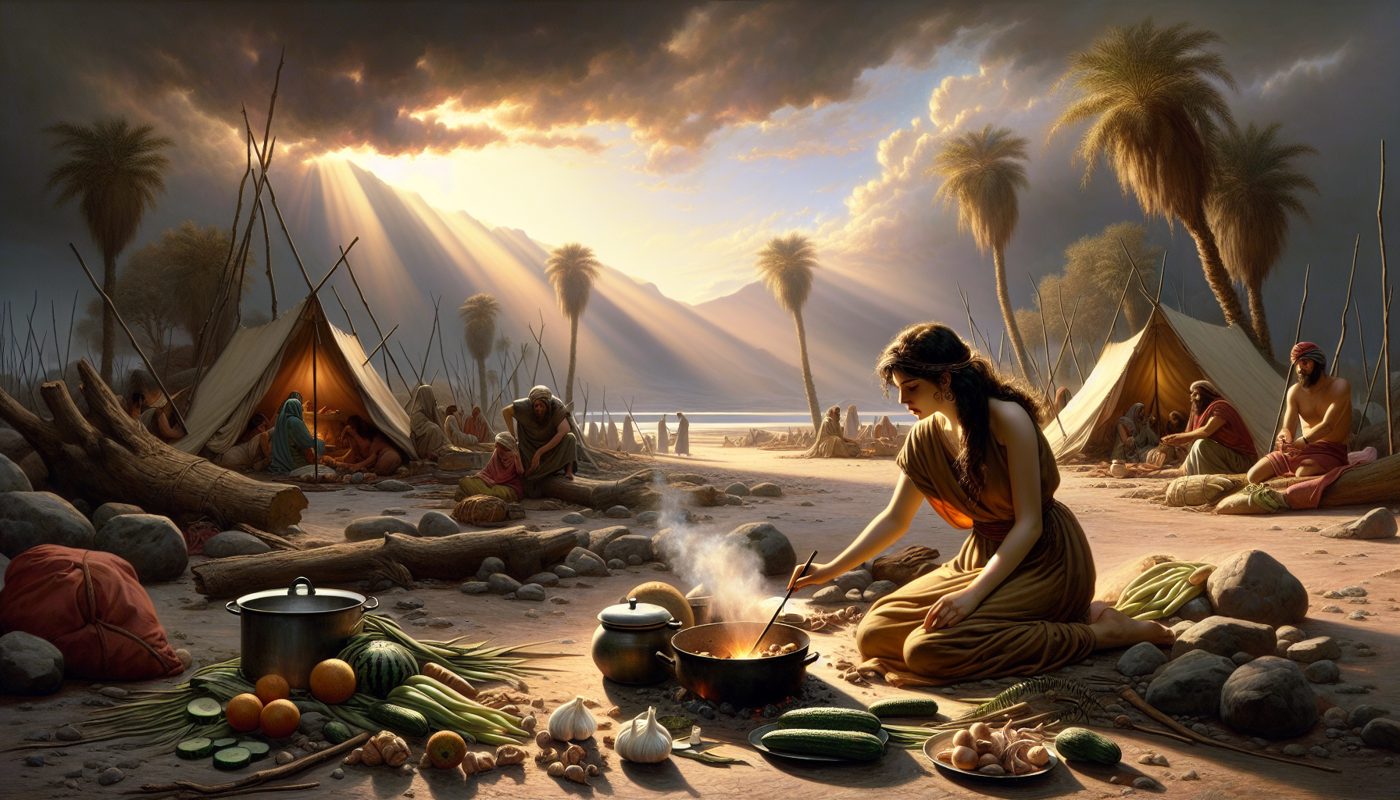
Then the mixed multitude among them begins to lust. The children of Israel join in, weeping again, and the demand is specific: flesh to eat. They remember Egypt not as a place of slavery but as a place of fish, cucumbers, melons, leeks, onions, and garlic. The manna, which falls with the dew and tastes like fresh oil, becomes nothing to them. Their souls are dried away by the very bread that keeps them alive.
Moses hears the weeping at the doors of the tents, every family, every man. The Lord’s anger is kindled greatly. And Moses is displeased. He does not scold the people. He turns to the Lord and speaks with raw honesty. He asks why the Lord has dealt ill with his servant, why the burden of this people is laid on him. He did not conceive them or birth them, yet he is told to carry them like a nursing father carries a suckling child. He cannot provide flesh for them. He cannot bear them alone. He asks to be killed outright if he has found favor, so he does not have to see his own wretchedness.
The Lord does not rebuke Moses. Instead, he gives an answer that addresses both the leadership crisis and the demand for meat. He tells Moses to gather seventy elders of Israel, men already known as elders and officers, and bring them to the tent of meeting. The Lord will come down, speak there, and take the Spirit that is on Moses and put it on them. They will bear the burden of the people with him, so he does not bear it alone.
Then the Lord addresses the people directly. They are to sanctify themselves, because tomorrow they will eat flesh. They wept in the Lord’s ears, saying who will give us flesh, saying it was well with us in Egypt. So the Lord will give them flesh, and they will eat. Not one day, not two, not five, not ten, not twenty, but a whole month, until it comes out their nostrils and becomes loathsome to them. Because they have rejected the Lord who is among them, and wept before him asking why they ever came out of Egypt.
Moses reacts with disbelief. He counts six hundred thousand footmen, and the Lord has promised meat for a whole month. He asks if flocks and herds must be slaughtered, if all the fish of the sea must be gathered. The Lord answers with a short question: Is the Lord’s hand waxed short? Moses will see whether the word comes to pass or not.
Moses goes out and tells the people the Lord’s words. He gathers the seventy elders and sets them around the tent. The Lord comes down in the cloud, speaks to Moses, and takes the Spirit that was on him and puts it on the seventy. When the Spirit rests on them, they prophesy. But they do not continue prophesying. The Spirit comes for a specific purpose, and it is done.
Two men, Eldad and Medad, remain in the camp. They were listed among the elders but did not go out to the tent. Yet the Spirit rests on them as well, and they prophesy in the camp. A young man runs to tell Moses. Joshua, Moses’ chosen minister, tells Moses to forbid them. Moses refuses. He asks Joshua if he is jealous for Moses’ sake, and says he wishes all the Lord’s people were prophets, that the Lord would put his Spirit on them all. Then Moses goes back into the camp with the elders of Israel.
A wind goes out from the Lord, driving quail from the sea, and they fall around the camp, a day’s journey on each side, about two cubits deep on the ground. The people spend all that day and night and the next day gathering quail. The least gatherer collects ten homers. They spread them out around the camp. But while the flesh is still between their teeth, before it is chewed, the Lord’s anger kindles against the people, and he strikes them with a very great plague.
That place is named Kibroth-hattaavah, the graves of lust, because there they buried the people who had lusted. From there the people journey to Hazeroth, and they stay there. The chapter ends without resolution. The fire stopped, the elders were appointed, the Spirit came, the quail arrived, and then the plague fell. The Lord gave exactly what they demanded, and it destroyed them.
Comments
Comments 0
Read the discussion and add your voice.
Members only
Sign in to join the conversation
We keep comments tied to real accounts so the discussion stays clean and trustworthy.
No comments yet. Be the first to add one.