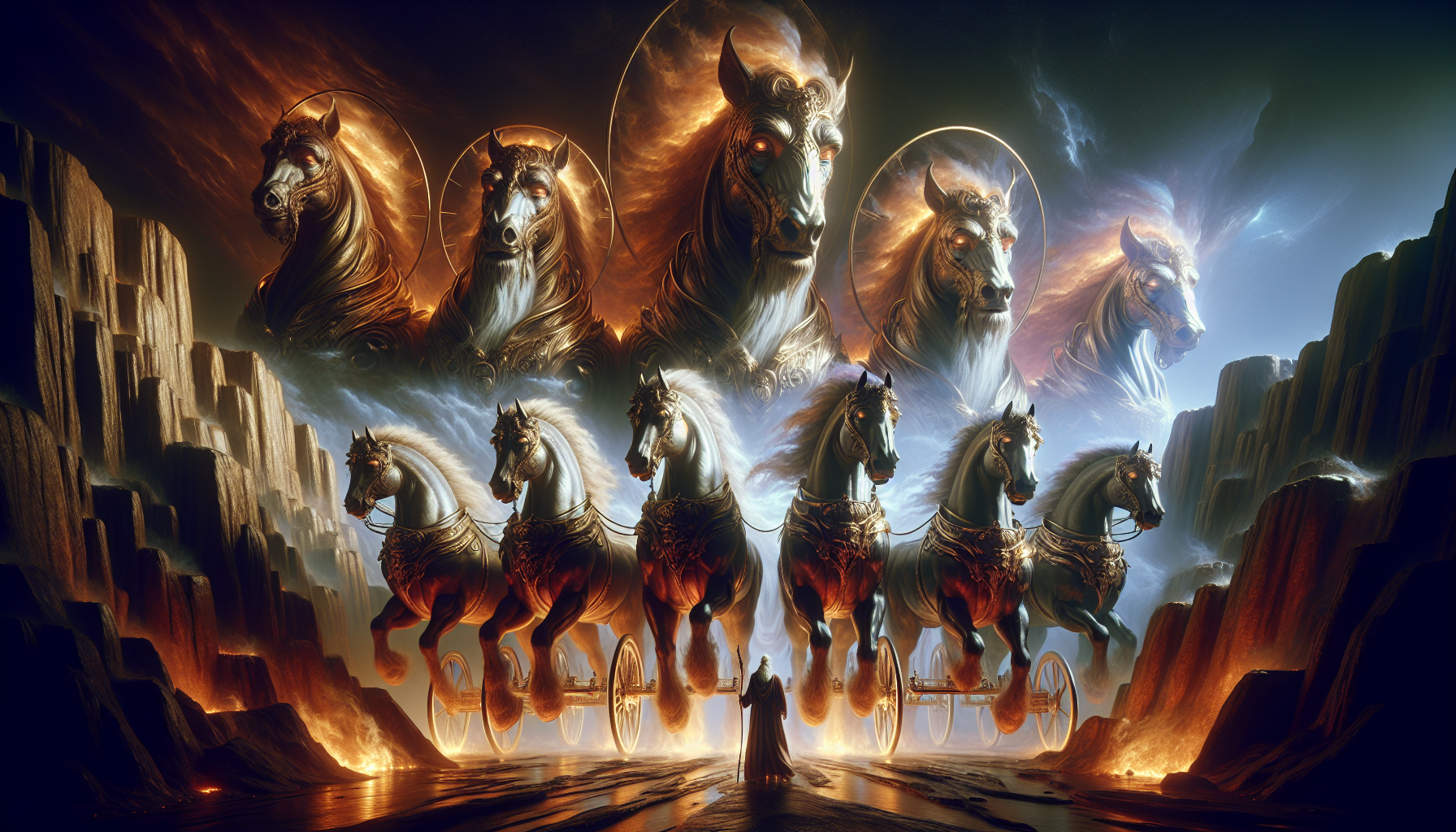
The eighth vision in the night sequence given to Zechariah opens with four chariots emerging from between two mountains of bronze. The metal is not ornamental. Bronze in this context signals judgment and permanence, and the mountains stand like gates through which something decisive is released. The prophet sees red horses in the first chariot, black in the second, white in the third, and in the fourth chariot horses that are described as grizzled and strong. The detail matters: these are not decorative animals but forces under command.
Zechariah asks the angel what these chariots mean. The answer is direct: they are the four winds of heaven, sent out from standing before the Lord of all the earth. The language of standing suggests a court scene. These spirits have been in the presence of the Lord, and now they are dispatched. The black horses go toward the north country, the white follow after them, and the grizzled go toward the south country. The red horses are not assigned a direction in the same way, but the strong horses seek to walk to and fro through the earth, and the Lord grants that permission.
Then the angel cries out to Zechariah with an explanation that is both theological and political: those who go toward the north country have quieted the Lord's spirit in the north country. The north country in this period means Babylon and the regions where the exile had been centered. The vision announces that the Lord's spirit is no longer stirred against that territory. Judgment has been executed. The chariots have done their work.
At verse 9 the form of the chapter shifts abruptly. The word of the Lord comes to Zechariah not in a vision but in a direct command. He is told to take silver and gold from certain men who have just arrived from Babylon: Heldai, Tobijah, and Jedaiah. These are captives, returned exiles. Zechariah is to go the same day to the house of Josiah son of Zephaniah, where these men are staying, and from their contributions he is to make crowns.
The crowns are not for a king. They are to be set on the head of Joshua son of Jehozadak, the high priest. This is a startling move. In the normal order of Israel, the high priest does not wear a crown. The crown belongs to the Davidic king. But here the prophet is told to crown the priest and then to speak a specific oracle to him.
The oracle names a figure: the Branch. The language echoes earlier prophetic promises. The Branch will grow up from his place and build the temple of the Lord. He will bear glory, sit and rule on his throne, and be a priest on his throne. The phrase is deliberately compressed. One person holds two offices. The counsel of peace, the oracle says, will be between them both. The grammar is ambiguous but the point is clear: the division between priesthood and kingship is being resolved in a single figure.
The crowns themselves do not remain on Joshua's head. They are to be placed in the temple of the Lord as a memorial for Helem, Tobijah, Jedaiah, and Hen the son of Zephaniah. These are the men who brought the gold and silver from Babylon. Their names are preserved not because they are great but because they participated in this symbolic act. The memorial stands in the temple as a public witness.
The chapter closes with a promise and a condition. Those who are far off will come and build in the temple of the Lord. That is the promise. The condition follows: this will come to pass if you diligently obey the voice of the Lord your God. The vision of chariots and the crowning of the priest are not ends in themselves. They are signs that press toward a future that depends on obedience. The chapter does not say whether that obedience was given.