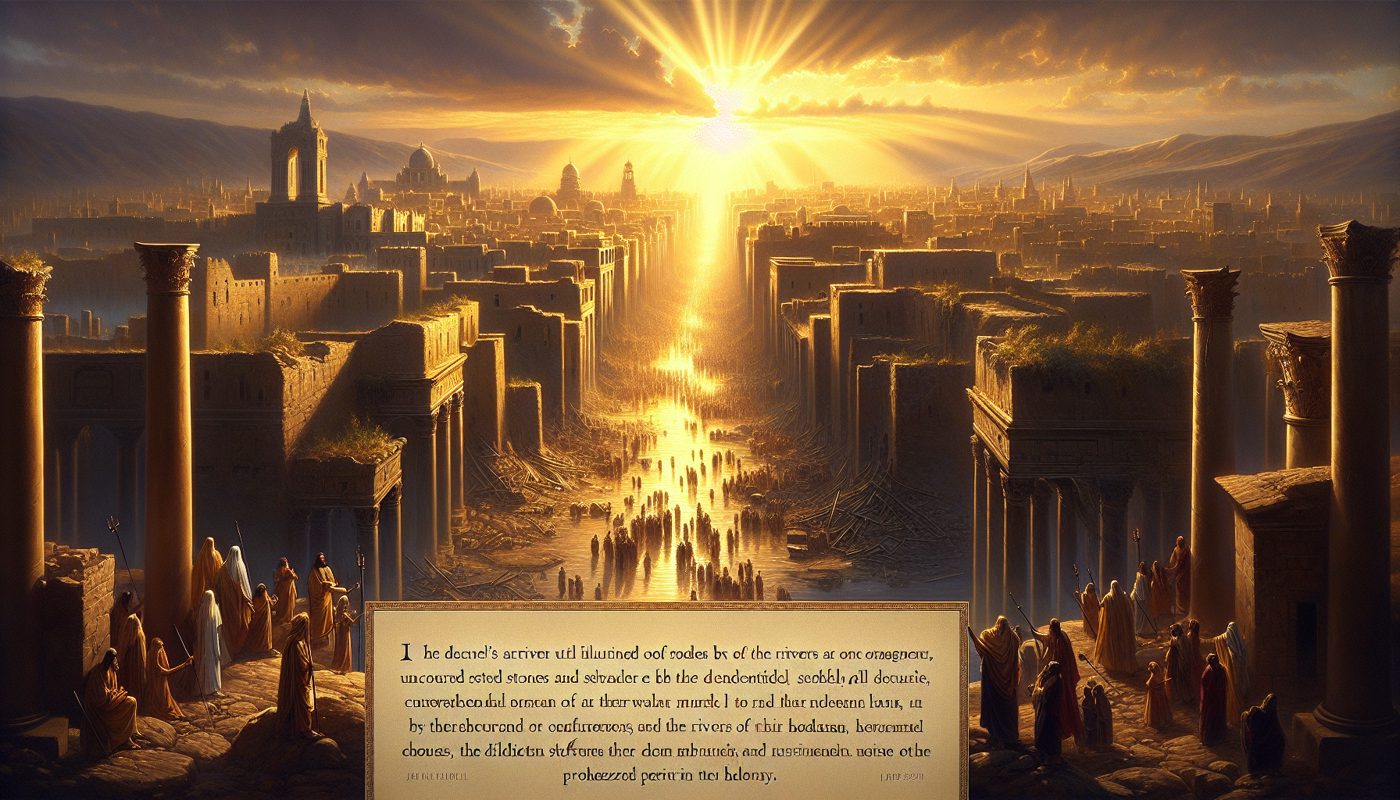
The chapter opens with a list. It is not a story of weeping by the rivers of Babylon or a dramatic decree from Cyrus. The decree has already been issued, and the return is underway. What Ezra 2 records is the census of those who answered the call—a dry, meticulous roll of names and numbers that carries its own weight.
The leaders are named first: Zerubbabel, Jeshua, Nehemiah, Seraiah, Reelaiah, Mordecai, Bilshan, Mispar, Bigvai, Rehum, and Baanah. These are the men who stood at the head of the caravan, but the chapter does not describe their emotions or their conversations. It simply records that they came, and then it begins to count.
The people of Israel are tallied by clan. The children of Parosh number 2,172. The children of Shephatiah number 372. The children of Arah number 775. The list continues, family by family, with numbers that feel both precise and impersonal. These are not round figures; they are the actual count of men who packed their belongings and walked out of Babylon.
The priests are listed separately. The children of Jedaiah, of the house of Jeshua, number 973. The children of Immer number 1,052. The children of Pashhur number 1,247. The children of Harim number 1,017. The priests are a distinct group, and their numbers are recorded with the same care as the rest of the people.
The Levites are far fewer: only 74. The singers number 128. The porters—the gatekeepers—number 139. The Nethinim, the temple servants, are listed by their families: the children of Ziha, the children of Hasupha, the children of Tabbaoth, and many more. Their total, along with the children of Solomon’s servants, comes to 392.
Then comes a problem. Some who came up from Tel-melah, Tel-harsha, Cherub, Addan, and Immer could not prove their ancestry. They had no register to show they were of Israel. Among them were the children of Delaiah, Tobiah, and Nekoda, 652 in all. And among the priests, the children of Habaiah, Hakkoz, and Barzillai—the last named after the Gileadite whose daughter he married—could not find their names in the genealogical records. They were deemed polluted and put from the priesthood.
The governor ruled that they could not eat of the most holy things until a priest arose who could consult the Urim and Thummim. The chapter does not say whether that priest ever came. The matter was left unresolved, a quiet tension in the midst of the return.
The total assembly numbered 42,360, plus 7,337 male and female servants, and 200 singing men and women. They brought with them 736 horses, 245 mules, 435 camels, and 6,720 donkeys. These are not spiritual symbols; they are the actual livestock that carried the people and their goods back to the land.
When the heads of the fathers’ houses arrived at the house of the Lord in Jerusalem, they gave willingly for the rebuilding. They contributed 61,000 darics of gold, 5,000 pounds of silver, and 100 priests’ garments. The chapter does not say that they wept or that the city was in ruins. It only says that they gave, and that they gave according to their ability.
The chapter ends with a quiet settlement: the priests, the Levites, some of the people, the singers, the porters, and the Nethinim dwelt in their cities. All Israel dwelt in their cities. The return was not a spectacle. It was a census, a donation, and a slow reoccupation of the land. The list itself is the story.
Comments
Comments 0
Read the discussion and add your voice.
Members only
Sign in to join the conversation
We keep comments tied to real accounts so the discussion stays clean and trustworthy.
No comments yet. Be the first to add one.