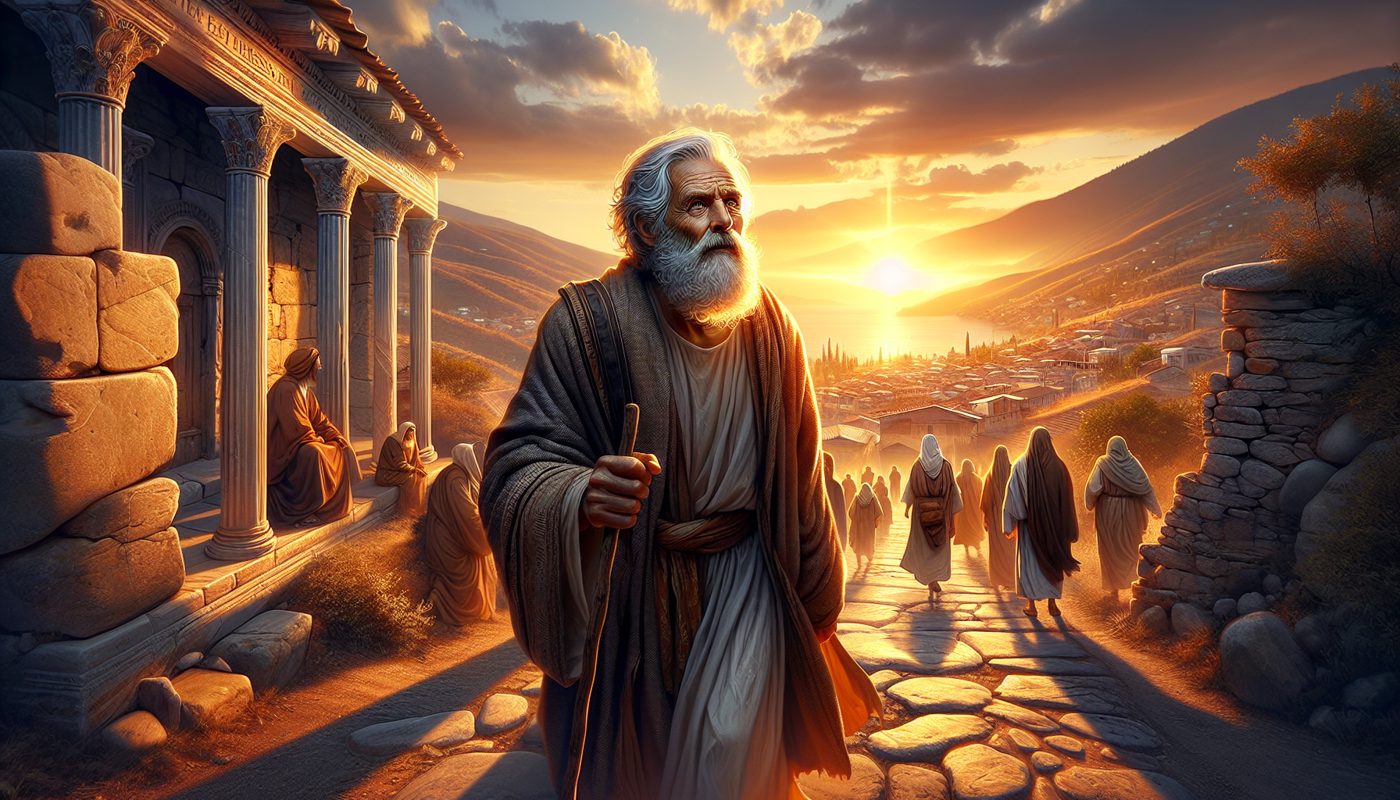
This chapter of John's letter draws a sharp line, and it does not blur. The opening question is not about method or ritual but about identity: what kind of love makes a person a child of God? John does not speculate. He states plainly that believers already are children of God, and that the world does not recognize them for the same reason it did not recognize Christ. The division is not subtle. It is built into the very fact of belonging to God.
John then moves to the future. He says that what believers will become has not yet been revealed, but when Christ appears, they will be like him because they will see him as he is. This hope is not abstract comfort. It has a practical consequence: everyone who has this hope purifies himself, just as Christ is pure. Purity is not optional. It is the direct result of fixing hope on the coming revelation of Christ.
The next verses escalate the stakes. Sin, John writes, is lawlessness. Christ appeared to take away sins, and in him there is no sin. So anyone who abides in Christ does not go on sinning. Anyone who sins has not seen him or known him. This is not a minor point. It is the test that separates those who belong to Christ from those who do not.
John addresses his readers as little children and warns them not to be led astray. The deception is simple: someone may claim to know God while continuing in sin. John dismantles that claim. The one who does righteousness is righteous, just as Christ is righteous. The one who does sin is of the devil, because the devil has been sinning from the beginning. The purpose of the Son of God's appearing was to destroy the devil's works. There is no middle ground.
Verse 9 is among the hardest in the letter. John says that anyone born of God does not practice sin, because God's seed abides in him, and he cannot go on sinning because he has been born of God. This is not about perfection in the sense of never making a mistake. It is about a fundamental orientation. The new birth changes a person's relationship with sin. The person who is born of God cannot live in sin as a settled pattern because the divine seed remains in him.
John then makes the division visible. By this the children of God and the children of the devil are revealed: anyone who does not practice righteousness is not of God, and neither is anyone who does not love his brother. The test is twofold: righteousness and love. They cannot be separated.
John returns to a message his readers heard from the beginning: they must love one another. He does not leave this abstract. He points to Cain, who belonged to the evil one and murdered his brother. Why did Cain kill him? Because his own works were evil and his brother's were righteous. John warns his readers not to be surprised if the world hates them. The hatred of the world is not random. It is the same dynamic that drove Cain to murder Abel.
Love is the evidence of passing from death to life. John says plainly that anyone who does not love remains in death. He sharpens this further: whoever hates his brother is a murderer, and no murderer has eternal life abiding in him. This is not hyperbole. It is a logical conclusion drawn from the nature of love and the nature of death.
John then defines love by Christ's action: he laid down his life for us. That sets the standard. Believers ought to lay down their lives for one another. But John does not leave the definition at the level of martyrdom. He brings it down to the ordinary. If someone has the world's goods and sees a brother in need but shuts up his compassion, how can the love of God abide in him? The question answers itself.
The final verses call for love not in word or speech but in deed and truth. That is how believers know they are of the truth and can reassure their hearts before God. Even if the heart condemns them, God is greater than the heart and knows all things. If the heart does not condemn them, they have boldness toward God, and whatever they ask they receive because they keep his commandments and do what pleases him.
John closes by stating the commandment clearly: believe in the name of his Son Jesus Christ and love one another as he commanded. The one who keeps these commandments abides in God, and God abides in him. And the proof of that mutual abiding is the Spirit God has given. The dividing line holds. The children of God are known by righteousness and love, and the Spirit is the seal of that reality.
Comments
Comments 0
Read the discussion and add your voice.
Members only
Sign in to join the conversation
We keep comments tied to real accounts so the discussion stays clean and trustworthy.
No comments yet. Be the first to add one.