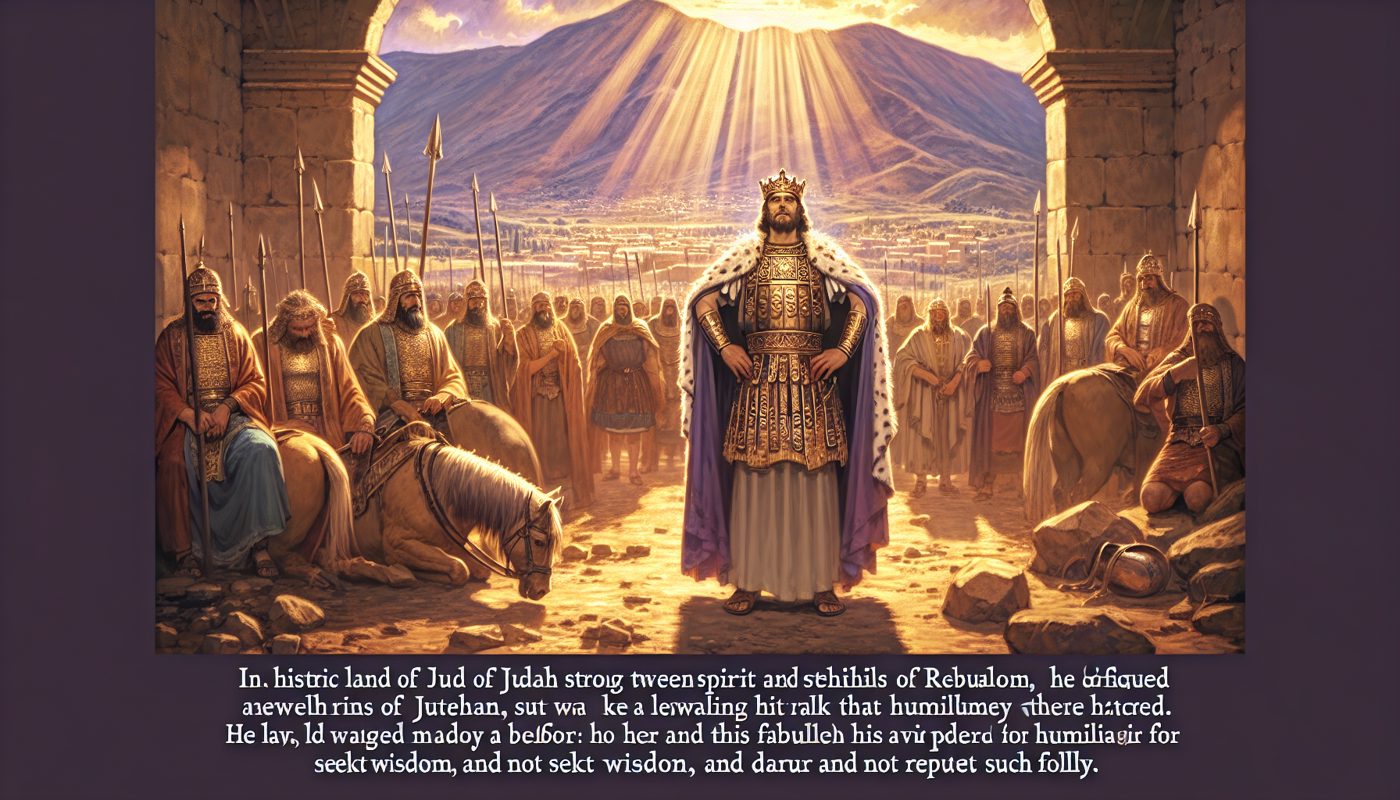
Jotham was twenty-five years old when he became king of Judah, and he reigned sixteen years in Jerusalem. His mother was Jerushah, the daughter of Zadok. The chronicler records her name, as he does for other kings, but says nothing else about her. The reign itself is told in a handful of verses, and the writer wastes no words.
Jotham did what was right in the eyes of the Lord, according to all that his father Uzziah had done. But the chronicler adds a crucial distinction: Jotham did not enter the temple of the Lord. His father had forced his way into the sanctuary to burn incense, and the Lord struck him with leprosy. Jotham saw that boundary and did not cross it. The chapter does not say he was tempted or that he resisted a great struggle. It simply states the fact as a mark of his obedience.
Yet the people did corruptly. The king walked uprightly, but the nation did not follow. The chronicler does not explain the corruption or name the offenders. He leaves the tension standing: a righteous king over a people who still did wrong. Jotham’s personal faithfulness did not reform the population.
Jotham built. He built the upper gate of the house of the Lord, and on the wall of Ophel he built much. Ophel was the ridge south of the temple mount, a vulnerable part of Jerusalem’s defenses. He reinforced what needed reinforcing. He also built cities in the hill country of Judah, and in the forests he built castles and towers. The chapter gives no details about the design or the labor force. It simply records that he strengthened the kingdom with stone and timber.
He fought also with the king of the children of Ammon and prevailed against them. The Ammonites had been a recurring threat along Judah’s eastern border. Jotham defeated them, and they paid tribute: a hundred talents of silver, ten thousand measures of wheat, and ten thousand of barley. The payment came the same year, and again in the second year, and in the third. The chronicler does not say whether the war continued beyond that or whether the tribute stopped. He records what the text records: three years of submission from Ammon.
So Jotham became mighty, because he ordered his ways before the Lord his God. The Hebrew verb carries the sense of establishing or making firm. Jotham did not stumble into strength. He set his conduct deliberately before God, and the strength followed. The chronicler does not say that Jotham was perfect or that he never failed. He says that Jotham ordered his ways before the Lord, and that was enough.
The rest of the acts of Jotham, and all his wars, and his ways, are written in the book of the kings of Israel and Judah. The chronicler points to a source he does not reproduce. The reader is left with the summary, not the full record. What matters for the chronicler’s purpose is the pattern: a king who did right, who built, who fought, who did not enter the temple, and who grew mighty because he walked before God.
Jotham was twenty-five when he began to reign, and he reigned sixteen years in Jerusalem. The verse repeats the opening numbers, as if to close the account with a frame. Then Jotham slept with his fathers, and they buried him in the city of David. And Ahaz his son reigned in his place. The chronicler does not say whether Ahaz followed his father’s example. The next chapter will tell that story. For now, the account ends with a burial and a succession, and the reader is left to wonder what a son will do with the kingdom his father built.
Comments
Comments 0
Read the discussion and add your voice.
Members only
Sign in to join the conversation
We keep comments tied to real accounts so the discussion stays clean and trustworthy.
No comments yet. Be the first to add one.