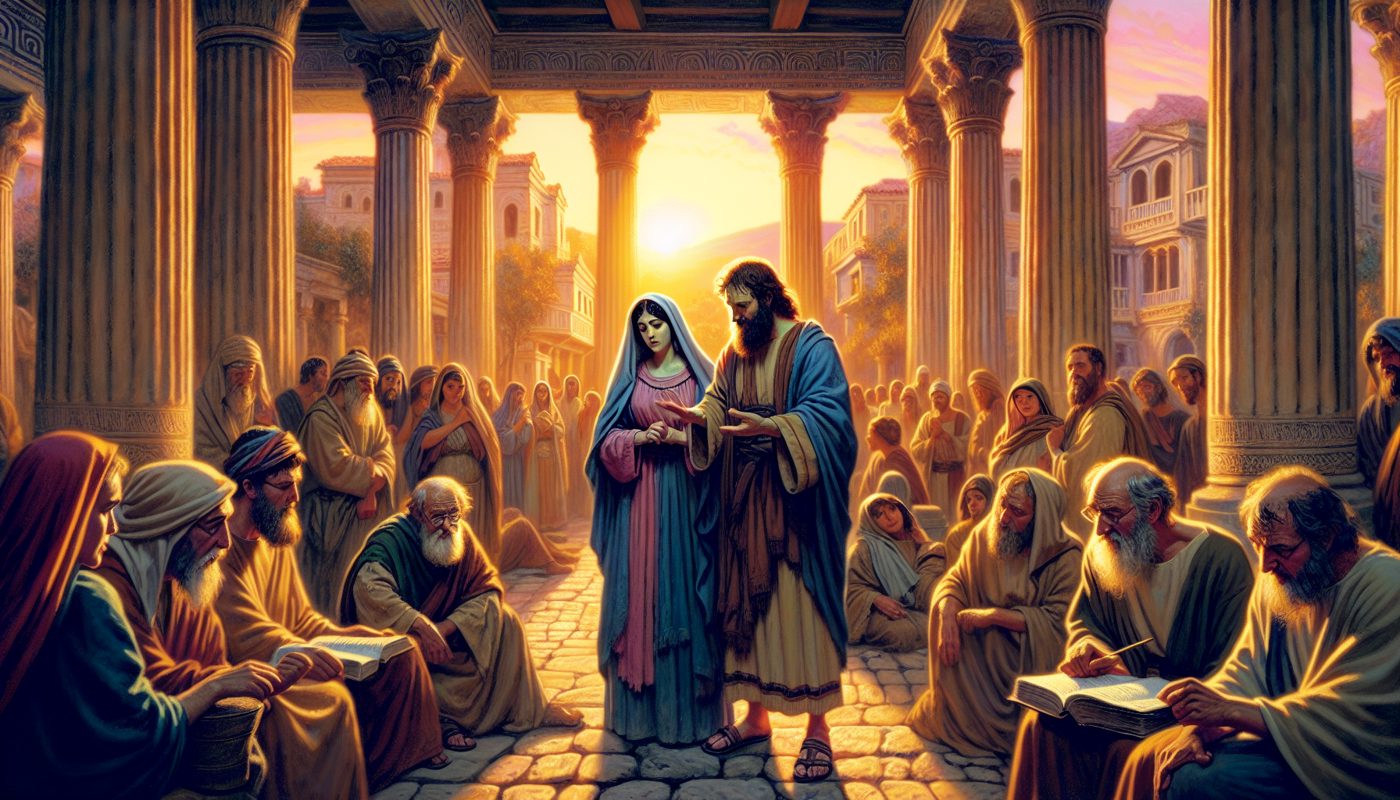
The assembly in Corinth had become a place of noise without direction. Some spoke in tongues with no interpreter; others claimed revelations without order. The apostle Paul did not write to suppress spiritual gifts but to press them into a single test: does this build up the church? That question runs through every verse of this chapter, and it lands with blunt force.
Paul begins by ranking the gifts. Tongues, he says, speak mysteries to God, but prophecy speaks to men for edification, exhortation, and consolation. The one who prophesies is greater than the one who speaks in tongues—unless the tongue is interpreted so the church can be built up. The measure is not the speaker's spiritual intensity but the assembly's understanding.
He reaches for a plain analogy. A pipe or a harp must give distinct notes, or no one knows the tune. A trumpet must sound a clear call, or no one prepares for battle. Speech without clarity is just air. If a believer speaks in a tongue and no one understands, the speaker is a foreigner to the hearers, and the hearers are foreigners to the speaker. The goal is not private ecstasy but public comprehension.
Paul does not dismiss tongues. He thanks God that he speaks in tongues more than all of them. But in the church, he would rather speak five words with his understanding than ten thousand words in a tongue. The point is instruction. The mind must be engaged, not bypassed. Prayer and singing should involve both the spirit and the understanding, so that the unlearned can say Amen and be edified.
He warns them not to be children in their thinking. Tongues, he says, quoting the law, are a sign for unbelievers, not for believers. Prophecy, by contrast, is a sign for believers, not for unbelievers. If the whole church speaks in tongues and an outsider walks in, the outsider will say they are mad. But if all prophesy, the outsider's secrets are exposed, and he falls down and worships God, declaring that God is truly among them.
Then Paul lays down the rules for the gathering. Each person may bring a psalm, a teaching, a revelation, a tongue, or an interpretation. But everything must be done for edification. Tongues are limited to two or three speakers, one at a time, and only if an interpreter is present. If no interpreter is there, the speaker must keep silent in the church and speak only to God and himself.
Prophets are also limited to two or three. The others must weigh what is said. If a revelation comes to someone sitting nearby, the first speaker must stop. All can prophesy one by one, so that everyone may learn and be encouraged. The spirits of prophets are subject to the prophets. God is not a God of confusion but of peace.
Paul adds a specific instruction about women in the assembly. They are to keep silent, not permitted to speak, but to be in subjection, as the law says. If they want to learn anything, they should ask their own husbands at home, for it is shameful for a woman to speak in the church. He then asks sharply: did the word of God go out from you, or did it come only to you? Anyone who claims to be a prophet or spiritual must recognize that what Paul writes is the Lord's commandment. If anyone ignores this, let him be ignorant.
He closes with a balance: desire earnestly to prophesy, and do not forbid speaking in tongues. But let all things be done decently and in order. The chapter does not invent a dramatic scene. It gives a set of commands that force the Corinthians—and every reader—to measure every spiritual expression by whether it helps the church hear and respond to God. The God of peace does not preside over chaos.
Comments
Comments 0
Read the discussion and add your voice.
Members only
Sign in to join the conversation
We keep comments tied to real accounts so the discussion stays clean and trustworthy.
No comments yet. Be the first to add one.