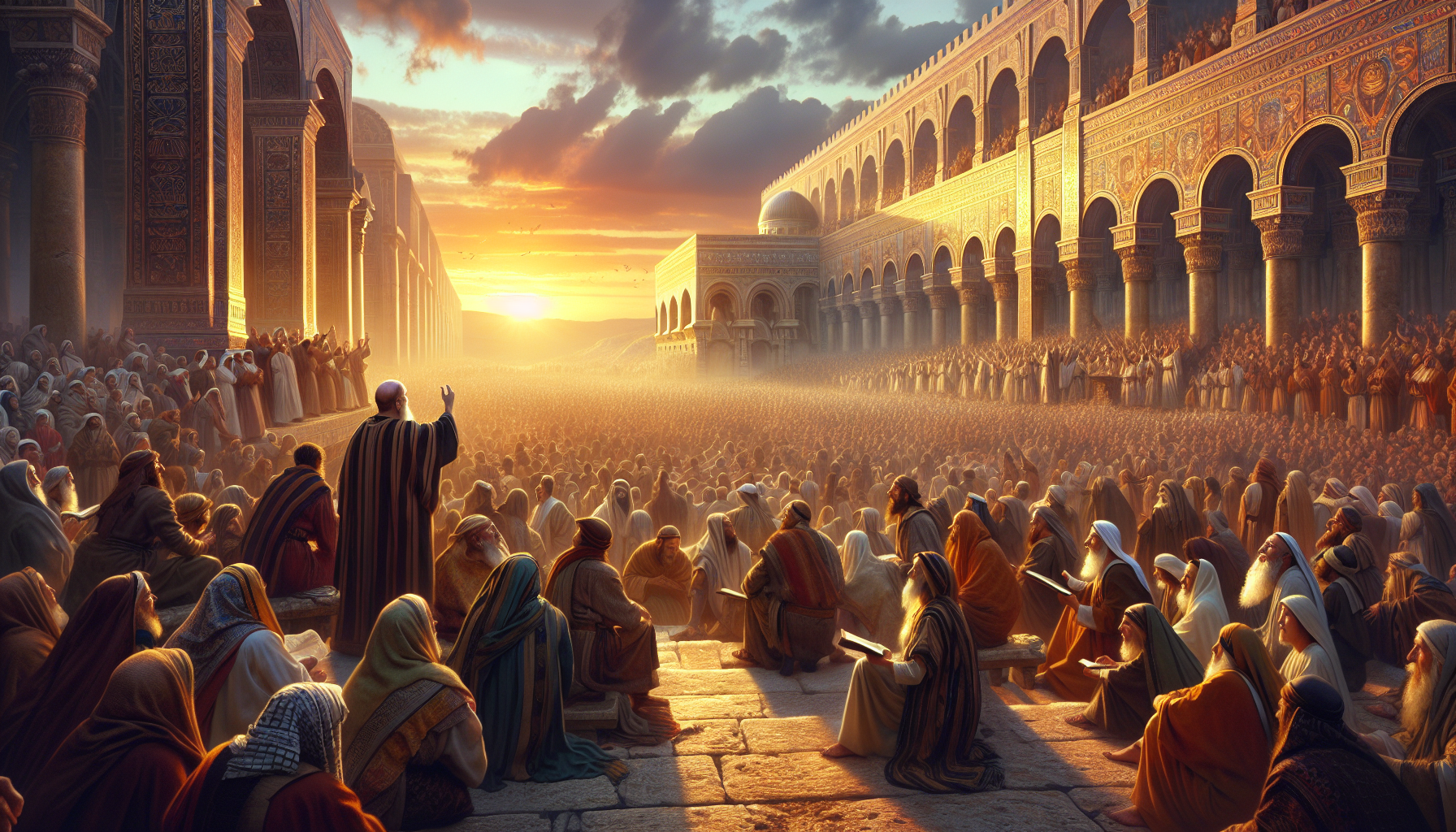
Psalm 150 does not narrate a story. It issues a command, repeated eleven times in six verses. The psalmist does not describe a scene of worship; he summons one. The opening imperative, 'Praise the Lord,' sets the tone for the entire psalm. There is no plea, no lament, no reflection—only a relentless call to exaltation. The sanctuary and the heavens are named as the stages for this praise, but no crowd, no priest, no musician is described. The psalm leaves the reader to supply the assembly.
The reasons for praise are given in verse two. The Lord is to be praised for his mighty acts and for his excellent greatness. These are not elaborated. The psalmist does not list the acts—the exodus, the conquest, the deliverances. He simply points to the fact of them. The greatness of the Lord is not measured or explained; it is declared as a sufficient ground for praise. The psalm treats the Lord's deeds and his character as self-evident reasons for worship.
Then the instruments are named. The trumpet sounds first, the shofar or the silver trumpet of the temple. Then the psaltery and harp, stringed instruments that accompany sung praise. The timbrel and dance follow, suggesting a rhythmic, bodily expression of joy. Stringed instruments and the pipe are added, broadening the range of sound. Finally, loud cymbals and high-sounding cymbals bring the list to a climax. The psalm does not describe how these instruments are played or who plays them. It simply commands that they be used.
The list moves from the most public and piercing instrument—the trumpet—to the most percussive and resonant—the cymbals. There is a building intensity. The cymbals are mentioned twice, with the second pair described as 'high sounding,' perhaps meaning clashing or ringing with a clear, sustained tone. The psalm does not explain the significance of each instrument. It treats them as tools for a single purpose: praise.
Verse six broadens the call beyond Israel. 'Let everything that hath breath praise the Lord.' The command is universal. Every living creature that draws air is summoned to join the chorus. The psalm does not say how a bird or a beast or a fish might praise the Lord. It simply extends the imperative to all breathing things. The final line repeats the opening: 'Praise ye the Lord.' The psalm ends as it began, a closed loop of command.
The psalm has no narrative arc. It does not build to a resolution or offer a concluding reflection. It is a single, sustained cry of praise, repeated in different forms. The structure is circular: it begins and ends with the same words. The middle verses expand the means and the reasons, but the psalm does not move forward in time or thought. It is a static burst of adoration.
Psalm 150 is the final psalm in the Psalter. It serves as a doxology for the entire collection. The book of Psalms, which contains laments, thanksgivings, royal psalms, and wisdom poems, ends with a pure command to praise. The psalm does not summarize the themes of the Psalter. It does not look back at David or the exile or the covenant. It simply calls for praise, as if that is the only fitting conclusion.
The psalm does not explain how to praise or why praise matters. It does not promise that praise will change circumstances or bring blessing. It does not warn against empty praise or hypocritical worship. It simply commands. The reader is left to obey or not. The psalm trusts that the Lord's mighty acts and excellent greatness are enough to compel praise from everything that breathes.
There is no sentimentality in this psalm. It does not soften the command with invitation or promise. It does not describe the joy of praise or the beauty of worship. It is blunt, repetitive, and insistent. The psalmist does not ask the reader to feel a certain way. He commands an action. The instruments are not metaphors. They are real objects to be sounded. The dance is not a symbol. It is a physical movement. The psalm is concrete, direct, and unadorned.
Psalm 150 does not tell a story about praise. It is praise itself, condensed into a few lines. It does not describe a past event or anticipate a future one. It exists in the present tense, a command that stands outside time. Every reading of the psalm is a new call to obey. The psalm does not age or become outdated. It remains a summons to every creature with breath to praise the Lord.