The letter to Timothy reaches its close with a charge that carries the full weight of divine judgment. Paul writes in the sight of God and of Christ Jesus, who will judge the living and the dead, and by his appearing and his kingdom. This is not a gentle suggestion. It is a formal command, delivered before the highest tribunal, and it lands on Timothy with the force of an oath.
The command itself is plain: preach the word. Be urgent in season and out of season. Reprove, rebuke, exhort with all patience and teaching. Paul does not leave room for Timothy to wait for convenient circumstances. The work is constant, and the urgency comes from the knowledge that a time is coming when people will not endure sound doctrine. They will gather teachers who suit their own desires, turning away from the truth and toward myths.
Paul then turns to his own situation. He writes that he is already being poured out as a drink offering, and the time of his departure has come. He does not describe this with regret. He states it as a fact. He has fought the good fight, finished the race, kept the faith. And now a crown of righteousness is laid up for him, which the Lord, the righteous judge, will give him on that day. But Paul adds that this crown is not for him alone. It is for all who have loved the Lord's appearing.
The letter then shifts to personal matters. Paul asks Timothy to come to him quickly. He reports that Demas has deserted him, having loved this present world, and has gone to Thessalonica. Crescens has gone to Galatia, Titus to Dalmatia. Only Luke remains with Paul. He asks Timothy to bring Mark, who is useful for ministry. Tychicus has been sent to Ephesus.
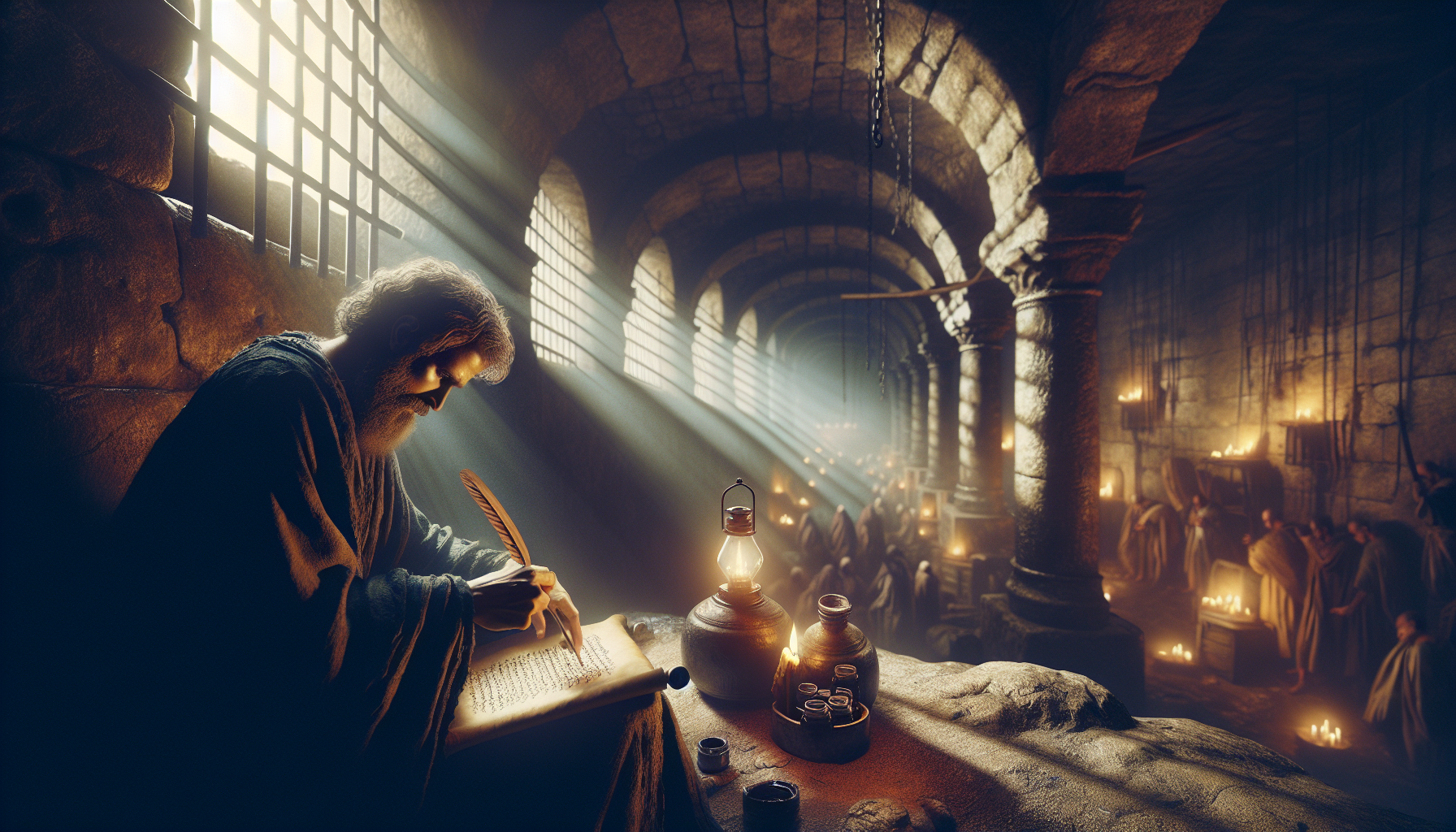
Paul then gives a specific request. He asks Timothy to bring the cloak he left at Troas with Carpus, and the books, especially the parchments. This detail is striking. A man facing execution, expecting the crown of righteousness, still wants his cloak and his scrolls. The cloak for warmth in the cold prison. The books for study and writing. The work is not finished until the Lord decides it is finished.
Paul warns Timothy about Alexander the coppersmith, who did him much harm and strongly opposed their message. Paul does not call for revenge. He states that the Lord will repay him according to his works. But he tells Timothy to be on guard. At Paul's first defense, no one supported him. Everyone deserted him. Yet he asks that this not be held against them. The Lord stood by him and strengthened him so that the message might be fully proclaimed and all the Gentiles might hear. Paul says he was delivered from the lion's mouth.
Paul closes with confidence. The Lord will deliver him from every evil work and will save him into his heavenly kingdom. To him be glory forever and ever. Then come the final greetings. Paul sends greetings to Prisca and Aquila, and to the household of Onesiphorus. He notes that Erastus remained at Corinth, and that he left Trophimus sick at Miletus. He urges Timothy to come before winter. He passes along greetings from Eubulus, Pudens, Linus, Claudia, and all the brothers. The letter ends with a blessing: the Lord be with your spirit. Grace be with you.
The chapter does not dwell on the prison cell or the cold stone. It does not invent a scene of Paul writing by lamplight. What it gives is a man who has kept the faith, who knows his time is short, and who still has work to do. He charges Timothy to preach. He asks for his cloak and his books. He sends greetings to friends. And he looks toward the crown that the righteous judge will give on that day.