The chapter opens not with ceremony but with a command about speech. A false report is not to be carried. A hand is not to be joined with the wicked to become an unrighteous witness. The pressure is immediate: the community is being told that its justice depends on what individuals say and refuse to say. Following the crowd to do evil is forbidden. Turning aside a case to side with the multitude is forbidden. Even favoring a poor man in his cause is forbidden. The law does not tilt toward popularity or pity—it demands that the judge see the matter itself.
The next commands move from the courtroom to the road. If a man meets his enemy's ox or donkey going astray, he must bring it back. If he sees the donkey of someone who hates him lying under its burden, he must not leave it—he must help release it. These are not suggestions about kindness to animals. They are instructions that override personal hostility. The enemy is still owed the return of his property and the relief of his beast. The law does not wait for the heart to feel friendly.
Justice for the poor is then restated with precision. A judge is not to wrest the justice due to a poor man in his cause. A bribe blinds the clear-sighted and perverts the words of the righteous. And the sojourner is not to be oppressed—because Israel knows the heart of a sojourner, having been sojourners themselves in Egypt. The memory of slavery is made into a legal principle: you were vulnerable, so do not exploit the vulnerable.
The land itself is brought under the same logic. Six years a man may sow and gather, but the seventh year the land must rest and lie fallow. The poor may eat what grows of itself, and the beasts of the field may eat what the poor leave. The vineyard and the oliveyard are treated the same way. The weekly rest is given a similar rationale: the ox and the donkey rest, the son of the female servant and the sojourner are refreshed. The rest is not only for the master but for everyone and everything that works.
Then the chapter pivots to worship. The name of other gods is not to be mentioned or heard from the mouth of Israel. Three feasts are required each year: the Feast of Unleavened Bread in the month Abib, the Feast of Harvest of the firstfruits, and the Feast of Ingathering at the end of the year. All males must appear before the Lord God three times a year. No one is to appear empty-handed. The blood of the sacrifice is not to be offered with leavened bread, and the fat of the feast is not to remain until morning. The first of the firstfruits is to be brought into the house of the Lord. And a strange command closes the section: a kid is not to be boiled in its mother's milk.
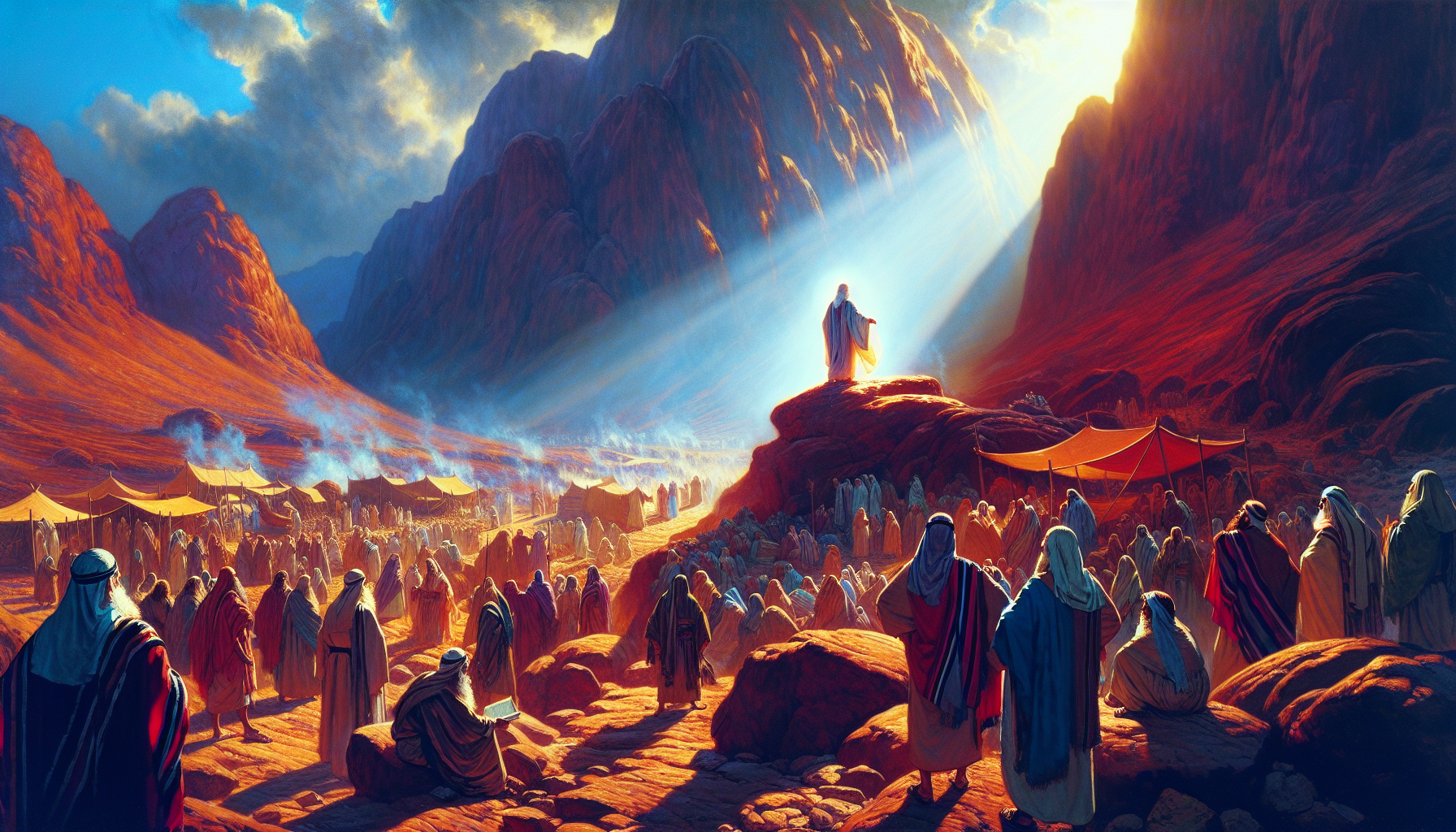
What follows is a shift in voice and scale. The Lord declares that He is sending an angel before Israel to keep them on the way and bring them into the place He has prepared. The people are to heed this angel and not provoke him, because the Lord's name is in him and he will not pardon transgression. If Israel hearkens to his voice and does all that the Lord speaks, then the Lord will be an enemy to their enemies and an adversary to their adversaries. The angel will go before them and bring them in to the Amorite, the Hittite, the Perizzite, the Canaanite, the Hivite, and the Jebusite—and the Lord will cut them off.
But the conquest comes with conditions. Israel is not to bow down to those gods, not to serve them, not to do according to their works. The pillars of the nations are to be utterly overthrown and broken in pieces. If Israel serves the Lord their God, He will bless their bread and water and take sickness away from their midst. There will be no miscarriage or barrenness in the land, and the number of their days will be fulfilled. The Lord will send His terror before them and discomfit all the peoples they face. He will send the hornet to drive out the Hivite, the Canaanite, and the Hittite.
Yet the removal will not happen in one year. The Lord says He will drive them out little by little, lest the land become desolate and the wild beasts multiply against Israel. The borders are set from the Red Sea to the sea of the Philistines, from the wilderness to the River. The inhabitants will be delivered into Israel's hand, and Israel is to drive them out. But no covenant is to be made with them or with their gods. They are not to dwell in the land, because they would make Israel sin against the Lord. Serving their gods would be a snare.
The chapter holds together two pressures that seem to pull in opposite directions. One is the pressure of mercy—returning an enemy's animal, leaving the land fallow for the poor, refreshing the sojourner on the Sabbath. The other is the pressure of separation—no covenant with the nations, no mention of other gods, no dwelling with peoples who worship them. The same Lord who commands help for a hated man's donkey also commands the destruction of the pillars of the Amorites. The mercy is not soft. The separation is not cruel. Both are anchored in the same claim: the Lord's name is in the angel, and the land is being prepared for a people who will serve no other god.