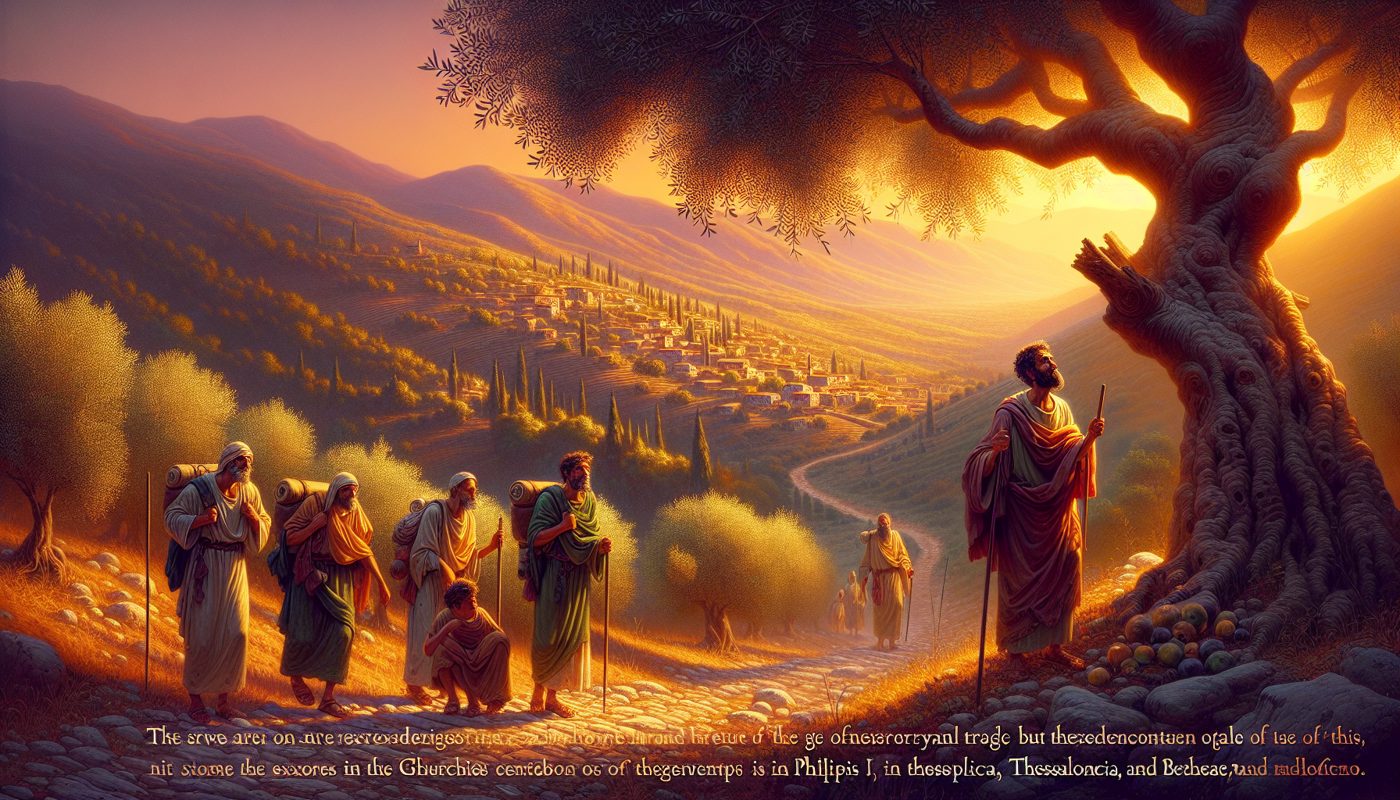
Paul makes known to the Corinthians a grace given among the churches of Macedonia. He does not begin with a command. He begins with a report.
The Macedonians were under affliction. Paul says it plainly: much proof of affliction, deep poverty. Yet their joy and their poverty together produced an abundance of liberality. The pressure did not shrink them. It pushed them toward generosity.
They gave according to their power and beyond it. Paul bears witness to this. They did not give because they were pressured. They gave of their own accord. More than that, they begged Paul with much entreaty for the grace and fellowship of ministering to the saints. They asked to be allowed to give.
Paul says this was not as he had hoped. It was more. They first gave themselves to the Lord, and to Paul and his companions, through the will of God. The gift of money followed the gift of themselves.
Because of this, Paul exhorted Titus to complete in Corinth this same grace. Titus had made a beginning before. Now Paul wanted him to finish the work.
Paul tells the Corinthians they abound in everything—faith, utterance, knowledge, earnestness, love. He wants them to abound in this grace also. He does not speak by way of commandment. He uses the earnestness of others to prove the sincerity of their love.
Then Paul gives the ground for all of it. The grace of the Lord Jesus Christ: though he was rich, for their sakes he became poor, so that through his poverty they might become rich. The pattern is not a theory. It is a person.
Paul gives his judgment. The Corinthians were the first to make a beginning a year ago, not only to do but to will. Now he tells them to complete the doing. The readiness to will must become a completion out of their ability. If the readiness is there, it is acceptable according to what a man has, not according to what he does not have.
Paul does not want others eased while the Corinthians are distressed. He wants equality. Their abundance now supplies the want of others. Their abundance later may supply the want of the Corinthians. He quotes the scripture: he that gathered much had nothing over, and he that gathered little had no lack.
Paul thanks God for putting the same earnest care for the Corinthians into the heart of Titus. Titus accepted the exhortation, but he was himself very earnest and went forth of his own accord. Paul also sends with him a brother whose praise in the gospel is spread through all the churches, appointed by the churches to travel with them in this matter of grace. This is done to avoid any blame in the matter of the bounty. Paul takes thought for things honorable not only in the sight of the Lord but also in the sight of men.
Paul sends another brother, proved earnest in many things, now much more earnest because of his great confidence in the Corinthians. Titus is Paul's partner and fellow-worker. The other brothers are messengers of the churches, the glory of Christ. Paul tells the Corinthians to show them the proof of their love and of Paul's glorying on their behalf.
Comments
Comments 0
Read the discussion and add your voice.
Members only
Sign in to join the conversation
We keep comments tied to real accounts so the discussion stays clean and trustworthy.
No comments yet. Be the first to add one.