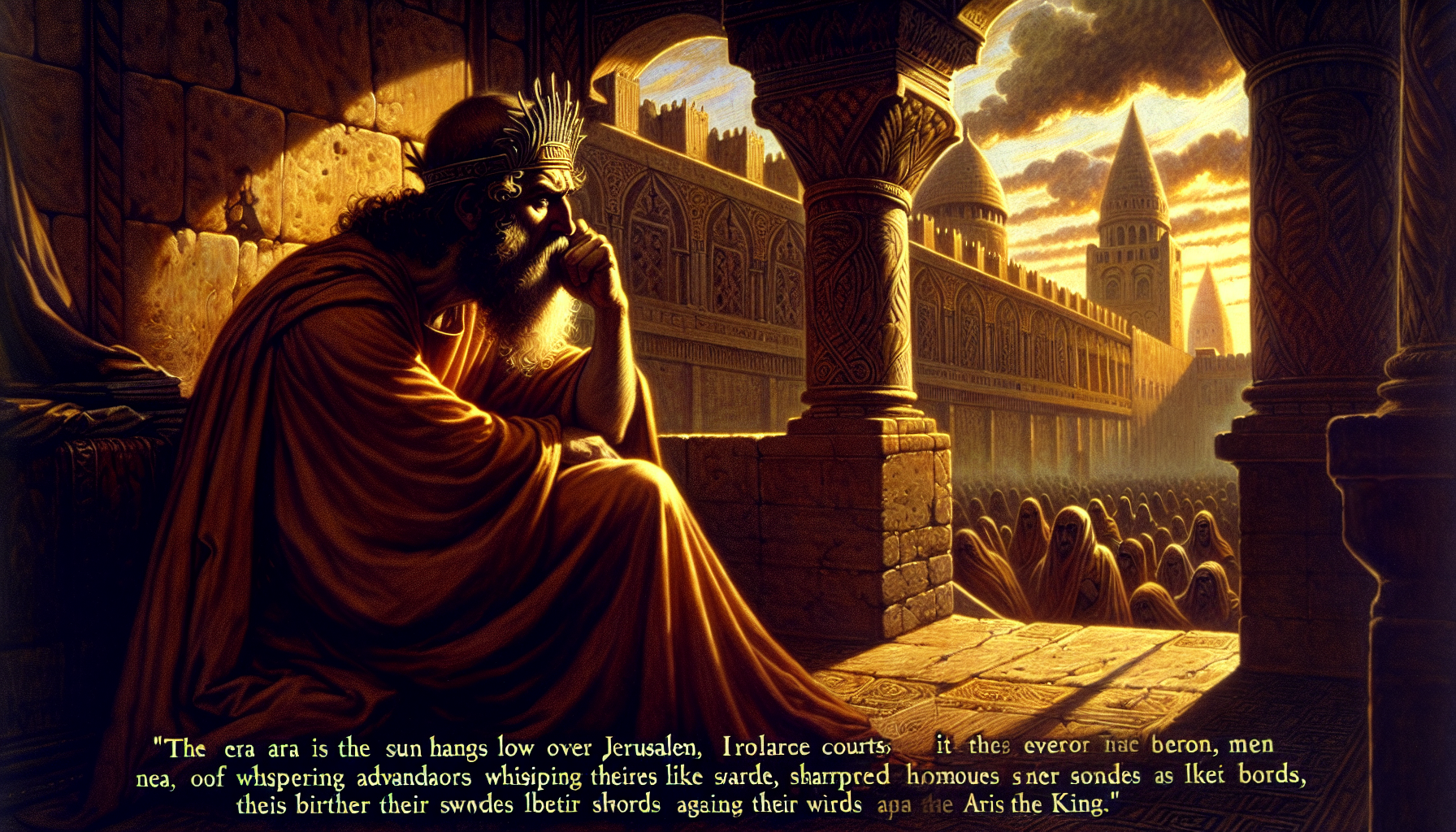
The psalm opens with a man under pressure. The speaker does not describe a general unease or a distant threat. He names a specific kind of trouble: the secret counsel of evildoers, the tumult of workers of iniquity. He asks the Lord to hear his complaint and to preserve his life from the fear of the enemy. The fear is not vague. It has a shape—whispered plots, hidden meetings, coordinated malice.
The enemies are described as men who have whet their tongue like a sword. They have aimed their arrows, and those arrows are bitter words. The weapon is speech, and the attack is premeditated. They do not rush into open confrontation. They shoot in secret places at the perfect, meaning the innocent or the upright. They shoot suddenly, and they feel no fear. Their confidence comes from the belief that no one will see them.
They encourage one another in an evil purpose. They talk together about laying snares privately. Their question is cynical: Who will see them? They believe their plans are invisible. They search out iniquities, as if conducting a diligent investigation, and they conclude that they have accomplished their search. The psalm notes that the inward thought and the heart of every one is deep—meaning human scheming runs deep, but the wicked assume their own depths are hidden from God.
Then the psalm turns. The Lord does not remain distant. He will shoot at them with an arrow, and suddenly they shall be wounded. The weapon the wicked used—the sudden arrow shot from hiding—is turned back on them. The Lord’s arrow strikes without warning, and the wound is real. The wicked are not merely exposed; they are struck down by the same kind of attack they launched.
The result is that they shall be made to stumble, their own tongue being against them. The very words they sharpened become the cause of their fall. Their speech, which they used to destroy others, now destroys them. All who see them shall wag the head—a gesture of mockery or astonishment at their downfall. The ones who thought no one would see them are now seen by everyone.
The psalm does not end with the wicked. It ends with the effect on everyone else. All men shall fear. They shall declare the work of God and shall wisely consider of his doing. The judgment is not just punishment; it is a public lesson. People see what happened and draw the right conclusion: the Lord sees secret plots, and he acts.
The righteous shall be glad in the Lord and shall take refuge in him. All the upright in heart shall glory. Their gladness is not revenge. It is the relief of those who were targeted by hidden schemes and who trusted that the Lord saw what no one else saw. They take refuge, not in their own cleverness or in counter-plots, but in the Lord who shoots straight and sees through every cover.
The psalm is tight and economical. It does not describe the enemies’ crimes in detail or name their victims. It gives the pattern: the wicked plot in secret, the righteous cry out, the Lord acts, and the outcome is visible to all. The structure is a single arc from hidden conspiracy to public vindication.
The final note is not about the wicked at all. It is about the upright in heart who glory in the Lord. The glory is not in having escaped trouble. It is in having a refuge that holds. The psalm leaves the reader with that refuge, not with the threat.