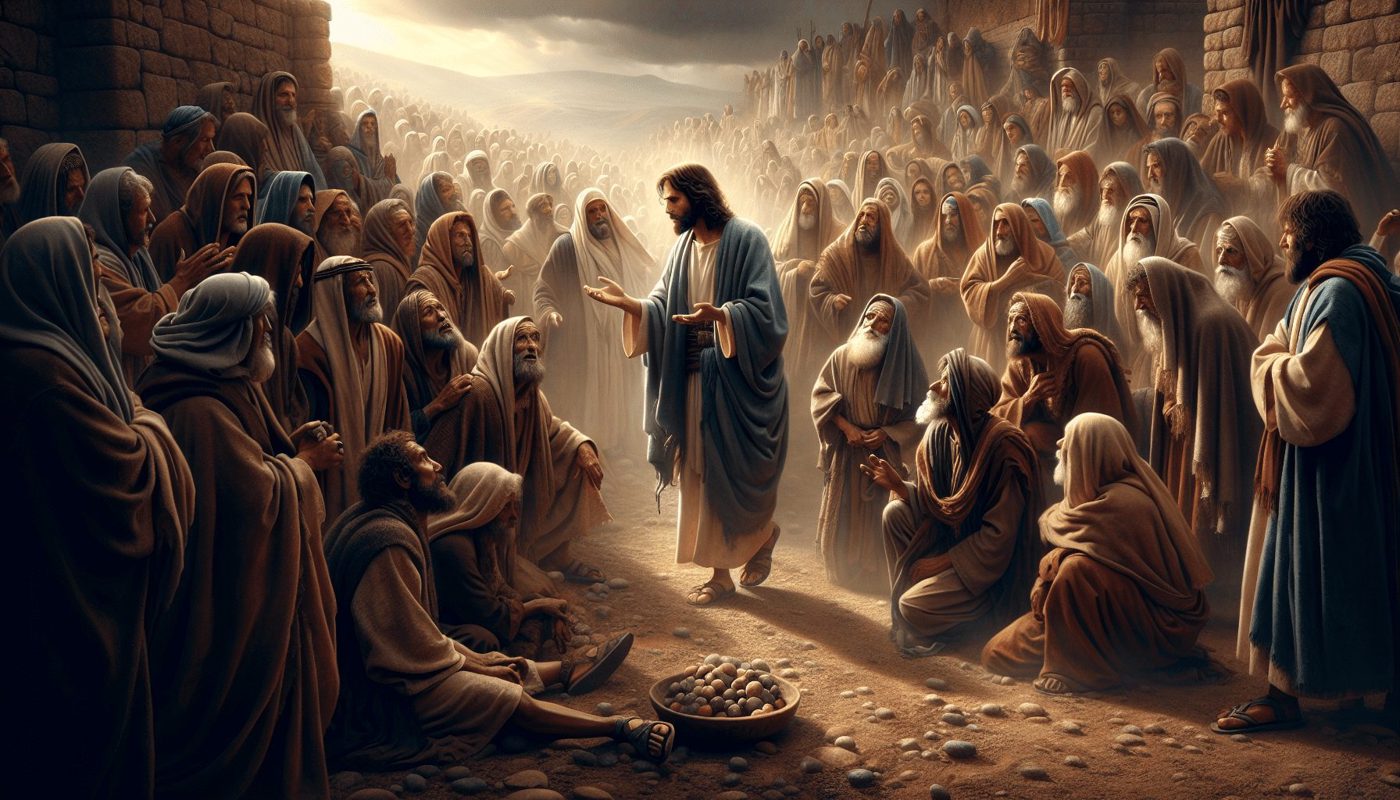
The Lord spoke this chapter directly to the disciples, but the Pharisees were listening in. And what they heard cut against everything they valued. The chapter opens with a parable about a steward who is about to be fired for wasting his master's goods. The steward has no strength to dig and is too ashamed to beg, so he uses his remaining time in office to reduce the debts owed to his master, securing favor with the debtors so they will welcome him after he is dismissed. When the master discovers what the steward has done, he commends the unrighteous steward for acting shrewdly. The Lord does not praise the steward's dishonesty; he points out that the sons of this world are wiser in dealing with their own generation than the sons of light are in dealing with theirs.
Then the Lord gives a direct command: make friends by means of unrighteous mammon, so that when it fails, those friends may receive you into the eternal dwellings. This is not a lesson in financial planning. It is a call to use worldly wealth in a way that serves eternal purposes. The Lord follows this with a series of sharp sayings about faithfulness. Whoever is faithful in very little is also faithful in much, and whoever is unrighteous in very little is unrighteous in much. If you cannot be trusted with unrighteous mammon, who will entrust you with true riches? If you have not been faithful with what belongs to another, who will give you what is your own? No servant can serve two masters. You cannot serve God and mammon.
The Pharisees heard all this, and they scoffed at the Lord. They were lovers of money, and they justified themselves before men. But the Lord told them plainly: you justify yourselves in the sight of men, but God knows your hearts. What is exalted among men is an abomination in the sight of God. Then the Lord declares that the law and the prophets were until John; from that time the gospel of the kingdom of God is preached, and everyone enters it violently. But he adds that it is easier for heaven and earth to pass away than for one tittle of the law to fall. The law stands, but the era of the kingdom has arrived, and the Pharisees are missing it because they are clinging to their money and their self-justification.
The Lord then gives a second parable, this time about a rich man who was clothed in purple and fine linen and feasted sumptuously every day. At his gate lay a beggar named Lazarus, covered with sores, who longed to eat the crumbs that fell from the rich man's table. Even the dogs came and licked his sores. The rich man did nothing for him. Both men died. The beggar was carried by angels to Abraham's bosom. The rich man was buried and found himself in Hades, in torment. He looked up and saw Abraham far off, with Lazarus at his side. He cried out for mercy, asking that Lazarus be sent to dip the tip of his finger in water and cool his tongue, because he was in anguish in the flame.
Abraham answered: Son, remember that in your lifetime you received your good things, and Lazarus received evil things. Now he is comforted, and you are in anguish. And besides all this, a great chasm is fixed between you and us, so that no one can cross from here to you or from there to us. The rich man then begged Abraham to send Lazarus to his father's house, to warn his five brothers, so they would not come to this place of torment. Abraham replied: They have Moses and the prophets; let them hear them. The rich man insisted: No, father Abraham, but if someone from the dead goes to them, they will repent. Abraham said: If they do not hear Moses and the prophets, neither will they be persuaded if someone rises from the dead.
The chapter does not soften the tension. The steward's shrewdness is held up as a model of urgency, not dishonesty. The Pharisees' love of money is exposed as an abomination. The rich man's fate is sealed not by his wealth but by his refusal to see the beggar at his gate. And the final word is that the scriptures already given are sufficient. No sign from the dead will change a heart that refuses to hear what Moses and the prophets have said. The Lord leaves the disciples—and the Pharisees—with a choice: serve God or serve mammon. There is no middle ground.
Comments
Comments 0
Read the discussion and add your voice.
Members only
Sign in to join the conversation
We keep comments tied to real accounts so the discussion stays clean and trustworthy.
No comments yet. Be the first to add one.