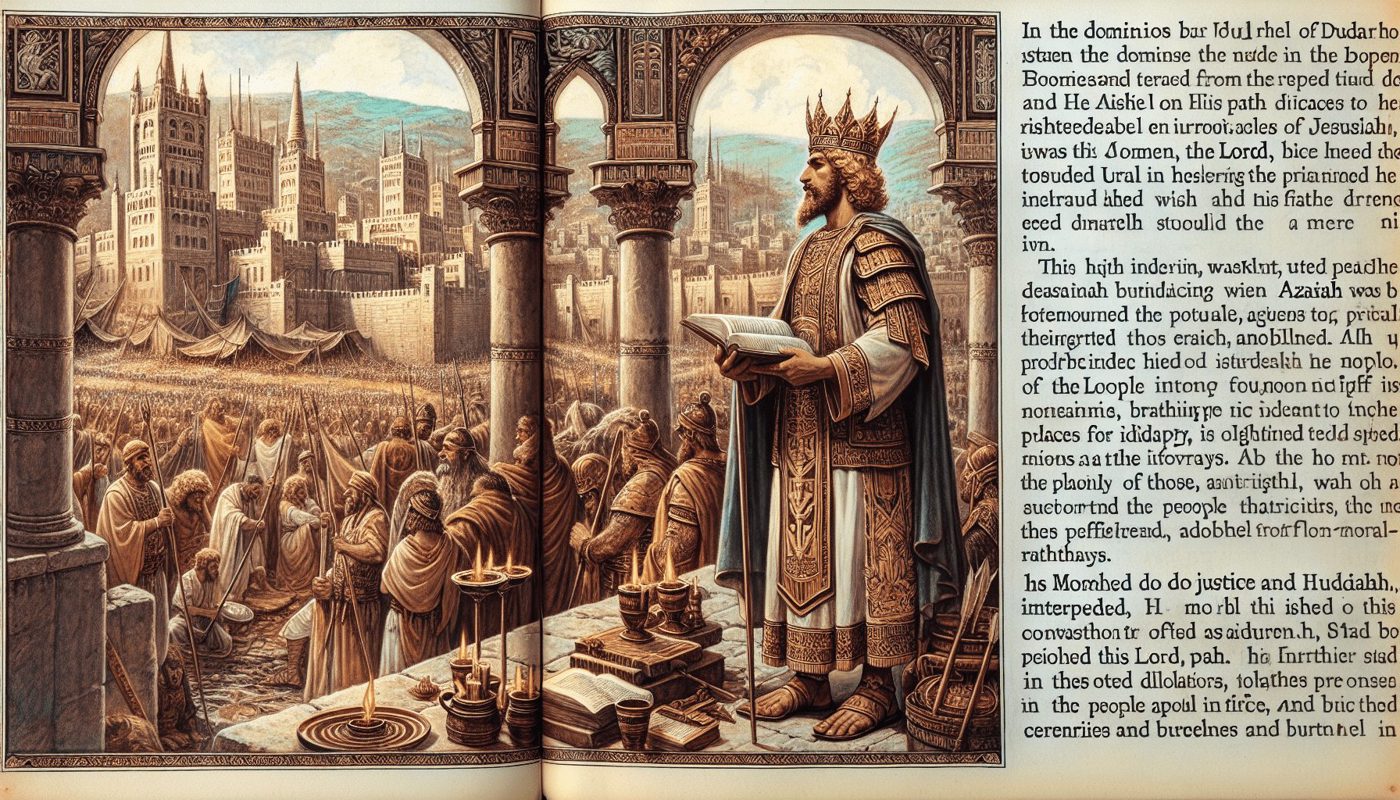
Azariah of Judah reigned for fifty-two years, a lifetime by any measure. He was sixteen when he began, and the text says he did what was right in the eyes of the Lord, following the pattern of his father Amaziah. But it does not call him perfect. The high places remained, and the people still sacrificed and burned incense there. Then the Lord struck the king, and he became a leper until the day of his death. The exact cause is not given here, only the result: he lived in a separate house, and his son Jotham ran the palace and judged the people. The long reign ended in isolation, not triumph.
Azariah’s burial was in the city of David, with his fathers. Jotham succeeded him. But the chapter does not pause to mourn or celebrate. It moves immediately to the northern kingdom, where the throne becomes a revolving door of conspiracy and blood.
Zechariah son of Jeroboam reigned over Israel in Samaria for six months. He did evil, just as his fathers had done, clinging to the sins of Jeroboam son of Nebat. Then Shallum son of Jabesh conspired against him, struck him down before the people, and took the throne. The chronicler notes that this fulfilled the Lord’s word to Jehu: his sons would sit on Israel’s throne to the fourth generation. It happened exactly as spoken.
Shallum lasted one month. Menahem son of Gadi came up from Tirzah, attacked Samaria, killed Shallum, and reigned in his place. The chapter records that Menahem then struck Tiphsah and all its territory because they refused to open their gates to him. The text is blunt: he ripped open all the pregnant women. There is no softening, no explanation. It is simply what he did.
Menahem reigned ten years in Samaria, doing evil in the sight of the Lord, never departing from the sins of Jeroboam. When Pul king of Assyria came against the land, Menahem did not fight. He gave Pul a thousand talents of silver to secure his own hold on the kingdom. He exacted the money from the wealthy men of Israel, fifty shekels each. The Assyrian king took the payment and left.
Menahem died, and his son Pekahiah reigned two years. He did evil, walking in the same sins. Then Pekah son of Remaliah, his own captain, conspired against him. He struck him down in the castle of the king’s house, with Argob and Arieh and fifty Gileadites, and reigned in his place.
Pekah reigned twenty years. He did evil, never turning from the sins of Jeroboam. In his days, Tiglath-pileser king of Assyria came and took Ijon, Abel-beth-maacah, Janoah, Kedesh, Hazor, Gilead, Galilee, all the land of Naphtali. He carried the people captive to Assyria. Then Hoshea son of Elah conspired against Pekah, struck him down, and reigned in his place.
The chapter returns to Judah. Jotham son of Uzziah began to reign in the second year of Pekah of Israel. He was twenty-five, reigned sixteen years in Jerusalem, and his mother was Jerusha daughter of Zadok. He did what was right, like his father Uzziah. But the high places remained, and the people still sacrificed and burned incense there. Jotham built the upper gate of the house of the Lord. That is the only specific act recorded for him.
In those days, the Lord began to send Rezin king of Syria and Pekah son of Remaliah against Judah. Jotham died and was buried with his fathers in the city of David. His son Ahaz reigned in his place. The chapter ends without resolution, with pressure building on Judah even as Israel disintegrates.
Comments
Comments 0
Read the discussion and add your voice.
Members only
Sign in to join the conversation
We keep comments tied to real accounts so the discussion stays clean and trustworthy.
No comments yet. Be the first to add one.