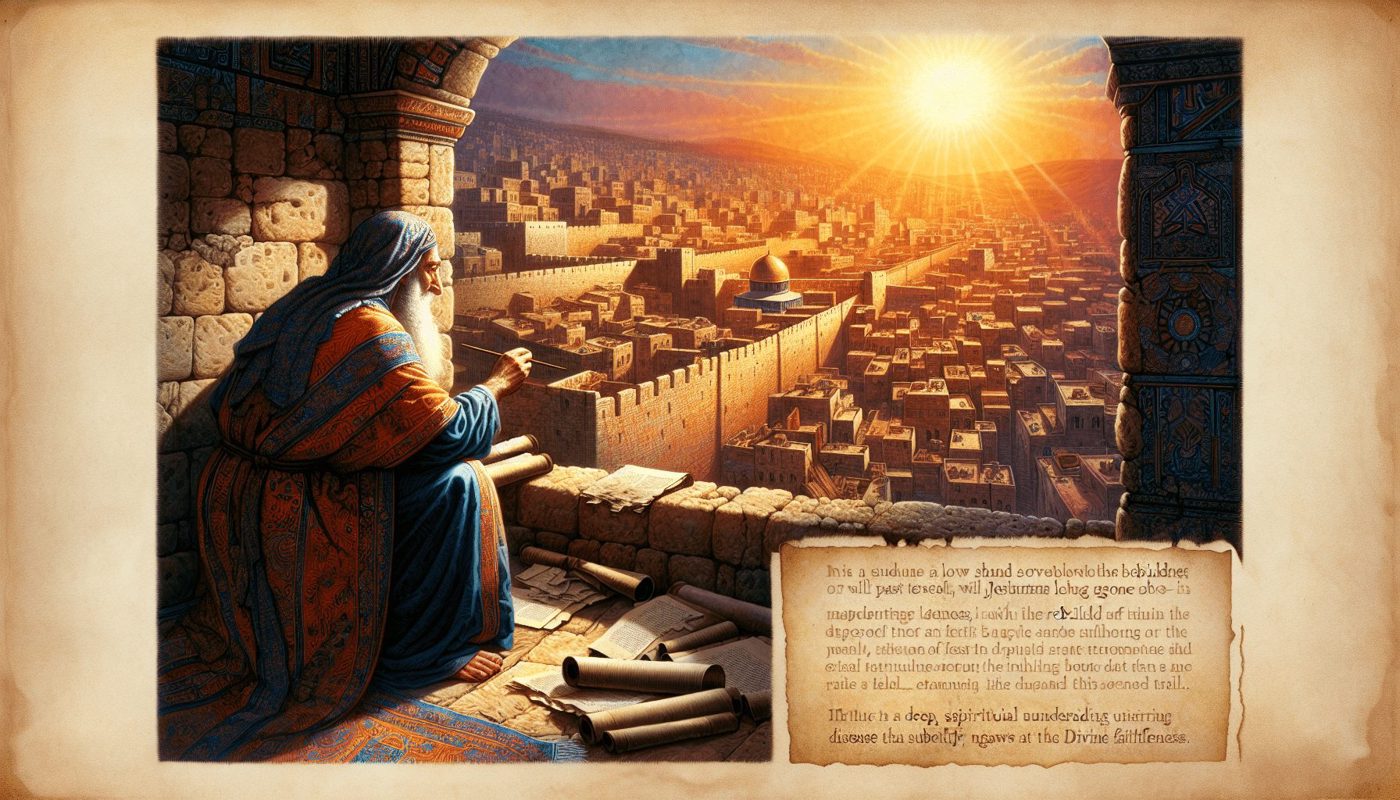
The princes came to Ezra with a report that cut through the work of restoration. The people of Israel, including the priests and the Levites, had not separated themselves from the peoples of the lands. They had adopted the abominations of the Canaanites, the Hittites, the Perizzites, the Jebusites, the Ammonites, the Moabites, the Egyptians, and the Amorites. The holy seed had been mingled with the nations, and the hand of the princes and rulers had been chief in this trespass.
Ezra did not respond with a speech or a decree. He tore his garment and his robe, plucked hair from his head and his beard, and sat down confounded. He remained in that state until the evening oblation, surrounded by those who trembled at the words of the God of Israel because of the trespass of the returned exiles.
At the evening oblation, Ezra rose from his humiliation with his garments still rent. He fell on his knees and spread out his hands to the Lord his God. His prayer began not with praise but with shame. He said he was too ashamed to lift his face to God, because their iniquities had increased over their heads and their guiltiness had grown up to the heavens.
Ezra traced the pattern of guilt back through the generations. From the days of their fathers, they had been exceedingly guilty. For their iniquities, they, their kings, and their priests had been delivered into the hand of the kings of the lands, to the sword, to captivity, to plunder, and to confusion of face. That condition continued to the present day.
Yet Ezra acknowledged that for a little moment grace had been shown from the Lord their God. A remnant had been left to escape. God had given them a nail in his holy place, lightened their eyes, and granted a little reviving in their bondage. They were bondmen, but God had not forsaken them. He had extended lovingkindness in the sight of the kings of Persia, giving them a reviving to set up the house of God, to repair its ruins, and to give them a wall in Judah and in Jerusalem.
Then Ezra turned the question back on the people and on himself. After all that had come upon them for their evil deeds and great guilt, after God had punished them less than their iniquities deserved and had given them such a remnant, should they again break his commandments and join in affinity with the peoples who did these abominations? Would not the Lord be angry with them until he had consumed them, leaving no remnant and none to escape?
Ezra closed his prayer with a stark confession. The Lord, the God of Israel, was righteous. They were left a remnant that had escaped, but they stood before him in their guiltiness. None could stand before him because of this.
The chapter offers no resolution. No word from heaven, no promise of mercy, no command to act. It ends with Ezra still on his knees, the people still guilty, and the holy seed still mingled. The tension is left hanging, unresolved, as if the weight of the confession itself is the only response that can be offered.
Comments
Comments 0
Read the discussion and add your voice.
Members only
Sign in to join the conversation
We keep comments tied to real accounts so the discussion stays clean and trustworthy.
No comments yet. Be the first to add one.