
The second Passover. That’s what they started calling it, long after. But that year, in the first month of the second year after the Exodus, it was just a problem.
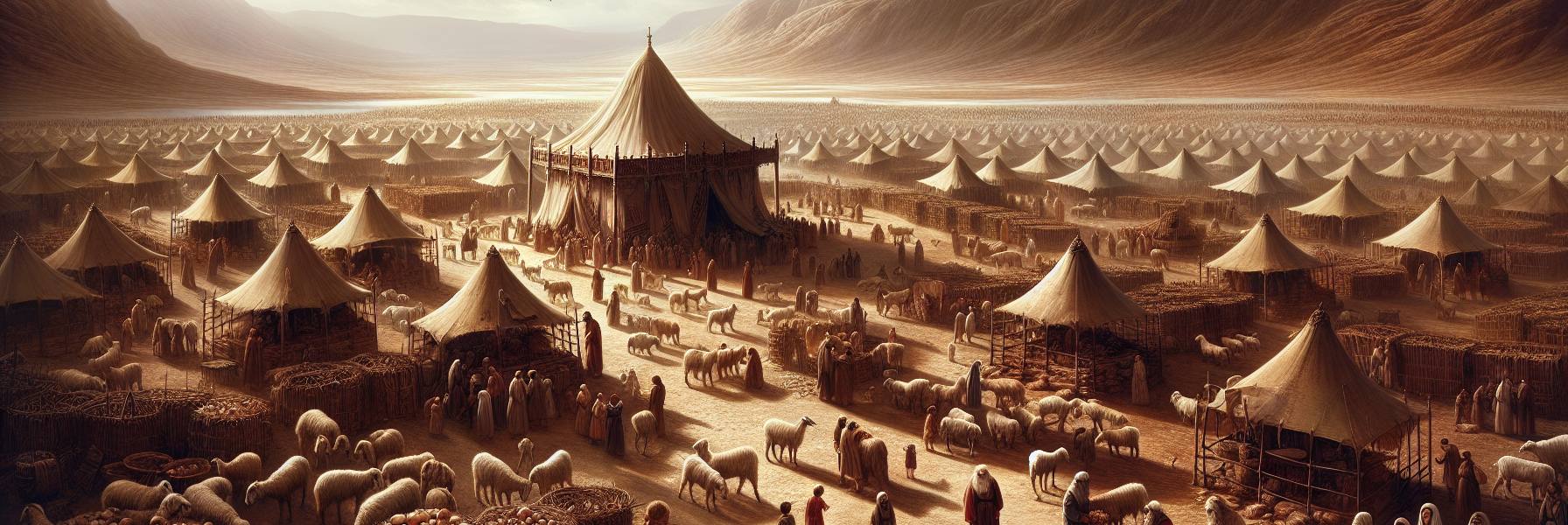
The air in the desert camp was a dry, gritty thing, tasting of dust and crushed herbs. It hung over the vast, disordered sprawl of tents and animal pens, a tapestry of bleating goats, crying children, and the low, constant murmur of a people learning to be a people. The memory of Sinai still echoed, a physical weight in the chest. And now, with the Tabernacle finally standing at the centre, a heartbeat of polished wood and woven linen, the instruction came: keep the Passover.
Moses had relayed the command, his voice carrying the strain of mediation. The lambs were selected, the bitter herbs gathered, the unleavened dough prepared in a thousand households. A solemn anticipation settled, a collective turning back to that night of terror and deliverance in Egypt. But in a few tents, a different silence prevailed.
It was the silence of defilement. A man named Eliazar—though his name wasn’t recorded, I imagine it was something like that—stood before his tent, staring at his hands. They were clean, scrubbed with sand, but they felt unclean. He had touched death. A cousin, taken by a sudden fever. The strict, stark law was clear: contact with a human corpse rendered him ritually unclean for seven days. He was separate, set apart from the congregation, from the altar, from holiness. And the Passover, the ultimate celebration of community and covenant, was tomorrow.
He wasn’t alone. Others were in the same shadow—men who had attended to burials, who had brushed against mortality in a camp where death was no stranger. They found each other, these marked men, their fellowship one of shared frustration. “What are we to do?” one asked, his voice tight. “Are we to be cut off from God’s ordinance because we performed a duty for the dead?”
Their grievance felt like a hot stone in the belly. It wasn’t rebellion; it was a desperate desire to obey. To be included. They went, a small, solemn delegation, to the leaders of their tribes, who listened, frowned, and shrugged. No precedent existed. So they went to Moses.
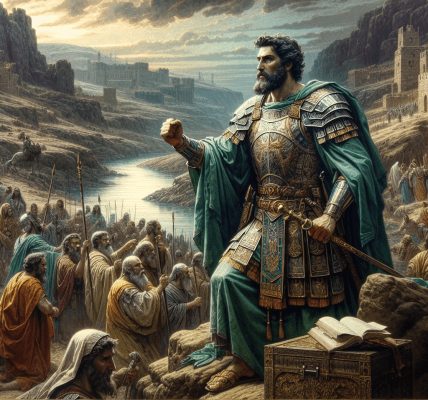
They found him outside the Tent of Meeting, his face lined with more than desert sun. He listened, his eyes moving from one anxious face to another. He didn’t offer an immediate answer. That was his way. The weight of their question settled on him visibly. He held up a hand. “Stay here,” he said. “I must inquire of the Lord.”
He turned and entered the Tabernacle courtyard, passing the bronze altar, approaching the terrifying, beautiful silence of the Holy Place. The men waited, the sun climbing, their shadow a small, dark pool at their feet. Time stretched. A donkey brayed somewhere. The scent of baking bread, flat and simple, wafted from a nearby tent. The ordinary life of the camp continued, oblivious to their suspended state.
When Moses emerged, his countenance was different. Not lighter, but resolved, as if he carried a specific, carefully measured weight. He walked back to them.
“Hear the word of the Lord,” he said, and his voice carried a quiet authority that stilled the very air around them. “If any man among you is unclean because of a dead body, or is on a distant journey—whether you or your future generations—he may still keep the Passover to the Lord. He shall keep it in the second month, on the fourteenth day at twilight. He shall eat it with unleavened bread and bitter herbs. He must not leave any of it until morning, nor break a bone of it. He must follow all the statutes of the Passover.”
He paused, letting the words sink in. The men’s eyes widened. A journey? Future generations? This was bigger than they had imagined.
“But,” Moses continued, his gaze sharpening, “the man who is clean and is not on a journey, yet neglects to keep the Passover—that person shall be cut off from his people because he did not bring the Lord’s offering at its appointed time. That man shall bear his sin.”
There it was. The profound, terrifying logic of grace and responsibility. For the one hindered by life’s unavoidable realities—death, distance, duty—there was a provision, a second chance. A testament to a God who desired the heart’s obedience over rigid, impossible adherence. But for the one who was able yet apathetic, who treated the sacred memory with disregard, there was severance. The sin was not in being unclean, but in being careless.
A slow relief washed over Eliazar. It was a postponement, not a cancellation. His duty to the dead was honoured, and so was his desire to worship. He would wait, and in the second month, he would eat the lamb with a gratitude deepened by exclusion and restoration.
The story spread through the camp, a ripple of wonder. The Passover was kept that fourteenth day, a mighty wave of remembrance crashing over Israel. But in those few tents, there was a quiet, patient waiting.
Then, on the day the Tabernacle was raised, the cloud covered it. It appeared as a settled, dense presence by day, a deep violet-grey mass that muted the sun’s glare. And at night, it glowed from within, like the heart of a furnace seen through smoke, a pillar of fire that cast long, dancing shadows and bathed the linen walls in a living light. This was the signal. When the cloud lifted from over the Tent, the people would set out. However long it rested—two days, a month, a year—they would stay, encamped.
I remember watching it, a young man then, tasked with tending the flocks at the camp’s edge. In the deep stillness of a desert night, the only light was that fire. It didn’t crackle. It was silent, a watchful, burning eye. It was terrifying. It was home. We learned to read its movements not with dates, but with a collective holding of breath. Packing was a constant, gradual thing. Tents stayed pegged, but hearts were always ready. When the cloud stirred, a murmur would start, a low hum that built into a shouted chorus from the captains of thousands down: “Prepare! The cloud rises!” And the vast, clumsy machine of a nation would lurch into motion, following a column of smoke into the unknown.
The rhythm was utterly unpredictable. There was no pattern a clever man could discern. A week at Rephidim, a year at Sinai, a night at Hazeroth. Our lives were dictated by divine whim, a lesson in absolute dependence. We could not plan harvests, could not build cities, could not settle our spirits. We were pilgrims, defined by movement and pause, by fire and cloud. Our theology was written not in scrolls first, but in the soreness of our feet and the dust on our faces, and in the strange, merciful provision of a second chance for a Passover missed. It was a hard schooling. But in that wilderness, we learned that the God who dwells in unapproachable fire also makes a way for the unclean, the distant, and the left behind. He moves, and we follow. He rests, and we wait. It is the whole of the life of faith.