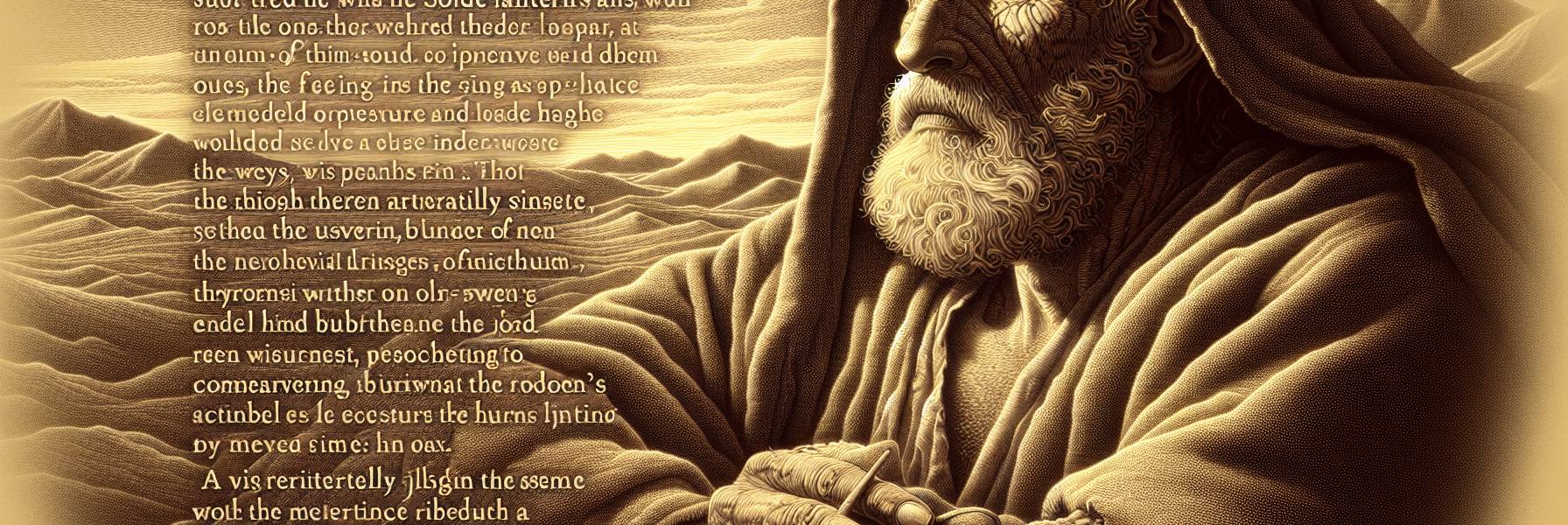

The memory comes to him sometimes in the cool darkness before dawn, a vivid and uninvited guest. It is not a single scene, but a season—a long, golden afternoon of his life that now feels like a story about another man. Job shifts on the ash heap, the grit of it finding new ways to chafe his sores, and he closes his eyes not to sleep, but to see.
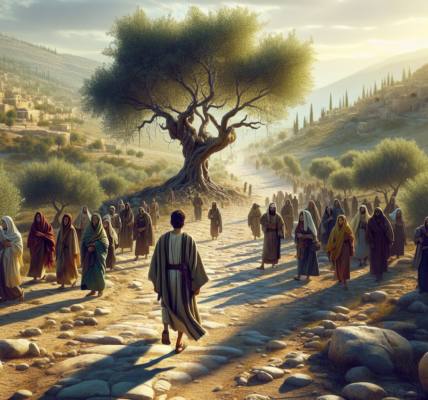
He remembers the light first. God’s lamp, he used to think, seemed to shine just a little brighter over his head. Its light felt different then, not the harsh, judging glare of the desert sun under which he now suffered, but a rich, honeyed glow that poured over his footsteps and made the very path ahead seem sure. In those days, the Almighty’s intimate friendship rested upon his tent. A profound, quiet companionship, a sense of being watched over not with scrutiny, but with fondness. It was in the rustle of the olive leaves at evening, in the deep peace that settled over his flocks and household. It was a presence, as tangible as the watchful silence of a good father.
And his children. The memory is a sharp, sweet ache. All seven of them, strong and vibrant, circling his house like young olive trees planted close to water. He could hear their voices mingling from courtyard to courtyard, a sound more precious to him than any market profit. He could picture them with a painful clarity: the way his eldest son would stride into a room, the particular laugh of his youngest daughter. They were around him, a living, breathing fortress of joy.
Those were the days of his prime, when his vigor was like a well-worn cloak, comfortable and never failing. And his steps—they were washed in cream. Not literally, of course, but that was the sensation. Every path was smoothed, every venture anointed with success. Even the rocks seemed to yield their riches for him. The bedrock would pour out streams of oil, a poet’s way of saying the land itself conspired in his blessing. His olive presses groaned with abundance, a fatness of the earth that felt like a divine smile.
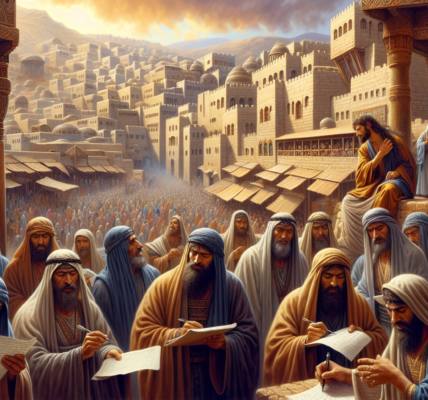
He would go out to the city gate. Ah, the gate. That was the heart of it. He would take his place in the square, and as soon as the elders saw him, they’d rise. Young men, too full of their own fire, would see him and step back, falling silent until he passed. Even the voices of the nobles would hush, their hands held still over their mouths. It wasn’t fear, not exactly. It was a reverence earned by a life lived squarely. His counsel had weight. They listened because they knew his judgments weren’t clever or self-serving, but clear as spring water.
Because he rescued the poor who cried for help, and the fatherless who had none to assist them. The dying man’s blessing would come upon him, a ragged whisper of gratitude that meant more than any public acclaim. He made the widow’s heart sing for joy. That was his true righteousness: not a list of rituals, but a life that became a refuge. He was eyes to the blind and feet to the lame. He clothed himself in justice, and it fitted him like his own skin. He broke the fangs of the unjust, wresting plunder from their teeth, and he would think, “I will die in my nest, and my days will be as numerous as the sand.”
People drank in his words like a parched land waits for the latter rain. They’d watch his face, hopeful, as if waiting for a sign. When a matter was thorny and contentious, they’d wait for his opinion. And when he spoke, it settled things. His words were final, a comforting resolution. He was like a chief, a king among his troops, a source of morale simply by being present. He could smile at men who had lost all confidence, and the light in his own face seemed to restore some of theirs.
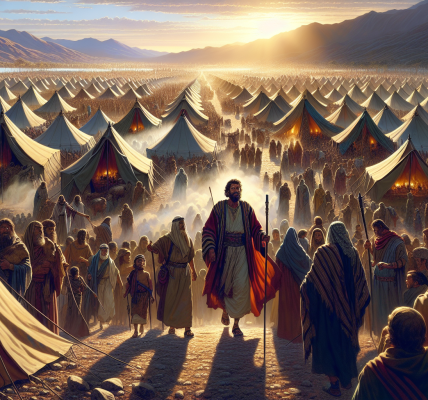
He chose their way for them, and sat as their commander. He dwelt like a king in his army, or like one who comforts mourners. That was the essence of it: comfort. His strength was not for domination, but for consolation. His authority was a shelter.
Now, lying in the dust, the memory fades, leaving behind its cruel silhouette. The light is gone. The square is silent for a different reason. The ones who watched for his smile now look away, if they look at all. The friendship of God is a withdrawn mystery, the watchful fondness replaced by a terrifying, vast attention.
He opens his eyes to the gray, creeping dawn. The ashes are real. The pain is real. The golden afternoon is a country he can no longer visit, except in these brief, brutal dreams of what was, when his path was drenched in cream and the rock poured out for him streams of oil. He lets out a slow breath, a sigh that is itself a kind of prayer—wordless, heavy, and waiting in the hollow space between memory and morning.