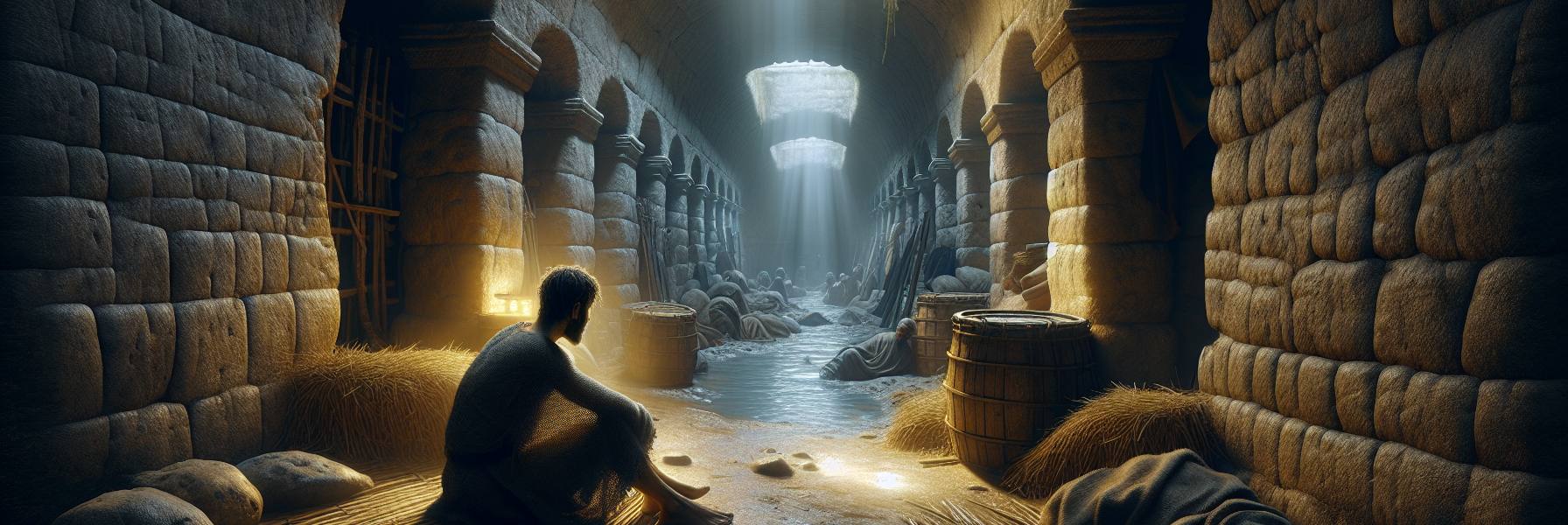

The damp of the stone seeped into his bones, a cold that no thin blanket could dispel. Paul shifted on the pallet, the rustle of straw the only sound besides the distant, echoing drip of water. Rome was a city of marble and mobs, of sun-baked forums and shadowed alleys, but here, beneath its grandeur, it was a tomb of chill and quiet. He pulled the threadbare cloak tighter, not against the cold alone, but against the weight of the silence. It was in these moments, when the guard’s footsteps had faded down the corridor, that the memories came, vivid and unbidden.
He saw Lystra. Not the city itself, but a face—young, earnest, dark-eyed with a keen intelligence that sometimes veered into worry. Timothy. The boy he’d found, the son he’d gained. He remembered the hands of the elders, rough and warm, resting on the young man’s shoulders; the shared prayers that were less words and more a current of spirit; the mother Eunice and the grandmother Lois, their faith a quiet, stubborn flame that had first kindled Timothy’s own. That faith lived in him, Paul was sure of it. But it was like embers now, banked, in need of a breath.
With a stiff groan, he pushed himself up, the chain on his wrist clinking dully. By the poor light of a single oil lamp, its flame guttering in the draft, he reached for the parchment. The stylus felt unfamiliar in fingers more used to the grip of a tent-maker’s needle or the feel of a scroll. He began, the letters forming slowly, not from weakness of mind, but from the gravity of the thing.
*Paul, an apostle of Christ Jesus by the will of God… to Timothy, my beloved child.*
The salutation was formal, necessary. But the next words poured out from a deeper place, a well of longing he seldom let himself drink from.
*I thank God whom I serve, as did my ancestors, with a clear conscience, as I remember you constantly in my prayers night and day. As I remember your tears.*
He paused, the stylus hovering. That last phrase had come unbidden. He saw it again: their last parting, somewhere on the coast of Asia. It hadn’t been a grand farewell. There had been urgency, danger. And Timothy’s eyes, bright with unshed tears, a vulnerability that spoke of a love that feared loss. Paul hadn’t chastised him for it. He stored the memory like a treasure. He wrote it down now, a testament to the real cost of their fellowship. This was not a philosophy; it was a family, etched in joy and sorrow.
*I am reminded of your sincere faith, a faith that dwelt first in your grandmother Lois and your mother Eunice, and now, I am sure, dwells in you.*
Theology, for Paul, was never abstract. It was lineage. It was passed down through stories at twilight, through steadfastness in hardship, through the unshowy loyalty of women who believed God in the quiet corners of a pagan city. This was the foundation. Timothy’s faith wasn’t a theory he’d adopted; it was an inheritance he needed to *re*-kindle.
The word sat in his mind before he wrote it. *Anazōpyreō*. To stir up the flames anew. The image was of a fire that hasn’t gone out, but has sunk low, its heat dormant under a layer of ash.
*For this reason I remind you to fan into flame the gift of God, which is in you through the laying on of my hands.*
He thought of the gift—a specific enablement from the Spirit for the work of ministry. But the laying on of hands… that was the human touch, the moment where the divine promise met the community’s commission. It was a tangible memory. Paul’s own hands, perhaps calloused and scarred, on Timothy’s shoulders, the weight of responsibility and blessing transferred in that silent, powerful act. That moment was a anchor. Timothy needed to remember the touch as much as the gift.
The draft shifted the lamp flame, casting leaping shadows on the wall. Paul’s own shadow looked like a hunched giant. He straightened his back, a surge of the old fire in his spirit.
*For God gave us a spirit not of fear but of power and love and self-control.*
He wrote each word as a blow against the darkness, both in his cell and in Timothy’s heart. Fear was the great extinguisher. It whispered of failure, of ridicule, of the overwhelming might of Rome or the clever arguments of the false teachers in Ephesus. The antidote was a three-fold cord: *power*—not his own, but the resurrection life of Christ; *love*—the sacrificial, binding force that was the motive for all true ministry; and *self-control*—the disciplined mind, the sober stewardship of the gift. This was the spirit they had received. Not a timid, cringing thing, but a robust, dynamic force.
He exhaled slowly, the chain clinking again. This was the heart of it. The rest—the warnings about shame, the call to guard the good deposit, the bleak mention of those who had turned away—all flowed from this central fire. He wrote of Onesiphorus, a man not ashamed of his chains, who had searched Rome tirelessly until he found this dank hole, bringing refreshment. That was the love in action, the *power* that overcame the *fear* of association with a condemned man.
Finally, near the end, his hand aching, he returned to the personal, to the familial.
*Greet Prisca and Aquila… May the Lord grant mercy to the household of Onesiphorus.*
And then, the simple, stark truth of his situation, stated without self-pity, a final lesson in faithfulness:
*When you come, bring the cloak I left with Carpus at Troas, and also the books, especially the parchments.*
He needed the cloak for the cold. He needed the books and parchments for the work. Even here, especially here, the work continued. The man chained as a criminal was still an apostle, a father, a shepherd.
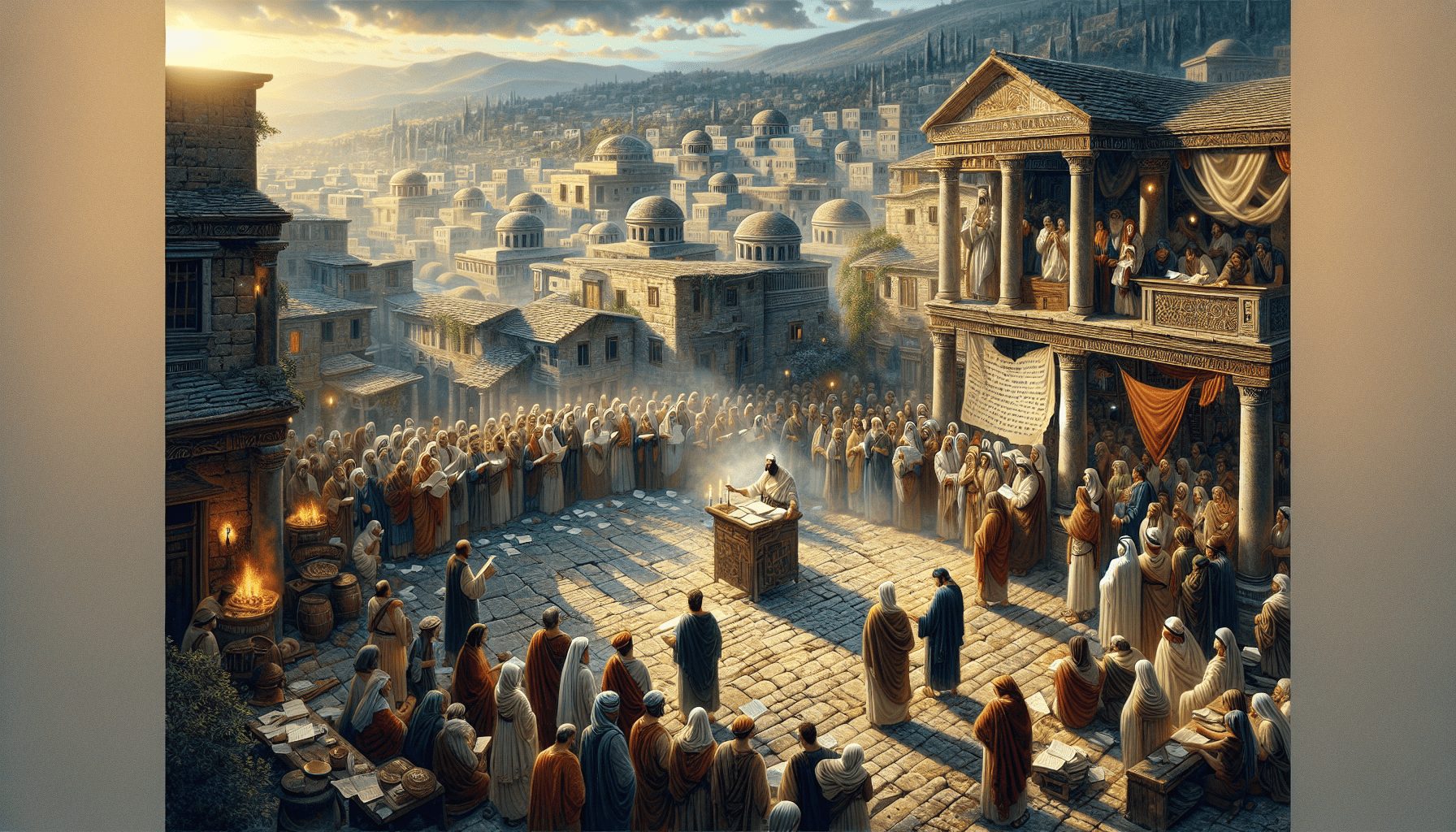
He signed it, the ink dark on the pale skin. The lamp was dying. He set the stylus down and leaned back against the cold stone, the completed letter beside him. He did not feel the cold so much now. In his mind’s eye, he saw the scroll traveling over land and sea, carried by faithful hands, finally arriving in Ephesus. He saw Timothy breaking the seal, reading the words by his own lamplight. He saw the young man’s face—first in recognition, then in conviction, then perhaps in a fresh resolve, the embers stirred, a new flame catching, pushing back the shadows in his own soul.
And in the Roman dark, Paul closed his eyes. The silence was no longer empty. It was filled with the communion of saints, a chain of faith stronger than the one on his wrist, linking Lois to Eunice to Timothy to him, and onward, through time and tears, held by the promise of life in Christ. It was enough. For now, it was enough.