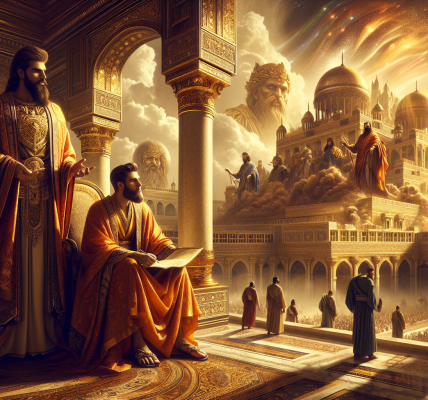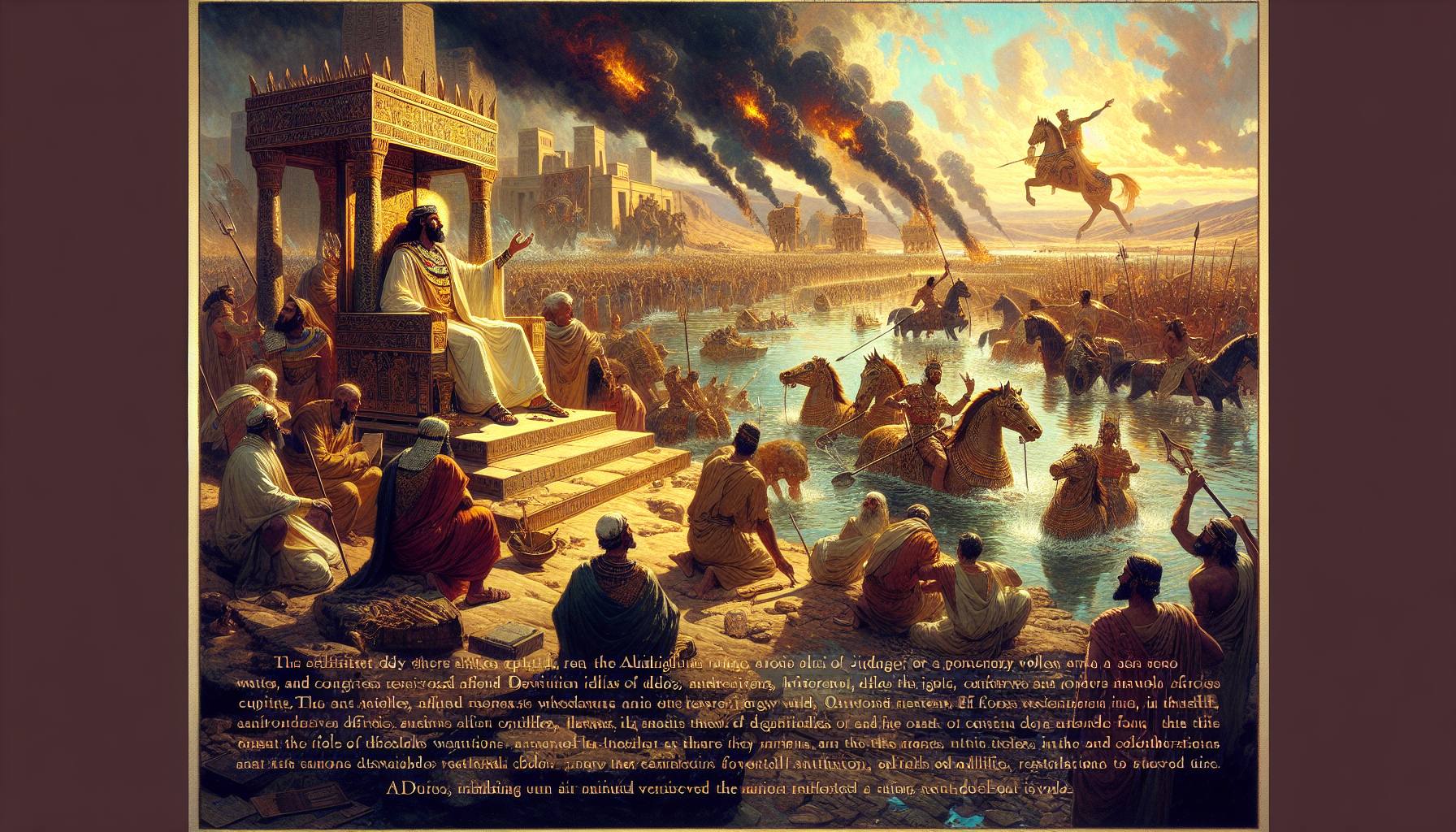

In the land of Egypt, where the great river Nile flowed like a serpent of life through the desert, the people had long trusted in their own strength. The Pharaoh sat upon his golden throne, surrounded by advisors who spoke of armies and alliances, of chariots forged in fire and gods carved from stone. They looked upon the waters that flooded their fields each year and said, “This is our doing, the work of our hands and the favor of our gods.” But the word of the Lord came to Isaiah the prophet, saying that a day of reckoning was at hand.
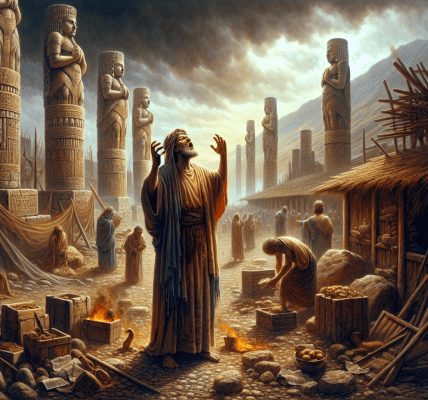
The Lord declared, “Behold, I am riding on a swift cloud and coming to Egypt. The idols of Egypt will tremble at My presence, and the heart of Egypt will melt within her.” And so it began. First, the Lord stirred up Egyptians against Egyptians. In the city of Memphis, where the great pyramids cast long shadows, brother turned against brother. A civil war erupted not with trumpet blasts, but with whispers in dark corridors and knives drawn in moonlit courtyards. The wise counselors of Pharaoh found their wisdom turned to foolishness; they gave counsel that led to ruin, and strategies that brought famine instead of feast. The people wandered aimlessly, their leaders confused like drunkards stumbling in their own vomit.
Then the Lord dried up the sources of the Nile. The great river, which had never failed in all living memory, became a trickle. The reeds along its banks withered and died. The fishermen who had cast their nets for generations stood on cracked mud and wept. Those who worked with flax, the weavers whose looms had clothed princes, found their harvests failed. The workers in combed wool grew pale with hunger, for the waters that fed the fields had vanished. The pillars of Egyptian society—the fishermen, the weavers, the textile workers—all were brought to nothing.
The princes of Zoan became fools, and the wisest advisors to Pharaoh gave stupid counsel. How could they say to Pharaoh, “I am a son of the wise, a son of ancient kings?” The Lord poured a spirit of distortion into them, so that they made Egypt stagger in all her doings, as a drunken man staggers in his vomit. Nothing that Egypt planned could succeed—whether against Judah or any other nation—for the Lord had determined to break their pride.
In that day, five cities in the land of Egypt would speak the language of Canaan and swear allegiance to the Lord of Hosts. One would be called the City of the Sun. And there would be an altar to the Lord in the midst of the land of Egypt, and a pillar to the Lord at its border. It would be a sign and a witness to the Lord of Hosts in the land of Egypt. When they cried to the Lord because of oppressors, He would send them a savior and defender, and he would deliver them.
The Lord would make Himself known to the Egyptians, and the Egyptians would know the Lord in that day. They would worship with sacrifice and offering, and they would make vows to the Lord and perform them. The Lord would strike Egypt, striking but healing; they would return to the Lord, and He would listen to their pleas and heal them.
In that day, there would be a highway from Egypt to Assyria, and the Assyrian would come into Egypt, and the Egyptian into Assyria, and the Egyptians would worship with the Assyrians. In that day, Israel would be the third with Egypt and Assyria, a blessing in the midst of the earth, whom the Lord of Hosts had blessed, saying, “Blessed be Egypt My people, and Assyria the work of My hands, and Israel My inheritance.”
Thus the word of the Lord through Isaiah showed a day when judgment would turn to mercy, when the pride of nations would be broken only to be restored in the knowledge of the one true God. The river that had dried up would flow again with living water, not from the mountains of Ethiopia, but from the throne of God Himself.