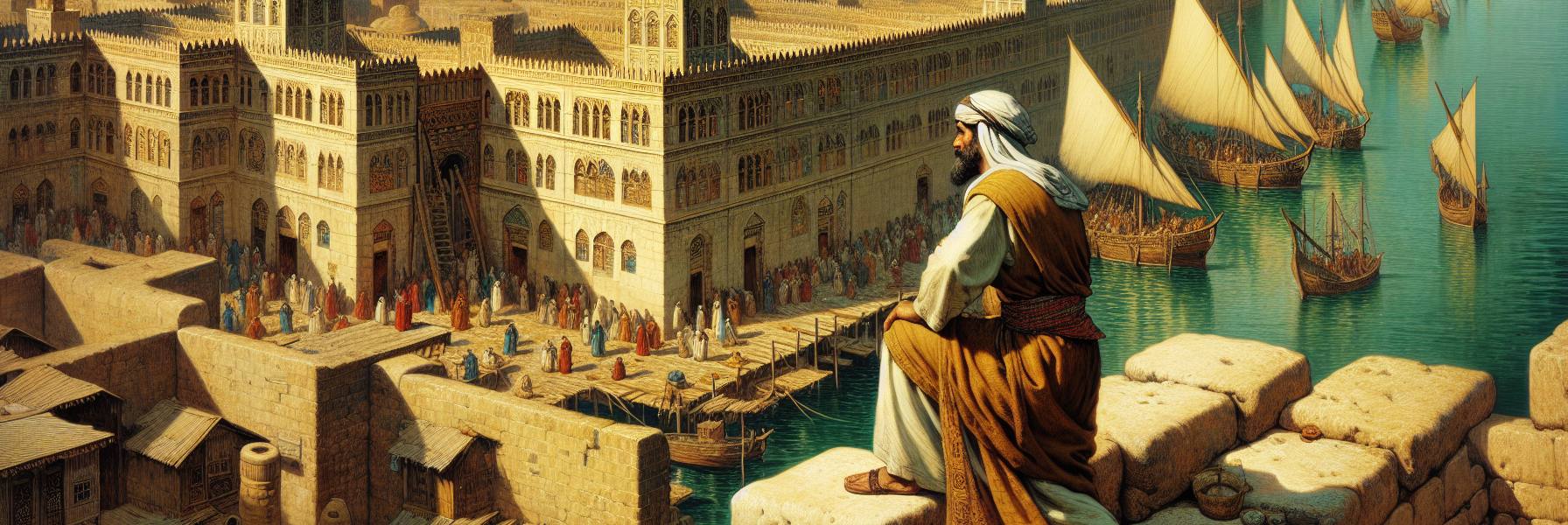

The salt wind carried the scent of cinnamon and despair. Elam, son of Asher, stood on the rooftop of his merchant house in Tyre, his knuckles white on the sun-bleached limestone parapet. Below him, the city was a symphony of commerce that had played for centuries. The great double harbor—the Sidonian to the north, the Egyptian to the south—crawled with ships. The cries of Phoenician stevedores mingled with the creak of ropes and the slap of sailcloth. From here, the wealth of the world flowed: silver from Tarshish beyond the pillars of Hercules, wheat from the Nile’s black soil, fine wool from Aram, and the strange, beautiful tin of distant Britannia.
Tyre was not just a city; it was a nerve center, a beating heart of trade. Its merchants, they said, were princes, its traders the honored of the earth. Elam’s own warehouses groaned with bolts of purple-dyed cloth, the color extracted from a thousand thousand murex shells, a hue so costly it clothed emperors. He had walked its colonnaded streets, paved with the confidence of millennia, and believed, in his soul, that it would never end. The sea was their domain, their mother and their servant.
But the wind had changed.
First came the rumors, whispered in the wine shops by sailors with frightened eyes. A shadow in the east. A new power, rising with a hunger for iron and conquest. Then the trade routes began to falter. The ships from Sidon, their sister-city to the north, arrived less frequently, their captains speaking of blockades and burned coastal towns. The market in the agora, once a cacophony of a dozen tongues, grew quieter. The price of grain climbed, and the easy laughter of the wealthy faded.
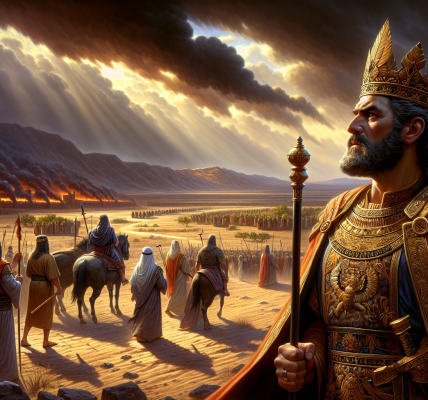
Then, one evening, a single, wounded galley limped into the Egyptian harbor. Its sail was torn, its oars splintered. The news it carried spread through the city like a fever. *Ashur*. The Assyrian. The great king Sennacherib had turned his gaze west. Sidon had fallen. Now his armies, an inexorable tide of men and siege engines, were marching down the coast. They were not coming for trade. They were coming to break the spirit of the sea.
Panic, cold and quiet, settled over Tyre. The clever, agile minds that had built empires with ledgers and loans turned to the grim calculus of survival. Wealth was packed into secret holds. Children were sent to colonies across the sea—to Carthage, to Cyprus. The song of the city became a dirge. “Wail, O ships of Tarshish,” Elam found himself muttering, an old lament rising unbidden, “for your fortress is destroyed.”
The siege did not come as a storm, but as a slow, strangling cord. The Assyrians took the mainland city, Ushu, in a matter of weeks. Then they stood on the shore and looked at the island fortress of Tyre, a walled jewel a thousand yards out in the azure water. They could not reach it. So they began to choke it. No more caravans from the east. No more grain from Egypt. The harbors were blockaded by sleek, deadly Assyrian patrol craft.
On his rooftop, Elam watched the life ebb from his world. The proud ships of Tarshish, the great ocean-going vessels, were glimpsed on the horizon, turning their prows away. Their captains would not risk their precious cargo for a dying city. The market squares stood empty, dust devils dancing where merchants once haggled. The vibrant purple cloths in his warehouse began to smell of mildew and abandonment. The silence was the worst of it. The deep, profound silence of a stilled heart. The harbors were mute. The ceaseless rhythm of commerce—the one true god Tyre had worshipped—had stopped.
For years, it went on. The Tyrians, resourceful to the end, dug cisterns for rainwater, fished the barren sea. But their greatness had been connection, and they were severed. Elam grew thin. His fine robes hung loose. He watched his city become a ghost of itself, its famous wisdom now bent only on scraping a few more days of life from the unforgiving rock.
The word finally came from a fisherman who dared the blockade at night. Babylon. A new power had risen and crushed Assyria. But there was no celebration. The message was clear: the Lord of Hosts had given Tyre over to another. Their time was not restored; it was merely transferred. They were a chip passed between gamblers. The prophecy, it seemed, was a wheel that turned and crushed all beneath it. “He has stretched out his hand over the sea; he has shaken the kingdoms.”
Seventy years. A biblical lifetime. Elam died in the quiet ruin, remembering the scent of spices on the wind. His children’s children grew up in the husk of a legend.
Then, a curious thing happened. Decades after the fall, a different sort of ship nudged against the crumbling quays of Tyre. It carried not tribute, but tools. Men from the east, with permission from a Persian king, spoke of rebuilding. The strategic rock could not be ignored forever. Slowly, tentatively, like a man feeling limbs long asleep, trade began again. A trickle of goods. A forgotten song hummed by an old woman.
It would never be what it was. The crown of pride was shattered, the song of the harbor a faint echo. But as a later prophet might scribble on a scroll, the city would, in time, return to her hire. She would ply her trade with all the kingdoms of the world, but it would be a quieter thing, a humbled thing. Her profits would not be hoarded for her own glory, but would eventually be set apart, becoming, it was said, something holy.
Elam’s descendant, a young man with his same watchful eyes, stood on a rebuilt section of wall. The harbor was active again, but modestly so. He held a piece of murex shell, its inner lip still gleaming with a ghost of purple. The arrogance was gone. The invincibility was a tale for children. But the sea still murmured against the stones. It was a different Tyre. Not a queen, but a servant. And in that, perhaps, there was a kind of weathered, hard-won peace. The city had been taught, in the most brutal way, that the waters themselves belonged to Another.